

VHOLUME and CICADAMATA” both dropped at the same moment. Both are brilliant indie experiments in speed traversal through single player levels. Both are cheap, at eight and nine dollars respectively. Both make use of leaderboards for each stage, allowing a player to sink countless hours trying to shave off time and focus on route optimization. Both even let the player replay an entire area with a single button. And while they radically differ in how they approach story, space and basic movement, they are both standouts worth your time in one of the most packed release seasons in recent memory.
VHOLUME
The VHOLUME demo stunned me when it came out. It is a brutalist parkour runner a la Mirror’s Edge, Counter-Strike Surf or more specifically Titanfall 2’s beloved gauntlet level. I left the demo wondering how far the game would go outside the scope of the demo.
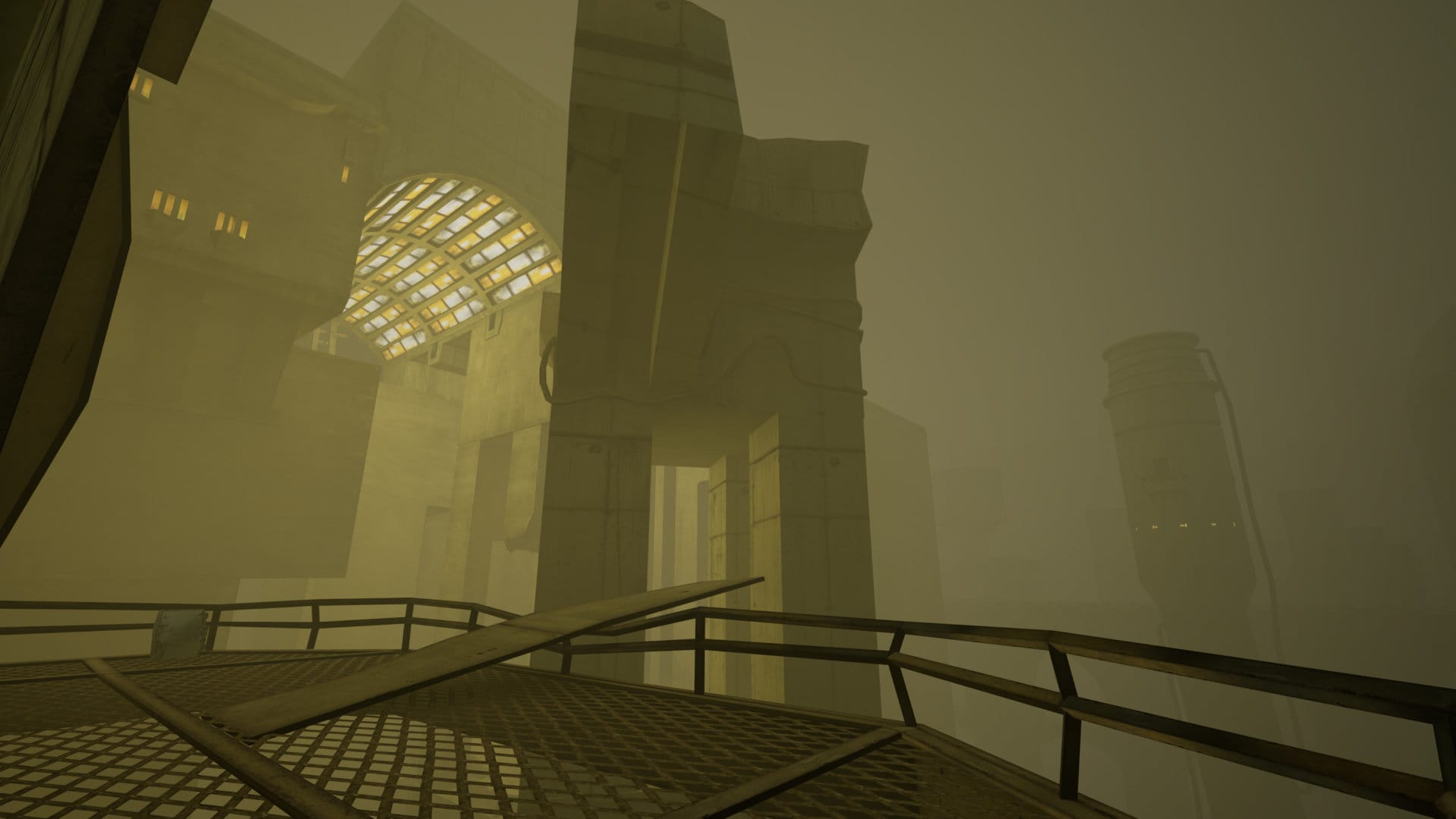
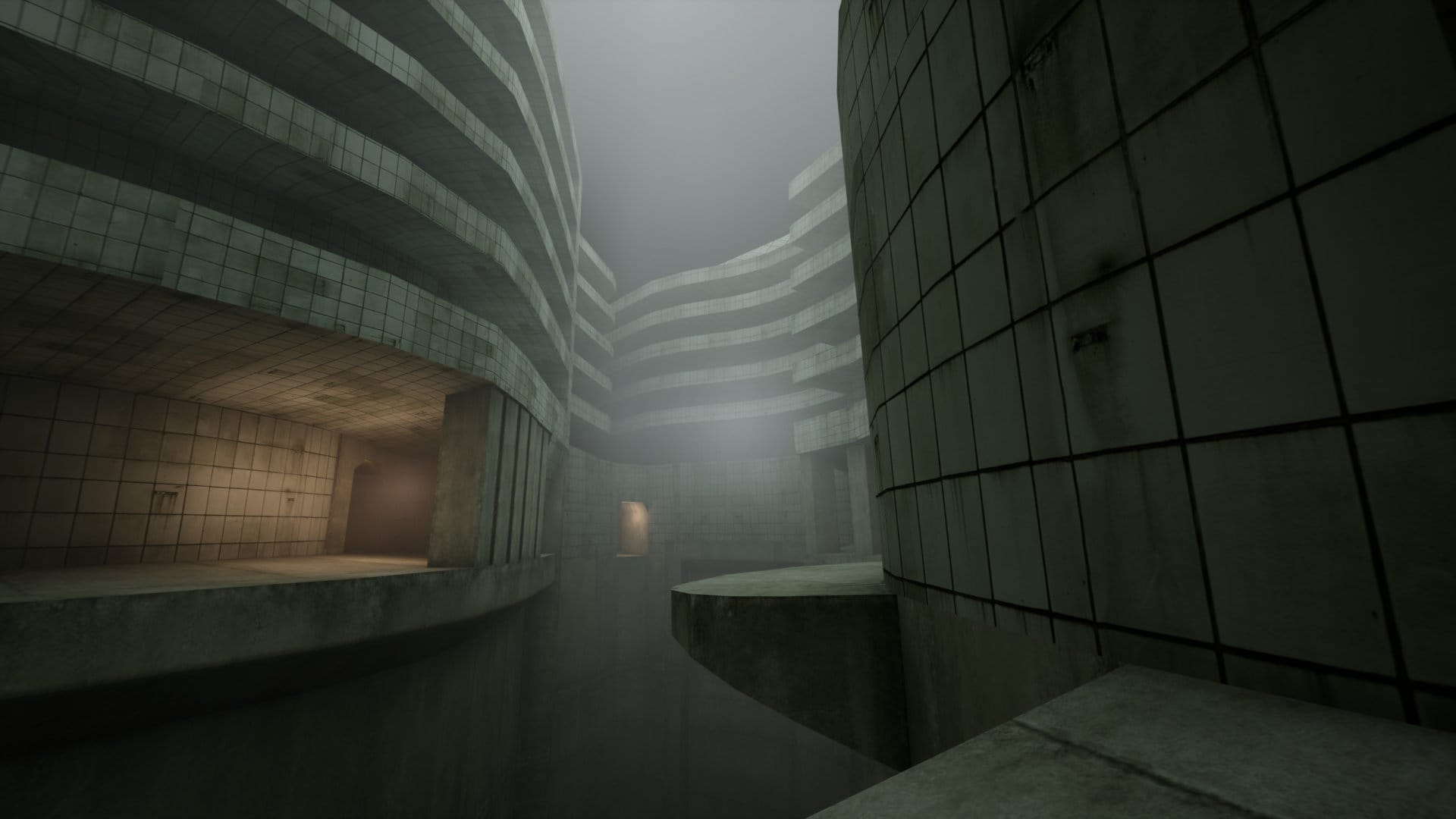
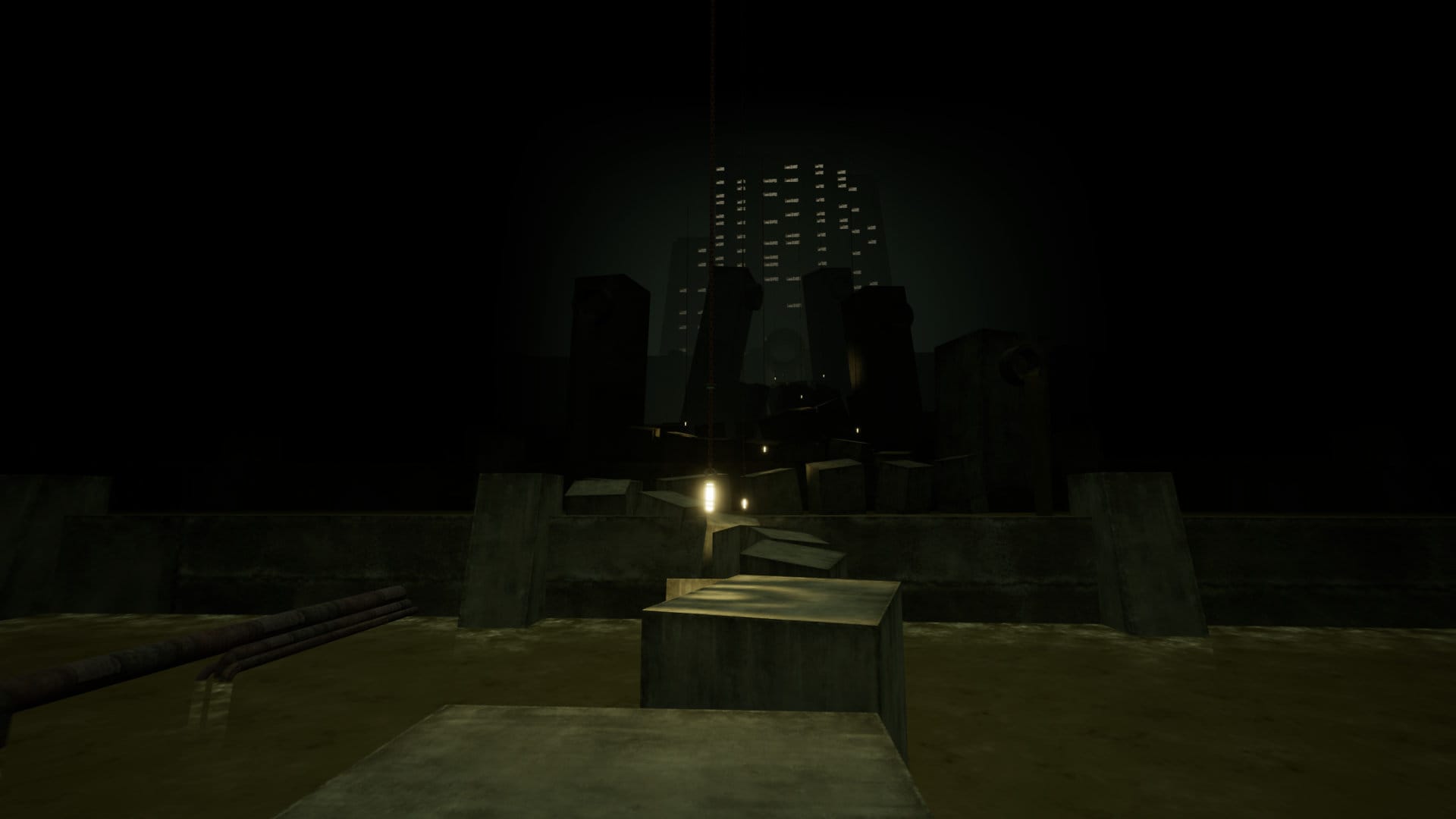
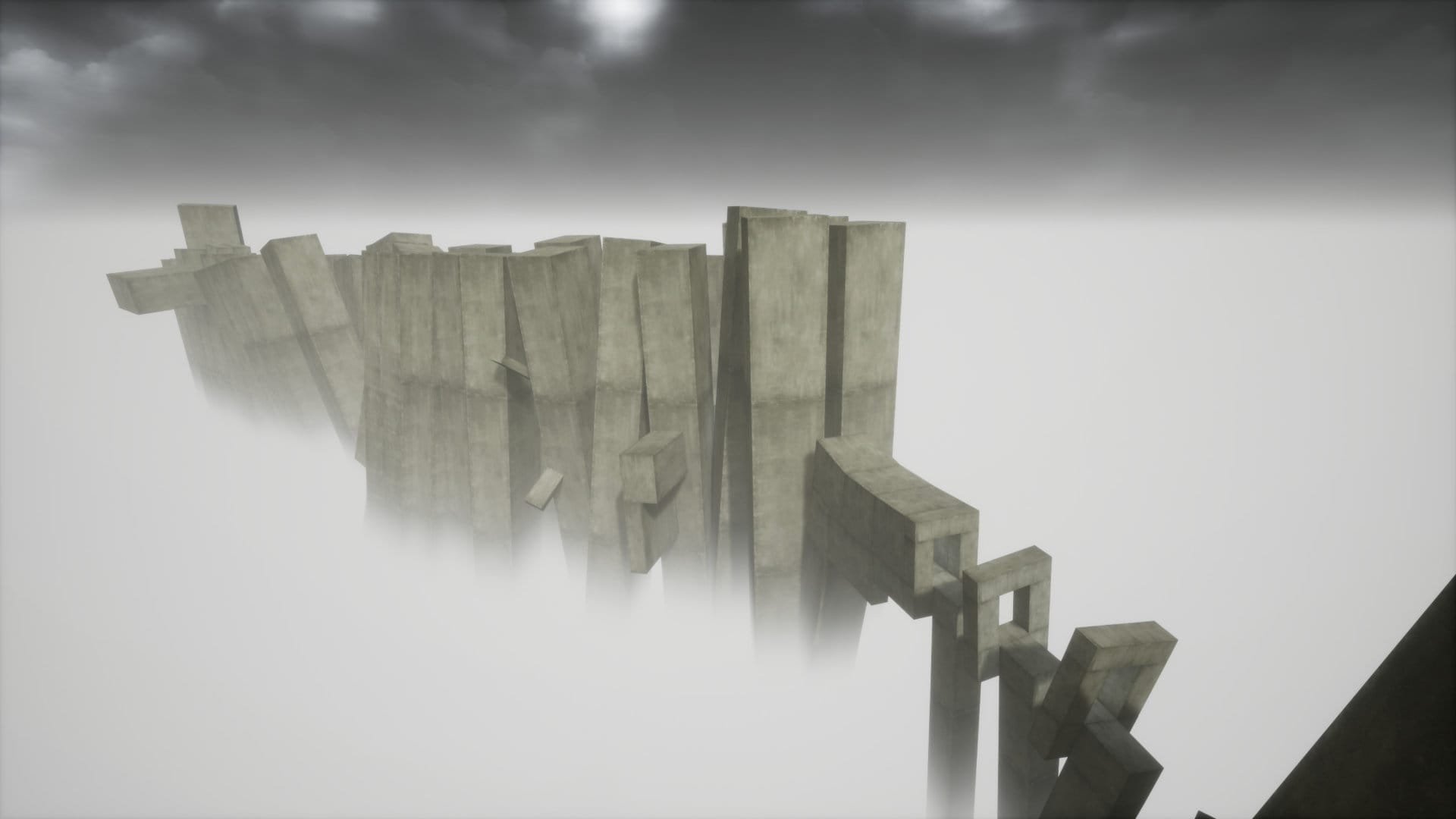
Not far, it turns out, which is the right call. VHOLUME took the demo and extruded it, adding more levels while retaining the slightly hands-off feeling that felt so special. Retained is the sensation of being dropped into a placeless and timeless world with little to latch on to save being oppressive and Eastern bloc-coded. The space is impossible and yawning, slabs of stone and concrete seemingly suspended in the air whose only functional purpose seems to be your traversal. Fumito Ueda’s legacy is deeply felt in every slab and brick. The music by, among other artists, 1000 Eyes (who wrote music for Signalis) and Konstantin Schimanowski hums and coos, ambiently tuned precisely to the register of a lonesome world. It is a game that evokes the groggy sensation of traveling at an ungodly speed through a city that can only live in half-remembered dreams.
Damn the soundtrack is good.
There is little in the way of a formal plot, but the narrative choices VHOLUME makes outside of its impossible architecture are filigrees – misshapen creatures sharing tiny lines of dialogue and detail that are more poem than prose. At one point a slug creature in a subway recites Sahrah Teasdale’s poem “A Prayer.” Two nude, sexless figures sit in a room filled with light carved by venetian blinds while one bemoans the status of a factory. Several large and distorted people behind desks extol the virtues of management and bureaucracy. These cryptic encounters never ever add up to a fully realized world, but encountering them is precious nonetheless.
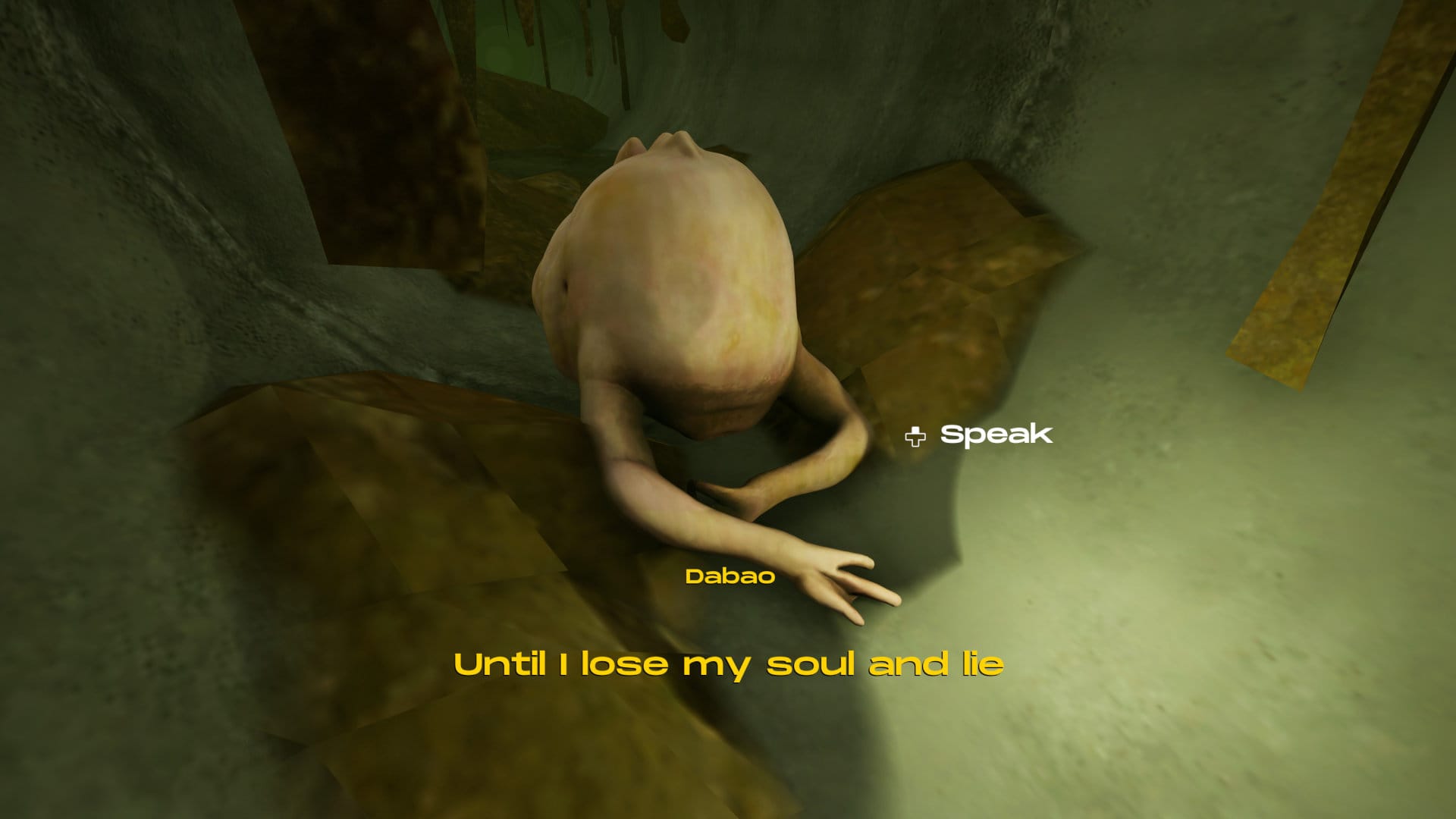
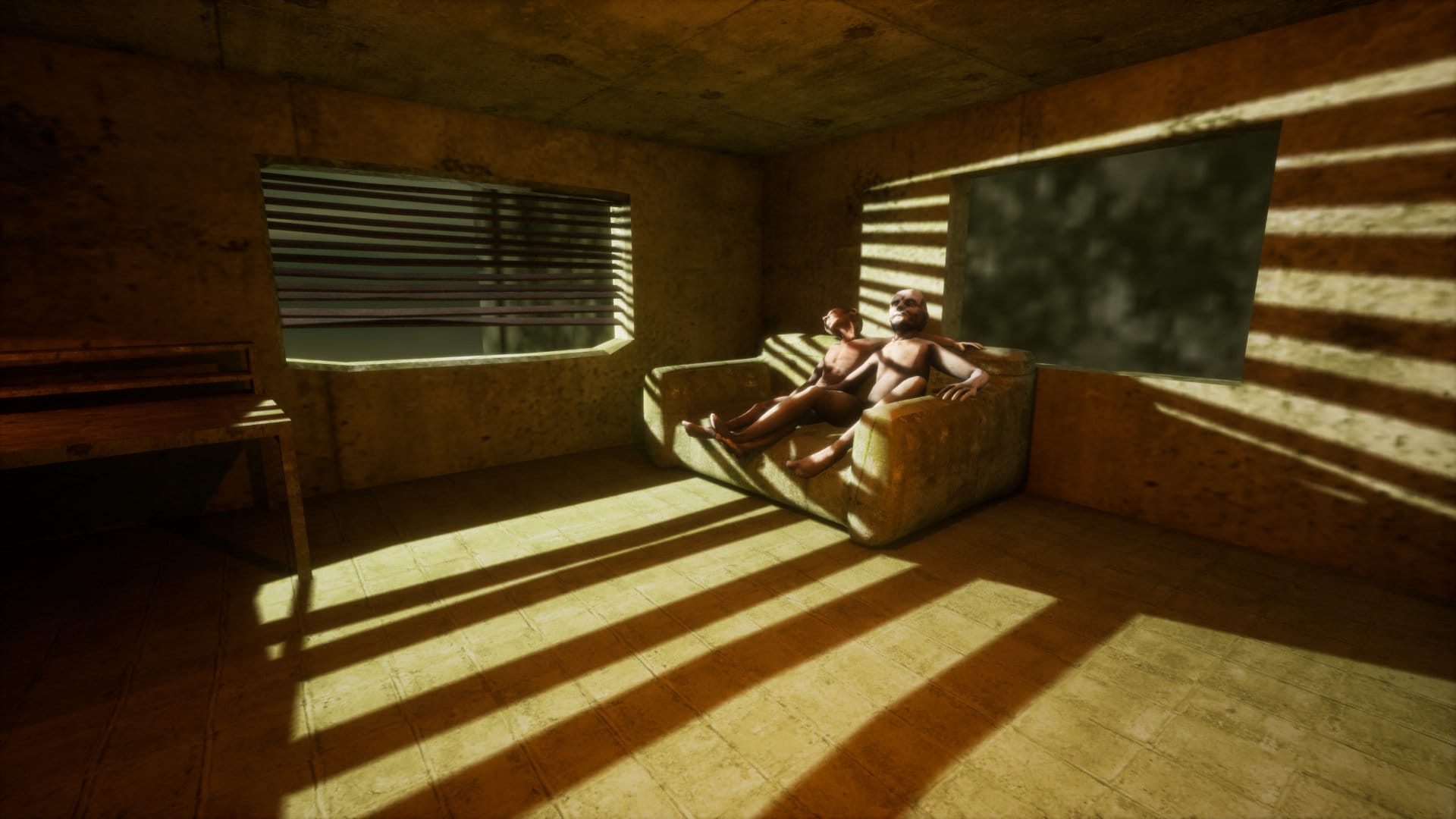
Though you might miss them, VHOLUME has some great little guys.
The basic verbs of VHOLUME are to run, crouch/slide, wall crawl, climb and jump. Like most serious first person traversal games there are nuances that allow you to optimize a run. Bunny hopping is fast, but the absolute fastest way to travel in a straight line often involves hopping and sliding so that it appears like you are bouncing on your ass. It is also possible to climb straight up a wall indefinitely by holding forward while looking up, letting go for a second, jumping, then repeating the process. The game features “Coyote time”, a game technique that allows the player to execute a jump for a short period of time after a wall run or cliff, but the specifics of using it are narrow and technical.
With these techniques you can bypass entire sections of a level, shaving minutes off a potential run. Because the game will not only record your time but also save a “ghost” to the leaderboard that anyone can replay, it’s quite easy to see just how to get silver or gold medals on each level, and to see how someone far more twisted than you managed to beat a level in eight seconds instead of minutes. You can ignore these challenges if you wish, but the appeal of VHOLUME is that you can easily become obsessed with trying to match or beat a run. The game is not long as far as time to beat it, but I spent far too much time attempting to beat one level by ping-ponging off of three poles.
In addition to this there are also unlockable B-Sides, community-made levels that have made it into the final version. Like arena shooter STRAFTAT which one of the creators worked on, VHOLUME feels like a game that benefits from its low price and open nature, and one that benefitted from having a Discord chat that it used to cultivate a loyal community. The B-Sides range from unrelenting to comical, with one of them being just a one-to-one recreation of the Tsukuba Circuit in Japan.
Here's a compilation of several WR.
Though a quick game to beat if you rush, VHOLUME’s levels are finely tuned and lovingly crafted, sculptures chiseled in Unreal Engine, somnial skyscrapers in a void. Despite sharing many traits of the game that came out the same day, there are few games that approach what it does, and few that will stick with me so vividly this year.
CICADAMATA”
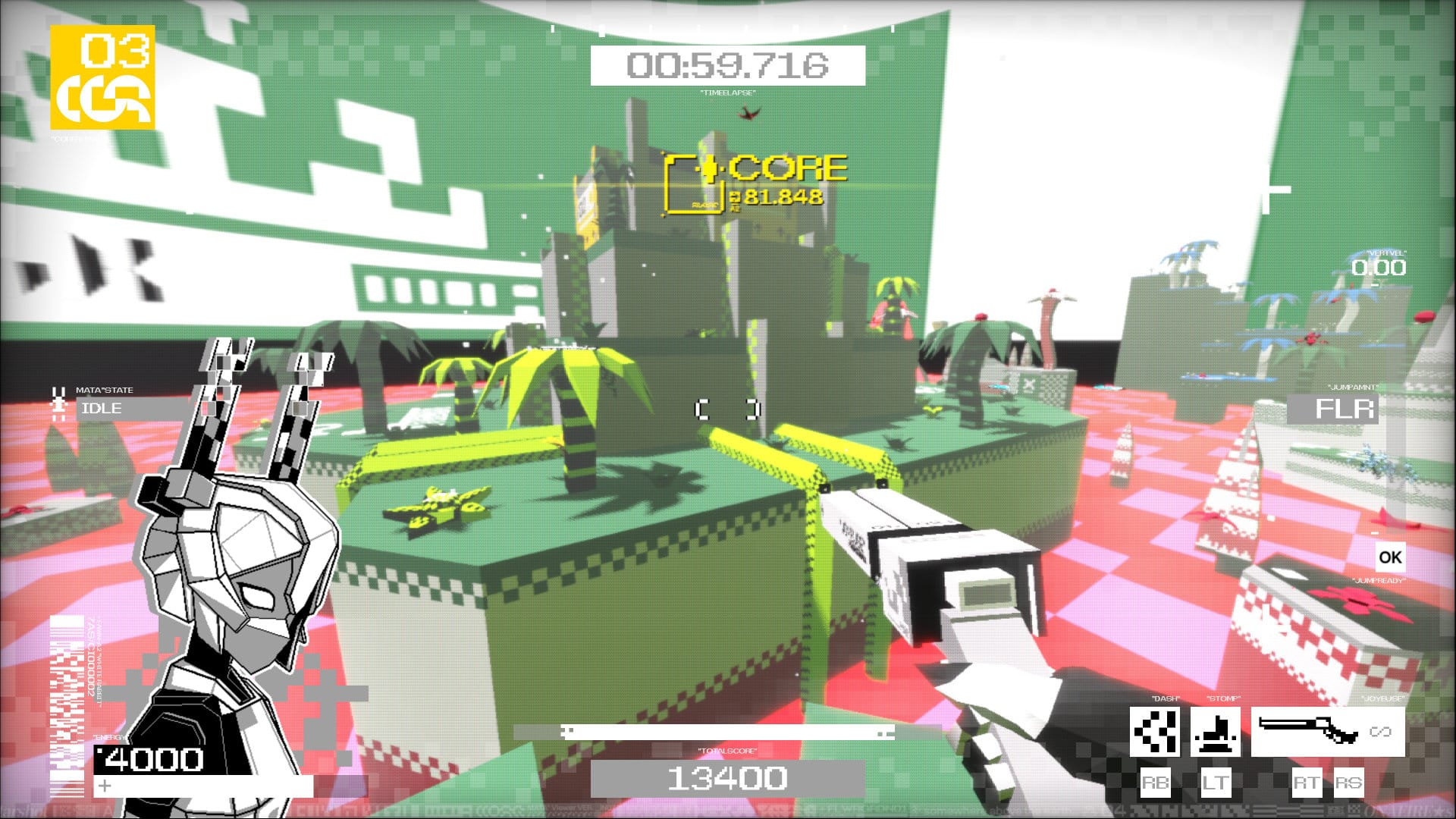
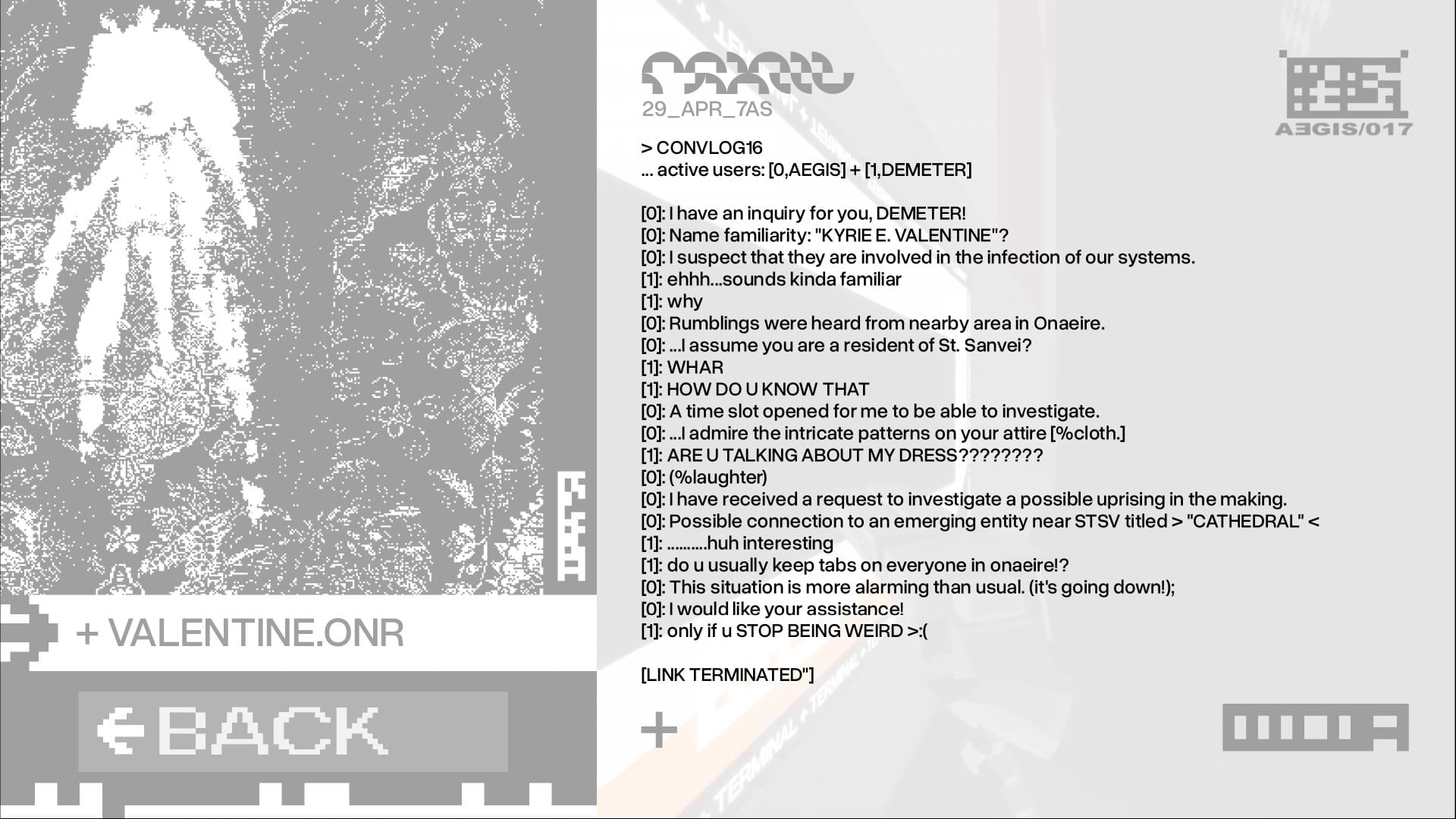
Where VHOLUME is contemplative and lonesome, CICADAMATA” is loud and abrasive. The world of CICADAMATA”, dubbed CASCADE, is low-poly, digital and cyberpunk, Marathon by way of the PSX. Your character FAWN-A2 (Callsign: “White Rabbit”) must traverse six spheres, each with three sublevels. The goal of each stage is to collect four cores and extract alive, racking up the highest score possible upon completion. FAWN-A2’s weapon of choice is a gun named Joyuse, a two shell shotgun similar to Marathon’s WSTR, although its secondary fire is functionally the railgun from Quake 3 Arena. In addition to this, FAWN-A2 can dash and stomp offensively. Dashing is a fantastic way to chain through several enemies, while stomping can be used offensively to crush, levitate a character with the force of an impact, and shave off seconds by rapidly descending.
Like VHOLUME, each stage has three potential tiers of success: silver, gold and platinum. Also like VHOLUME, these challenges are optional to completing the story, and more exist as a personal point of pride. But unlike VHOLUME, CICADAMATA”’s scoring system is not just a function of time to completion, but also involves points accrued based on how you traverse the world and defeat enemies, known as THREATS. Each THREAT has a different optimal strategy for engaging with it. Flowers explode on being shot taking out other THREATS nearby. Birds are often difficult to shoot but easier to dash through and can provide an additional mid-air platform through the level. CRABS cannot be stomped but can be launched and dashed. ESPERs are unique in that they drain FAWN-A2’s points when she is nearby, but if they are destroyed you will magnetize to their position, making them a very fast way to traverse a level if you can nail them with Joyuse’s secondary fire.
I will never be this good at this game Part 2.
CICADAMATA” feels indebted to Neon White in terms of both its heavy use of Machine Girl-esque breakbeats, the pace and structure of movement, and its approach to competitive single player leaderboards. There is also a not-insignificant amount of Jumping Flash and Sonic Adventure in the mix, particularly in terms of level design and how the game utilizes dashes for defeating enemies repeatedly.
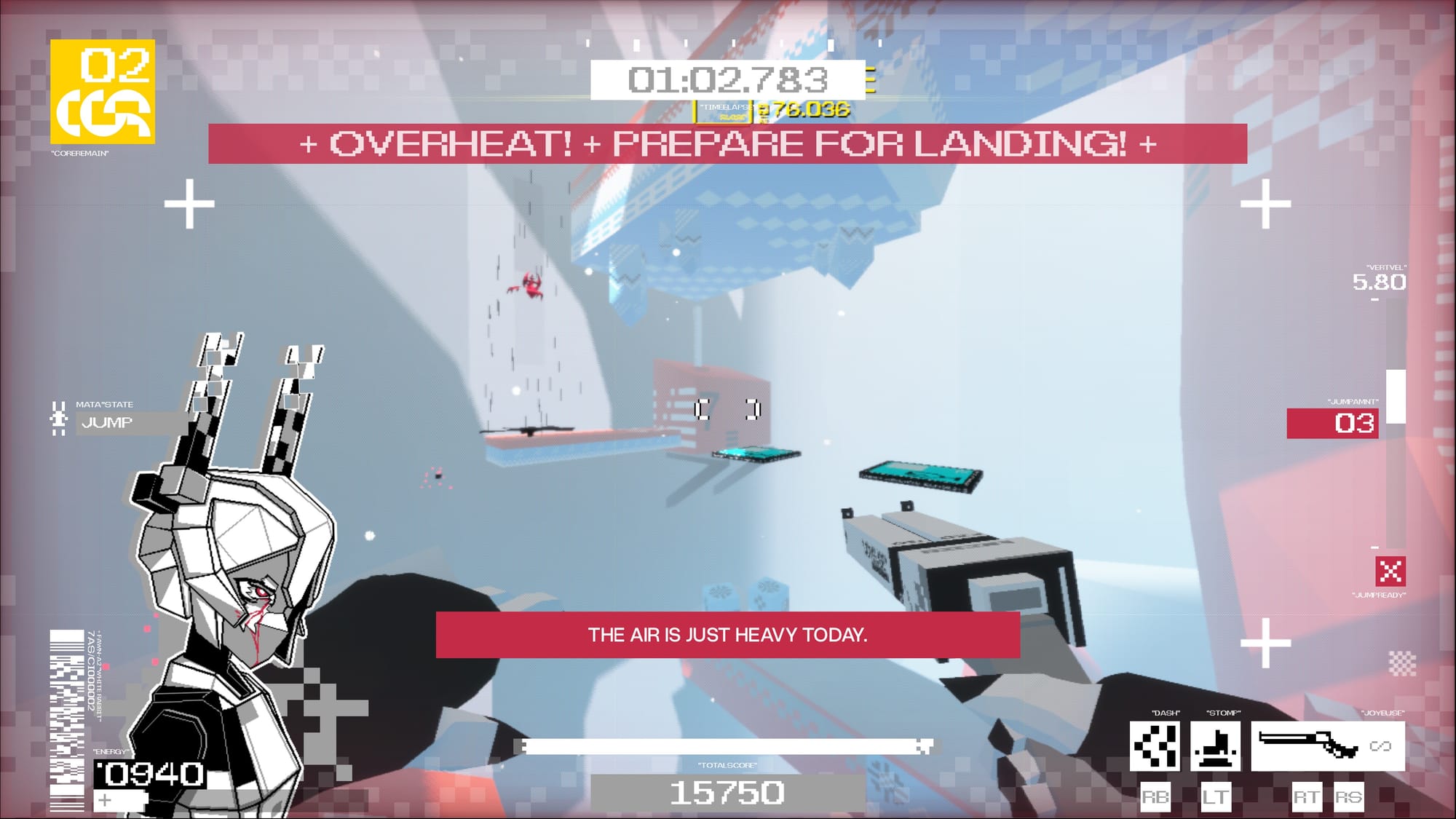
CICADAMATA” is also quite bluntly a queer game, engineered in a lab for lesbians and enbies who identify on a core level with games like Signalis, Nier:Automata, or even something like The Amazing Digital Circus. This is a game for people who find the mecha from Virtual-On and Zone of the Enders to be erotic.
Though the game does initially tell its story via scraps of text flashed on the screen and terminals from other CICADAS, how it settles at the end is much more explicit, grounded and earnest. It is heavily implied that this is simply the first part of an incomplete story to be finished later in the vein of Deltarune, and if that is the case I will happily reup for additional chapters. CICADAMATA” feels like it could be the foundation for something larger and more expansive, and I hope the creators have the opportunity to execute on that vision.
In a season littered with so many big budget releases, it can be hard to tell people to focus on tiny indie games. But both VHOLUME and CICADAMATA” cost less than a nice sandwich, and both are no-brainers for someone even remotely interested in what they’re attempting. Both are easy enough to complete but daunting to truly master. They are cheap enough that they can be easily gifted to a friend on Steam, something I’ve done already for both. If either of them sound intriguing, do not hesitate, because both are going to be precious for the audiences destined to find them.


