

Like many kids, I was raised by LEGO, which instilled in me a bone deep love for plastic snapping together. This is something that I have kept well into adulthood, and which has mostly manifested in my love of modular storage. I love any bookcase, shelf, bin, toolbox, or storage system that is standardized, easily taken apart, and can expand or contract at a moment’s notice. And now that I have a 3D printer, I have unlocked an entirely new dimension of modular storage.
Over the years I have collected or become fascinated with various methods of expandable storage systems. Here are just a few, in no particular order.
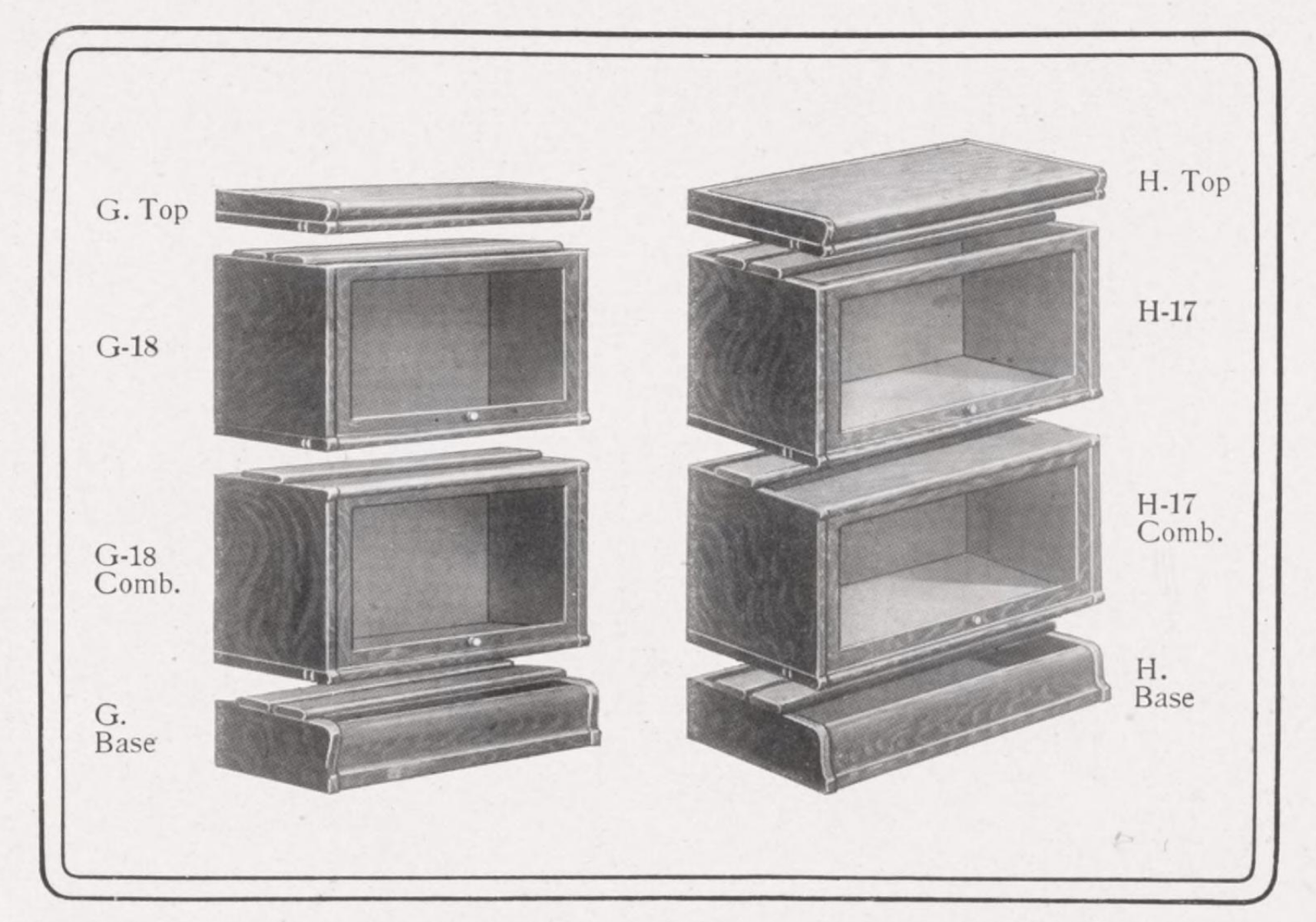
Barrister's bookcases AKA The Globe Wernicke "Elastic" Bookcase
The Barrister’s bookcase is one of the oldest forms of modular storage I know and was originally made by a company called Globe Wernicke that went defunct in the 1950s. Occasionally you can find old examples of these on Facebook Marketplace, worn but reliable. They’re built fairly well, standardized, and were originally designed to be disassembled in parts. Oftentimes they’ll have windows, so it’s like your books live in a little house.
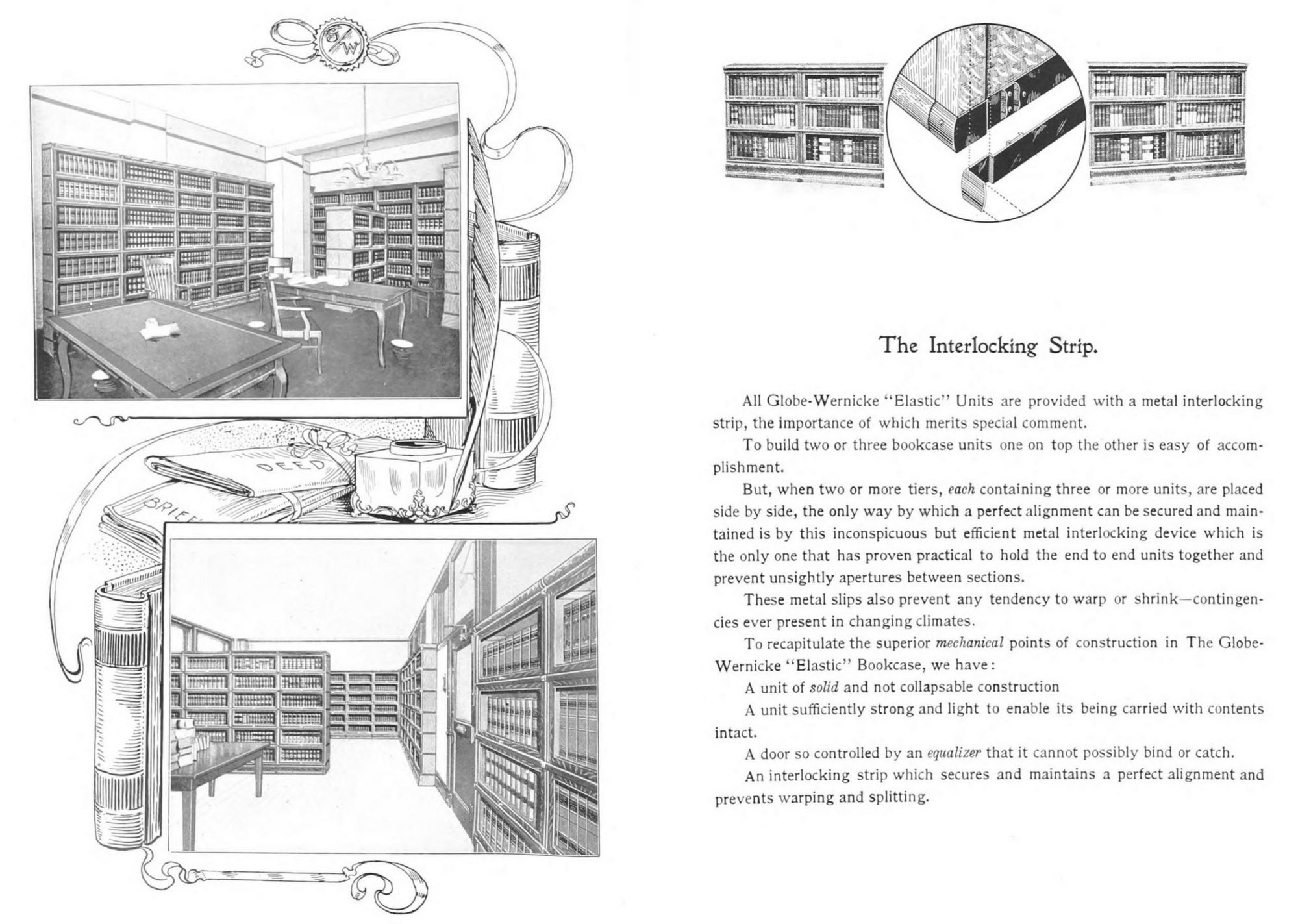
They can be moved easily and expanded, as opposed to a normal bookcase, which sucks to move and usually retains a fixed capacity. People still produce these since the designs are standardized and in the public domain, although many newer examples lack modularity, which is their entire appeal aside from looking like you’re a lawyer.
I find them to be handsome, charming, and proof that people that have my kind of brain have existed even in Cincinnati in the 1890s.
Olaf Von Bohr for Kartell (and knocked off on Alibaba a few years ago), USM, and Muji
Kartell is an Italian brand that sells space-aged injection molded plastic furniture from the 1960s-70s. You may have seen the Componibili, a big side table that looks like a pillbox, or the KD28 by designer Joe Colombo, a lamp which looks like an alien spaceship cradled lovingly by a cylindrical stand with massive gaps cut out in it. If you have a comical amount of money to burn and want your apartment to look like either the MoMA, the set of a 70s bond movie/French porno, or Austin Powers’ Shag Pad then Kartell is a good place to start.

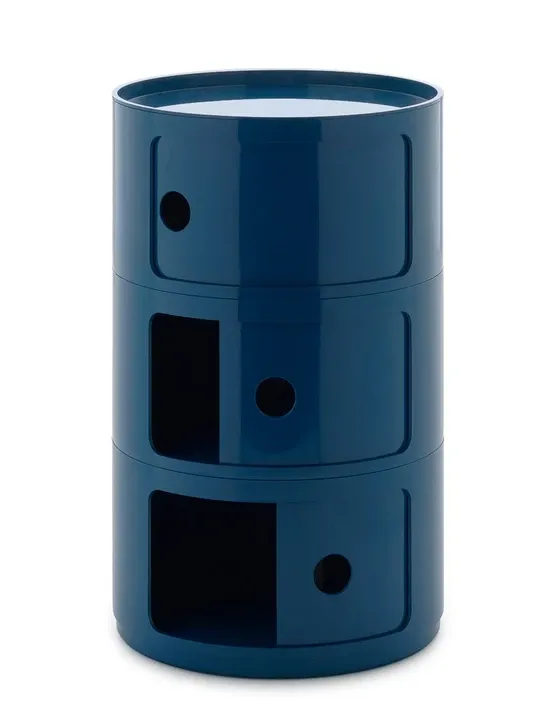
These are some of the most affordable items Kartell makes and they're still kinda pricy. Iconic for a reason.
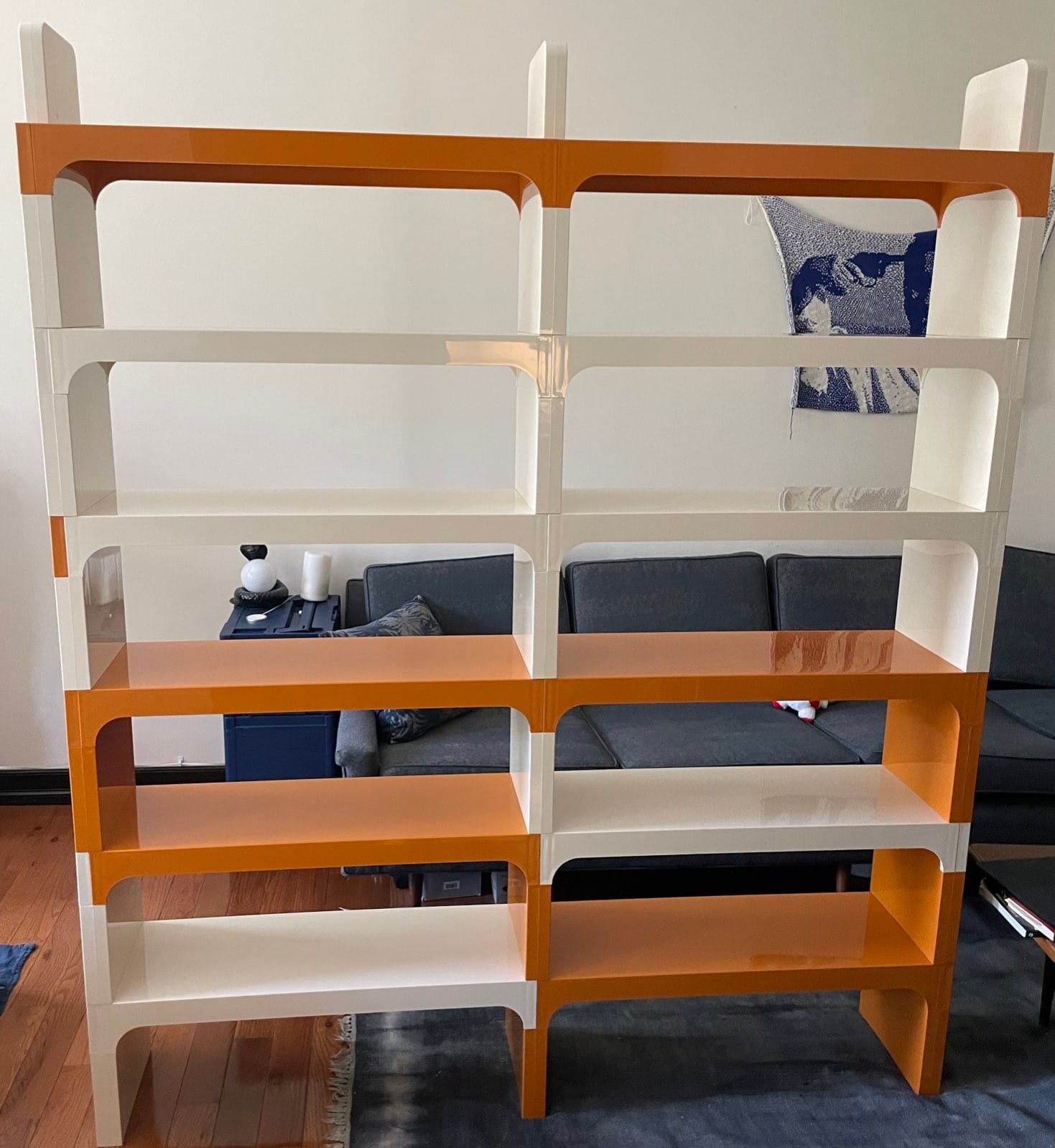
My favorite piece that Kartell ever produced were these big orange and white plastic bookcases by Austrian designer Olaf von Bohr. They fit together like Legos, look like they belong in a Swedish child’s room and can be easily added to or subtracted from depending on the need. Kartell has not produced the shelves in ages, which is a pity because as a result I have seen a decently-sized bookcase go for several grand on the used market. If Kartell was smart they would find a way to make them again.
This is an original vs. the random dupe I found on Alibaba.
In the absence of that, however, I did find a very good dupe. Mine were from a company called Hangzao Decopai on Alibaba in 2023, and I used the reverse image search feature to find them. Normally I’d feel slightly bad about designer dupes, but the shelf has not been available for decades and there is nothing particularly special about injected molded ABS plastic from a materials perspective. The shelves themselves were about $455 dollars and half of that was shipping, which is not bad for a two column, seven row dual book shelf. This was before Trump screwed things up royally for anybody importing things, and since then that company has stopped offering the dupe, although they still make USM Haller dupes, which I found to not be worth the prices of shipping at the time.
This stuff costs a lot of money but in all fairness it's very well built and functionally heirloom.
USM Haller are also fancy modular forms of bookshelves that are worth mentioning. They have chrome metal joints with tasteful solid color panels, and they look like if you tried to render an industrial bookcase on an Amiga. They were obscenely expensive when I originally looked at them, even to dupe, because they’re metal and shipping is often based on weight. I believe dupe companies have started importing those and the price has since gone down, although I don’t assume they’re cross compatible with the genuine article.
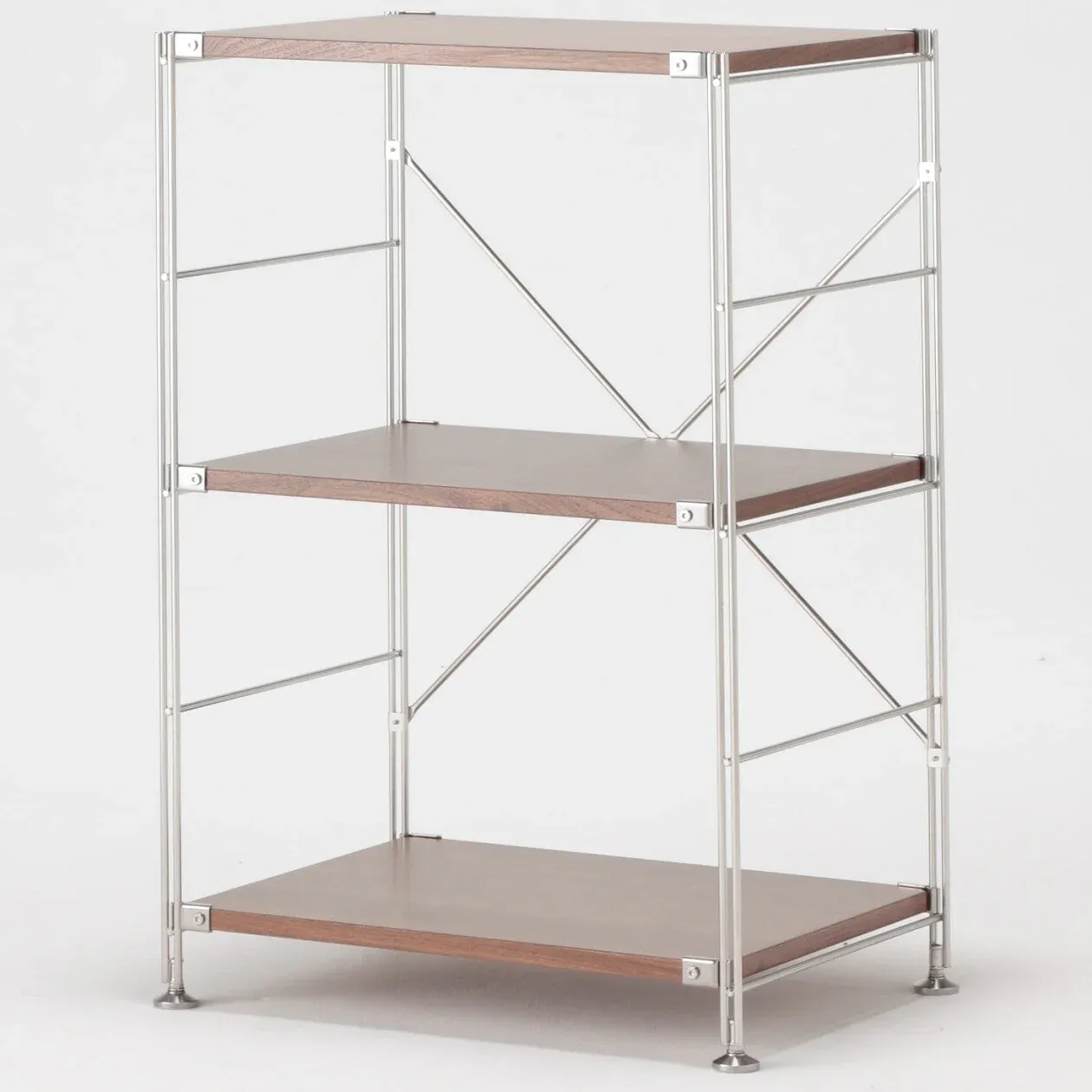
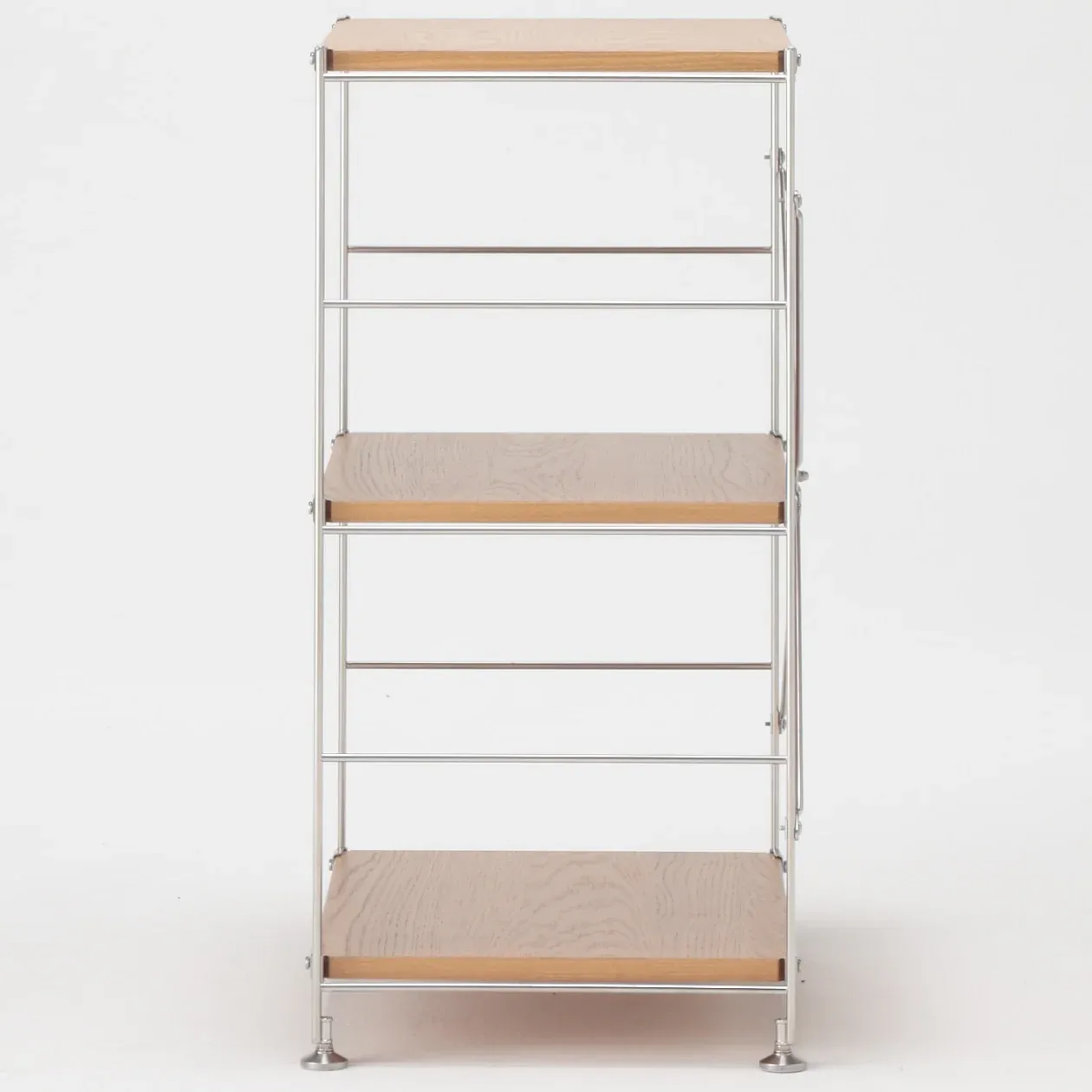
Muji, because you just turned 30. Credit: Muji
I would also be remiss if I did not mention the SUS system by Muji. Like many Muji objects, it exists in a middle ground between Ikea and rich people design options, better made than the former while not fully breaking the bank like a Haller set. The shelves are modular, crossbraced and come in either industrial powder-coated metal or veneer fiberboard. It’s an attractive choice for someone in their 30s who is doing well enough in their life to start caring about design but still isn’t made of money.
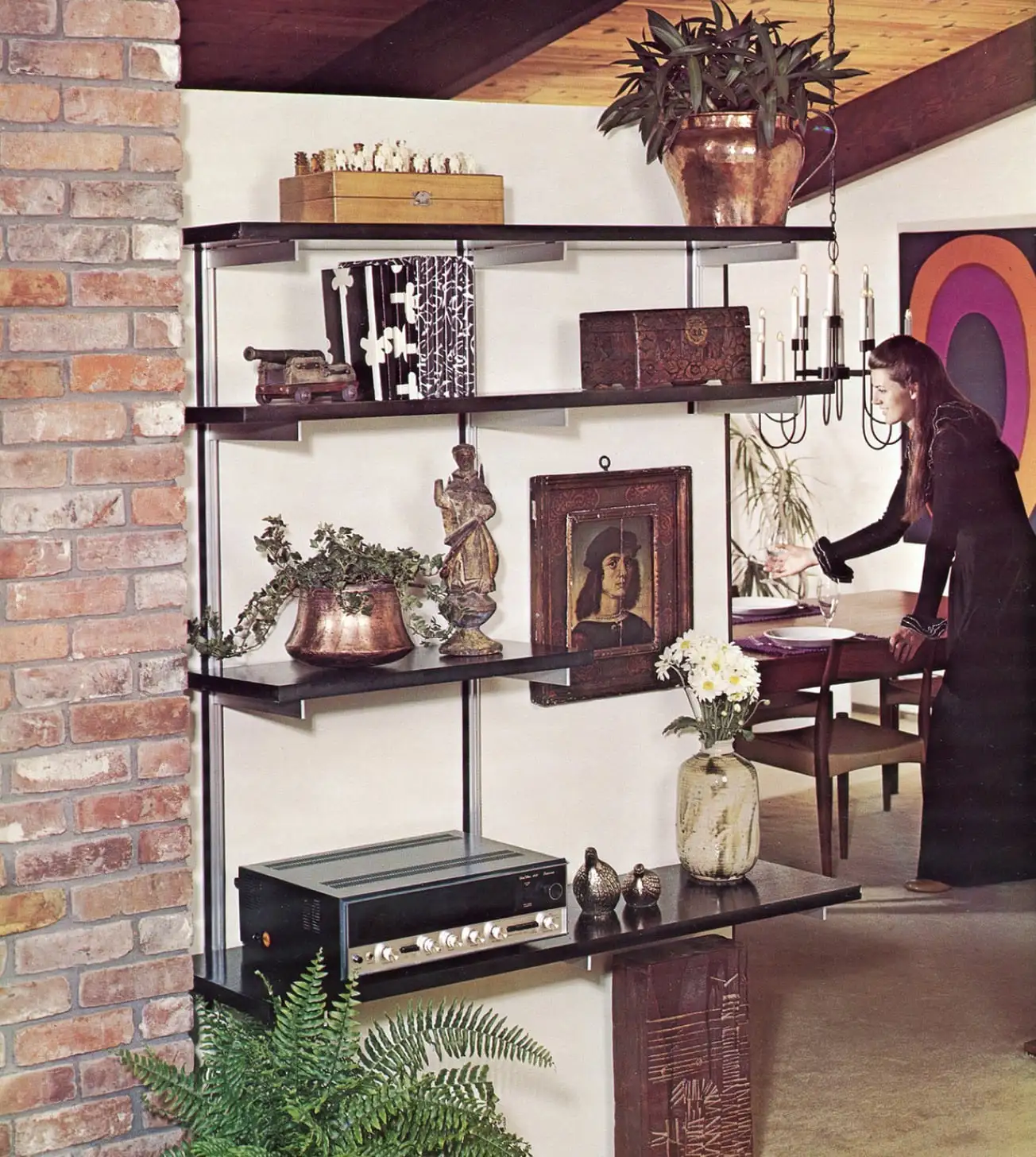
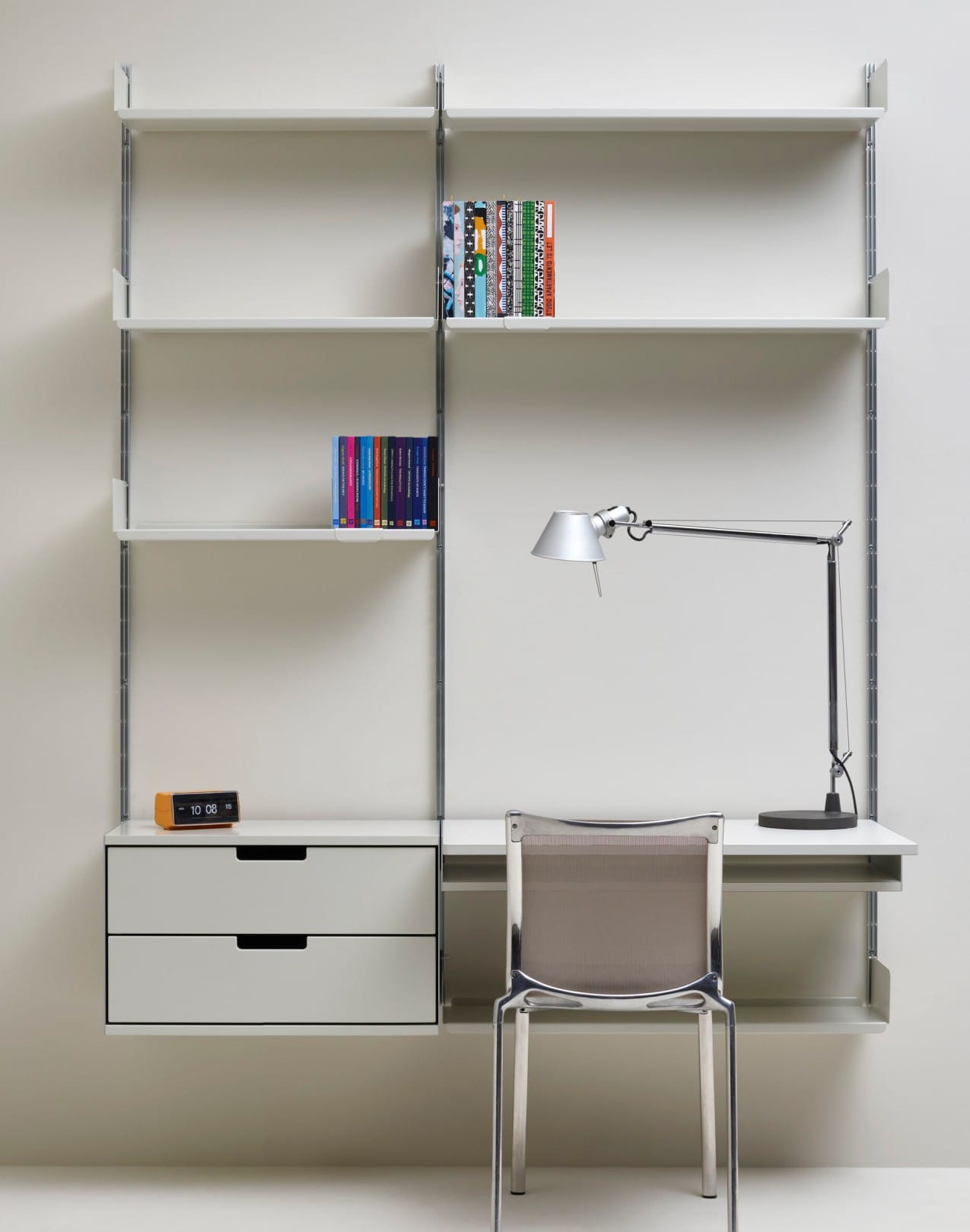
Rakks have been around for ages, the Vitsoe are iconic. Both cost more money than I'll ever see. Credit: Rakks, Vitsoe
Modular wall shelves, expensive save for one
For a long time I was very obsessed with fancy wall shelves, particularly the kinds you see in libraries and rich people’s houses. Shelving systems by Rakks and Vitsoe came up the most, and the Vitsoe 606 by Dieter Rams is the most iconic. You may know Dieter Rams as the guy Jony Ive built his entire career on by knocking off for Apple. I once bought drugs from a guy with an entire apartment covered in Vitsoe 606s, and short of getting a conversation pit it’s one of the biggest flexes I’ve seen. There’s also a tasteful hardwood design by Poul Cadovius called the Royal System that Design Within Reach, a company that offers designer furniture at prices out of reach for most people, still sells. Both of those systems are way too rich for my blood, as are the modular floating shelves you see at Design Within Reach known as the String system.
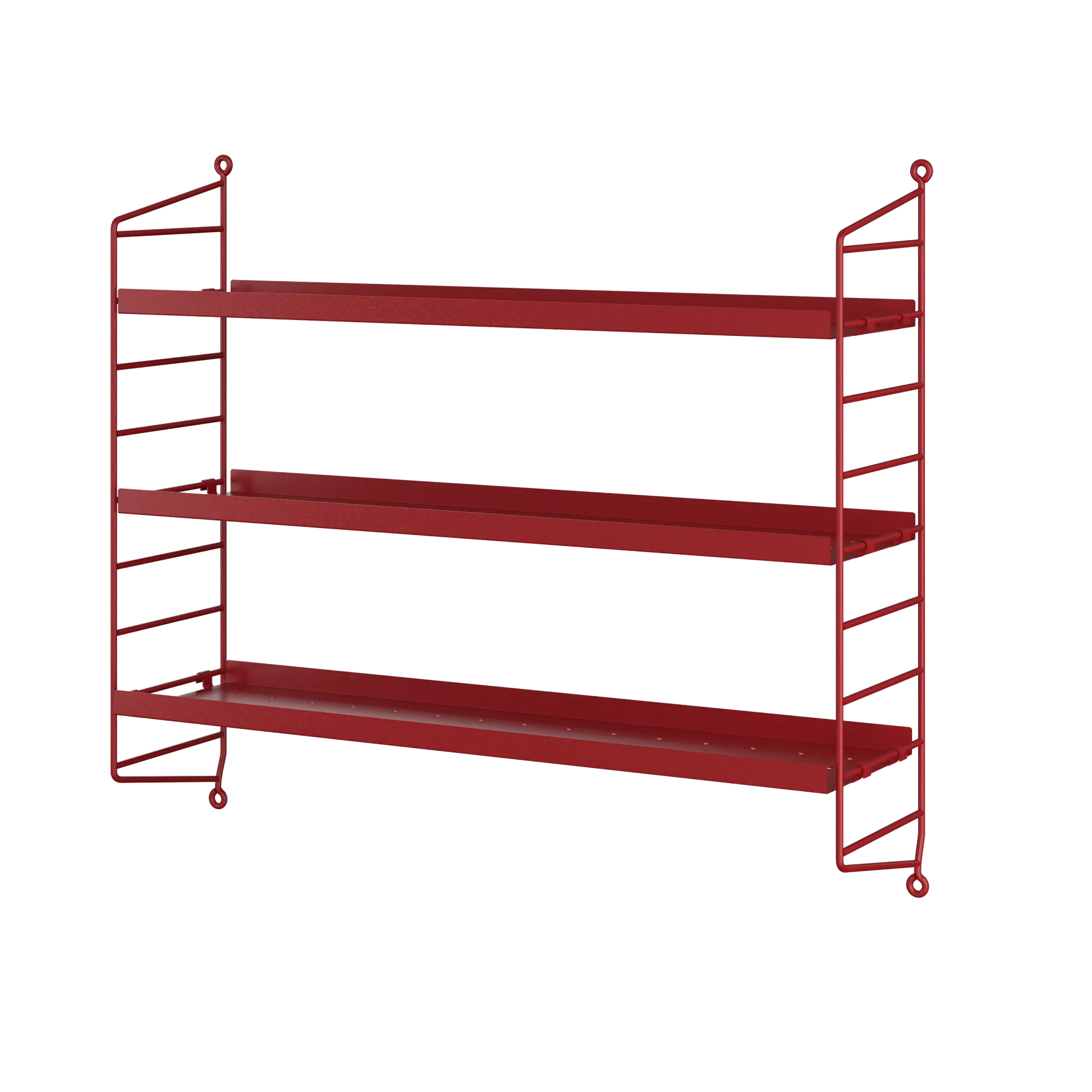
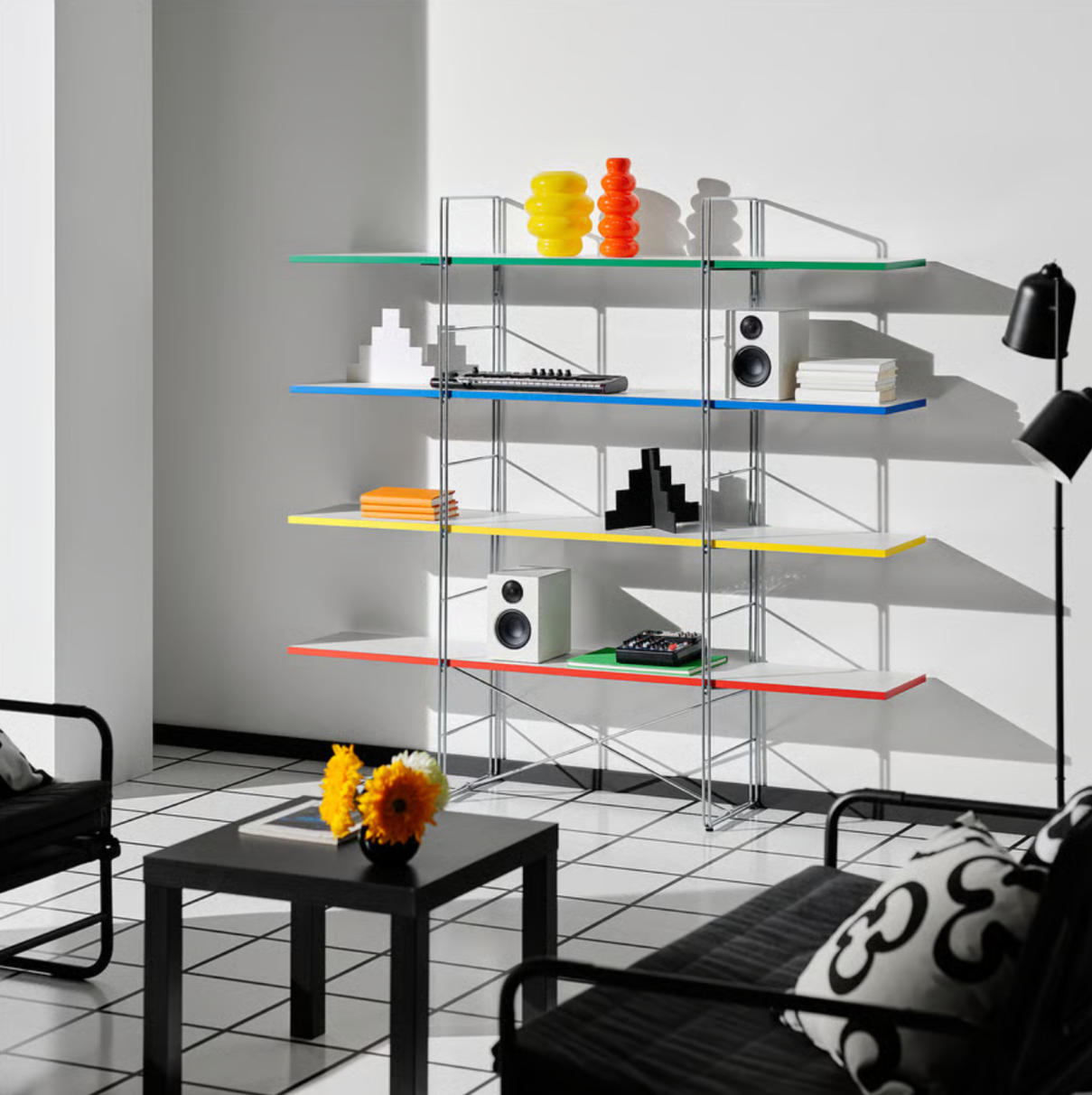
The String system is iconic and has been around since 1949. It’s a system of floating rails that screw into the wall and allow you to quickly add or subtract shelves. You can also put the rails either symmetrically or asymmetrically, allowing you to have a lot of fun with layout without taking up too much floor space. The String system costs a lot of money for not a lot of storage, but there has been a competing Scandinavian modular shelving system called the Tomado shelving system, currently produced by a company called Metalatex, made of sheet metal in either solid colors or in Piet Mondrian style primaries.
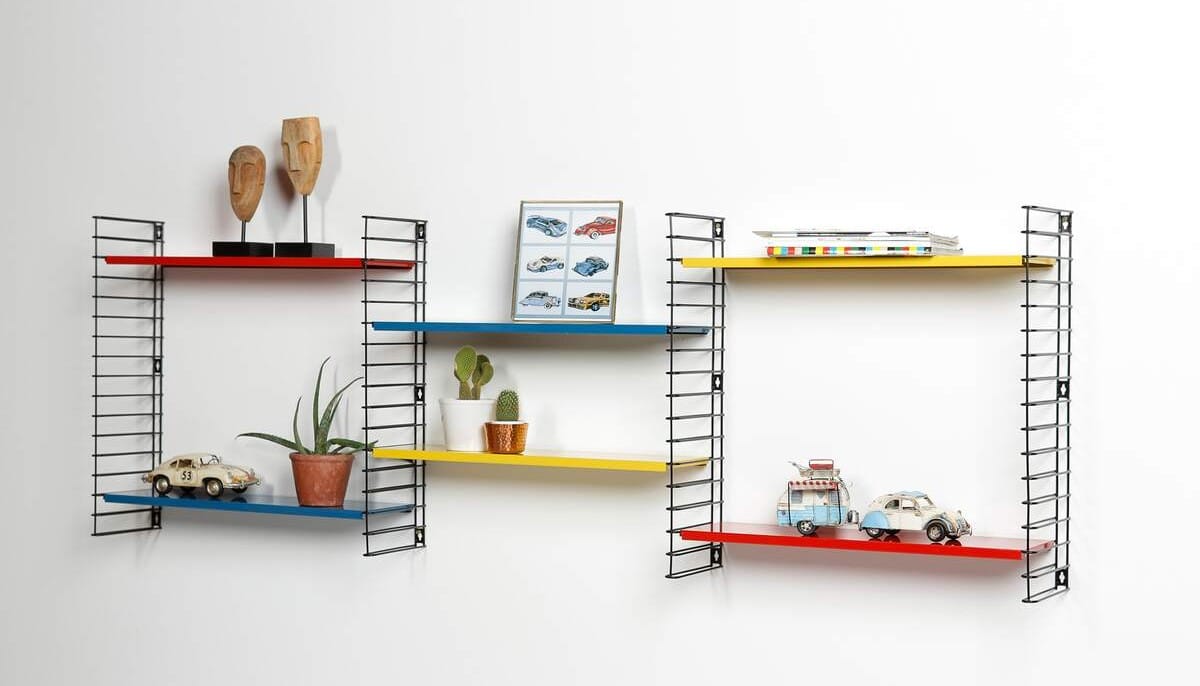
They tend to cost a fraction of the price, and for a brief moment The Container Store sold them for $60 and so I loaded up on them. That was smart because they stopped importing them for some reason, but they’re good shelves, and if you’re in Europe they still sell them online. I haven’t needed mine in a long time, because I moved into a place where I generally am not allowed to screw stuff into the walls, but I would still highly recommend them. The Container Store also has a system called the Elfa system which I have always found to be utilitarian and a little fugly. Ikea also used to make something called the SVALNÄS system but seems to have discontinued it in favor of twenty different flavors of bookcases made out of particle board.
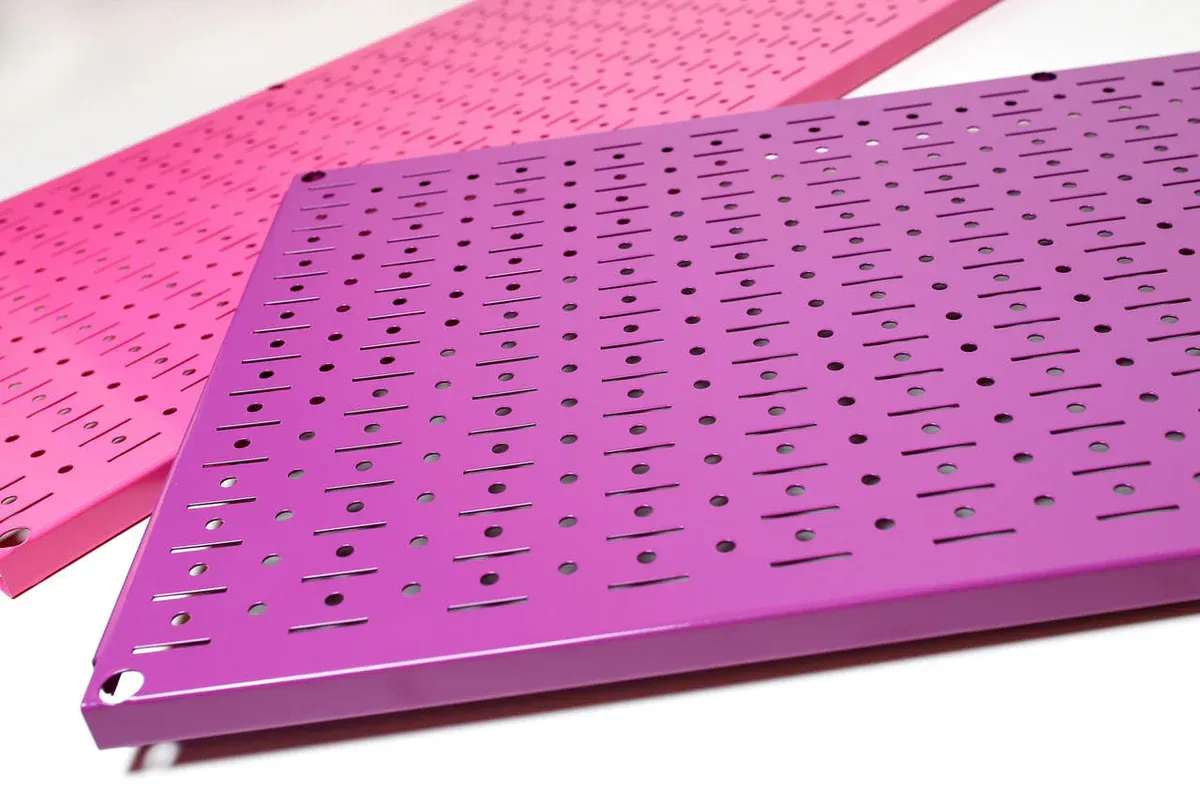
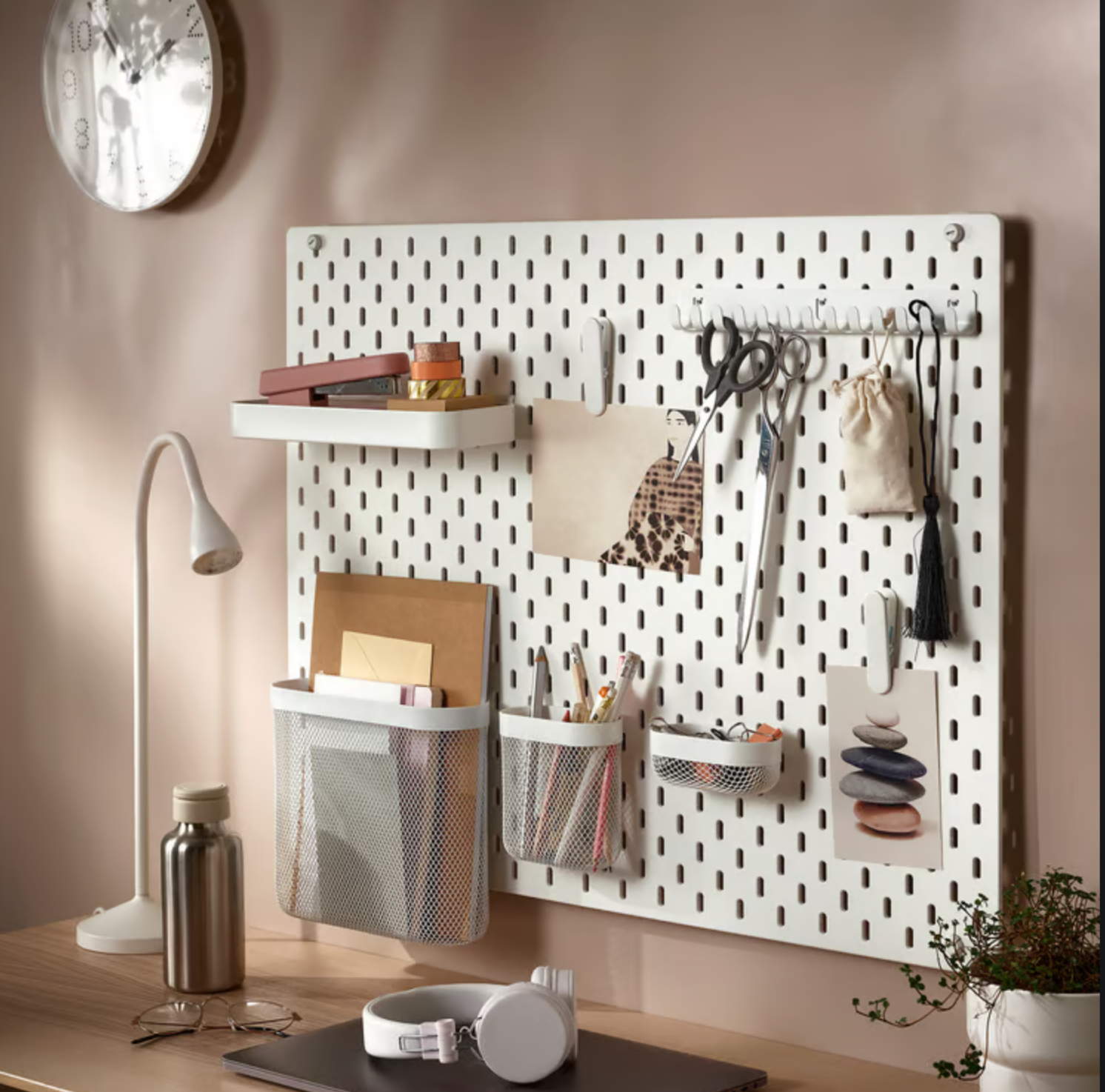
Wall Control and the SKÅDIS. The former is durably made, industrial and powder coated. The latter fits into an office and has more mods than I can count. Credit: Wall Control, Ikea.
Pegboards and also Ikea
I have resisted bringing up Ikea too much in this article because years ago I made a promise to myself not to have anything by them in my household, because I’m too old and everything I purchased from them disintegrated and/or became an object of intense loathing. Many of their products are moddable into something respectable, and much of their vintage stuff was well made including the iconic Ikea Guide bookshelf by designer Niels Mossbeck which goes for wild prices in vintage stores. Ikea revived this spiritually as the BYAKORRE not too long ago only to subsequently stop offering it in the United States for reasons that remain mysterious to me. I must also acknowledge the KALLAX because every single DJ I have ever met owned a unit to store records. Additionally, search “Ikea Old-growth Romanian Forests” if you wanna have a good time.
One place where Ikea still cooks, aside from very cheap smart bulbs and perfectly OK quality sensors, is pegboards. Pegboards are not uncommon in garages, and if you don’t mind the sight of colored metal in your kitchen or work space you could do far worse than the pegboard systems offered by the company Wall Control. They come in tons of beautiful powder-coated colors (and you know that I love powder coating) and I used to own two racks in cobalt blue that I loved. But oftentimes metal pegboards are not appropriate in the home, and so Ikea seized on the pegboard format years ago with the SKÅDIS system. It’s a system much more geared towards people in a bedroom or office setting, with brackets that let you use it either freestanding or mounted to a desk. In addition to this, countless 3D printed modules have popped up, infinitely expanding the modularity of the system.
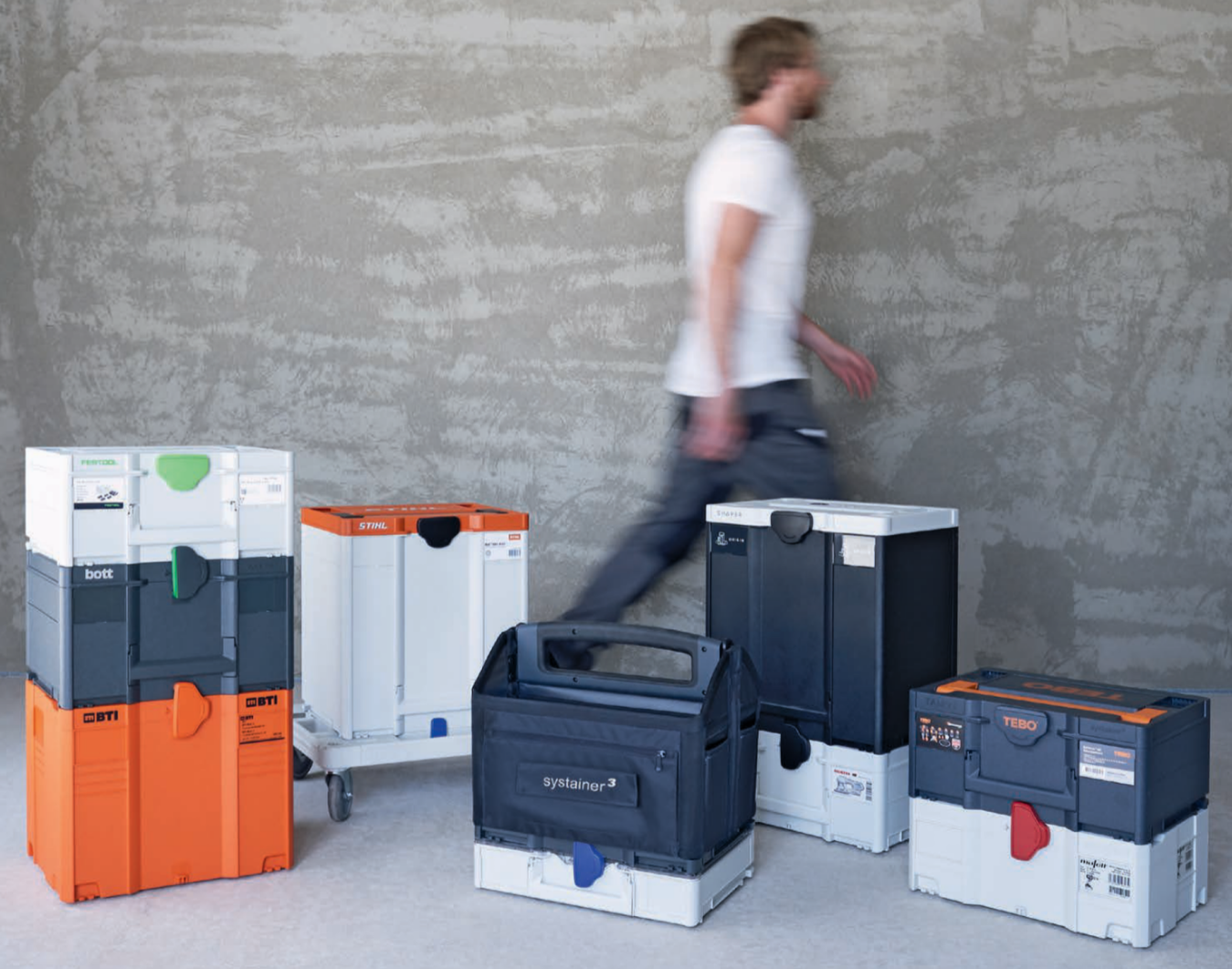
Systainers – the endgame modular toolbox
People who do woodworking are particular about their tools, and often anal about how they are stored. There are many different competing standards for tool storage (Milwaukee has the sturdy “Packout” system, for example), but if one is “the best” it’s the Systainer system. You usually see these with Festool brand tools, but other companies use the same standard under various names including the MakPac by Mikita. Systainers are on the pricier end but, unlike design bullshit for rich people, they’re durably built, deeply German and infinitely useful. Systainers have a latching design, allowing any unit to be attached to the one under it.
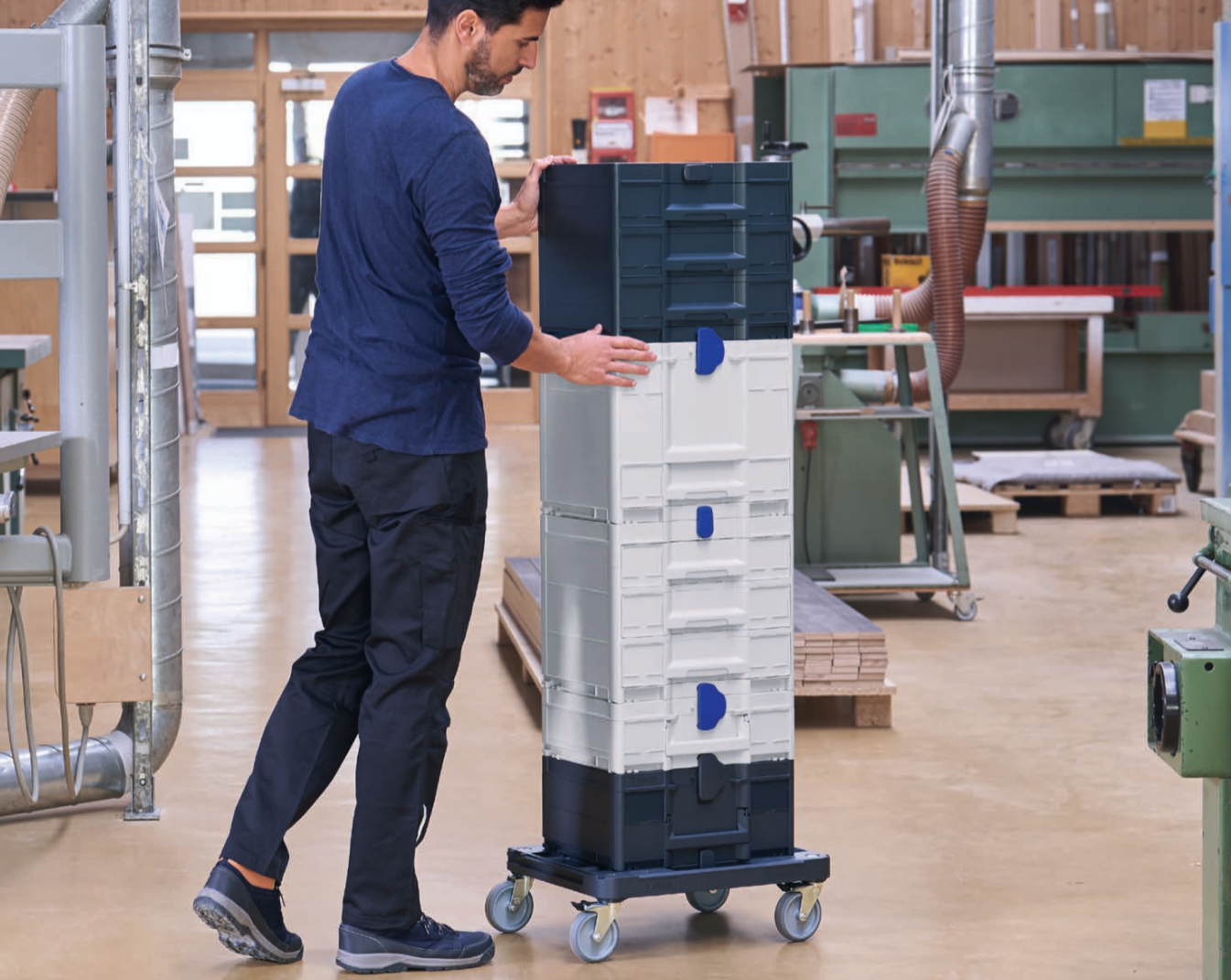
It’s a genius system that allows for entire stacks of boxes to be securely attached to each other. Systainers are easy to keep organized, with some units allowing you to custom modify the internal drawers to specific, pre-determined sizes or feature removable bins. I have Systainers in my house and most of them I got used from this guy in College Point for next to nothing. You can even get Systainers in solid colors. I have a deep navy I used as a side table near my couch because it reminded me of the Joe Colombo Boby office trolley for about half the cost, but that has since been replaced by a Lane side table I found on the street. If you have ever thought “man, the containers Sam uses in Death Stranding look cool,” you may enjoy owning several Systainers. It is also worth mentioning Sortimo, a rackable German toolbox system that Adam Savage swears by.
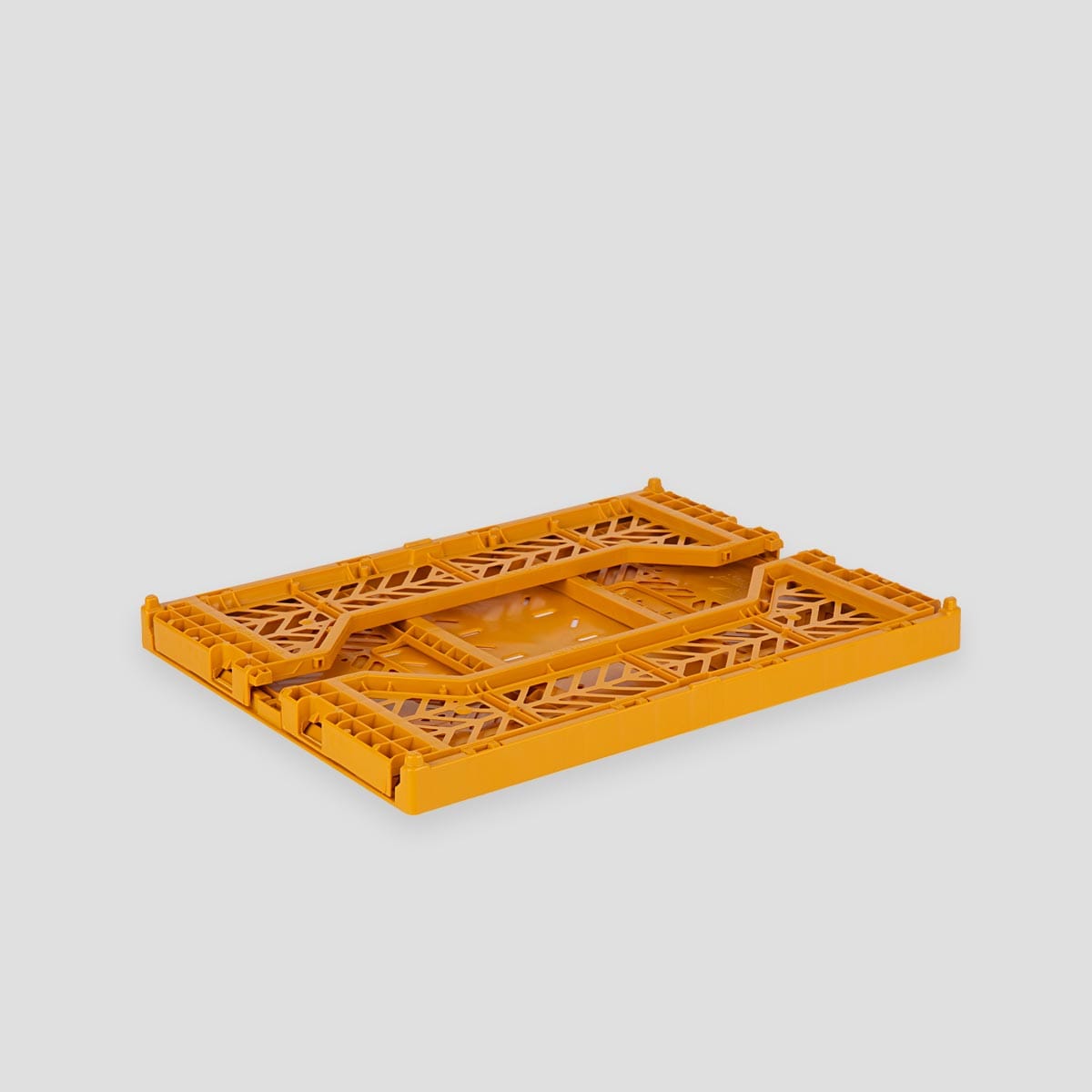
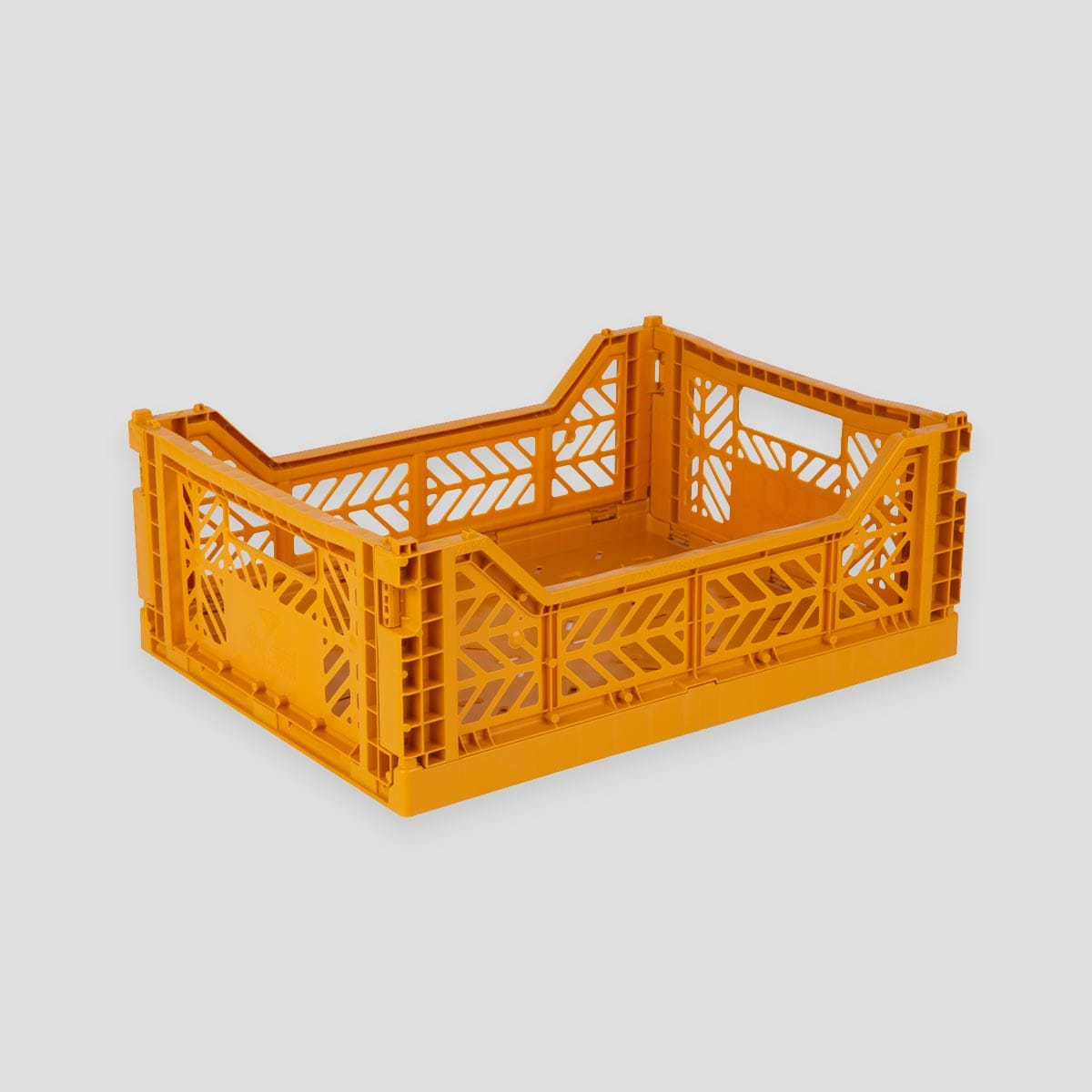
These things got huge a few years back because HAY started carrying them. Credit: Aykasa
HAY/Aykasa storage crates
Danish design brand HAY started selling these fruit crates a few years back and they blew up in popularity during the pandemic. The fruit crates stack on top of each other neatly and are easy to break down. They are a rebrand of a Turkish design from a company called Aykasa, practical crates meant for fruit storage outside recontextualized in a design setting. Though they have died down as an item of Instagram fascination, they’re collapsable and stack easily, and I have a few I still use to keep unsorted tools in. If you need a tasteful bin to store a bunch of your child’s toys that can be broken down when you don’t need them, these will do the trick.
Server racks, mini racks, micro racks, printable racks
Spend a sufficiently long time around ethernet cables and you will become accustomed to network racks and devices that fit into them. Network racks are standardized modular shelving systems for storing servers, network switches, and associated equipment. They have a defined size, codified by the EIA-310-D into specific unified size and shapes. Usually they are 19 inches wide, and broken into 1.75” rack units, abbreviated as either RU or more commonly “U.” Each number before the U typically denotes the number of rack units, so 1U is 1.75”, 2U is 3.5”, and so on.
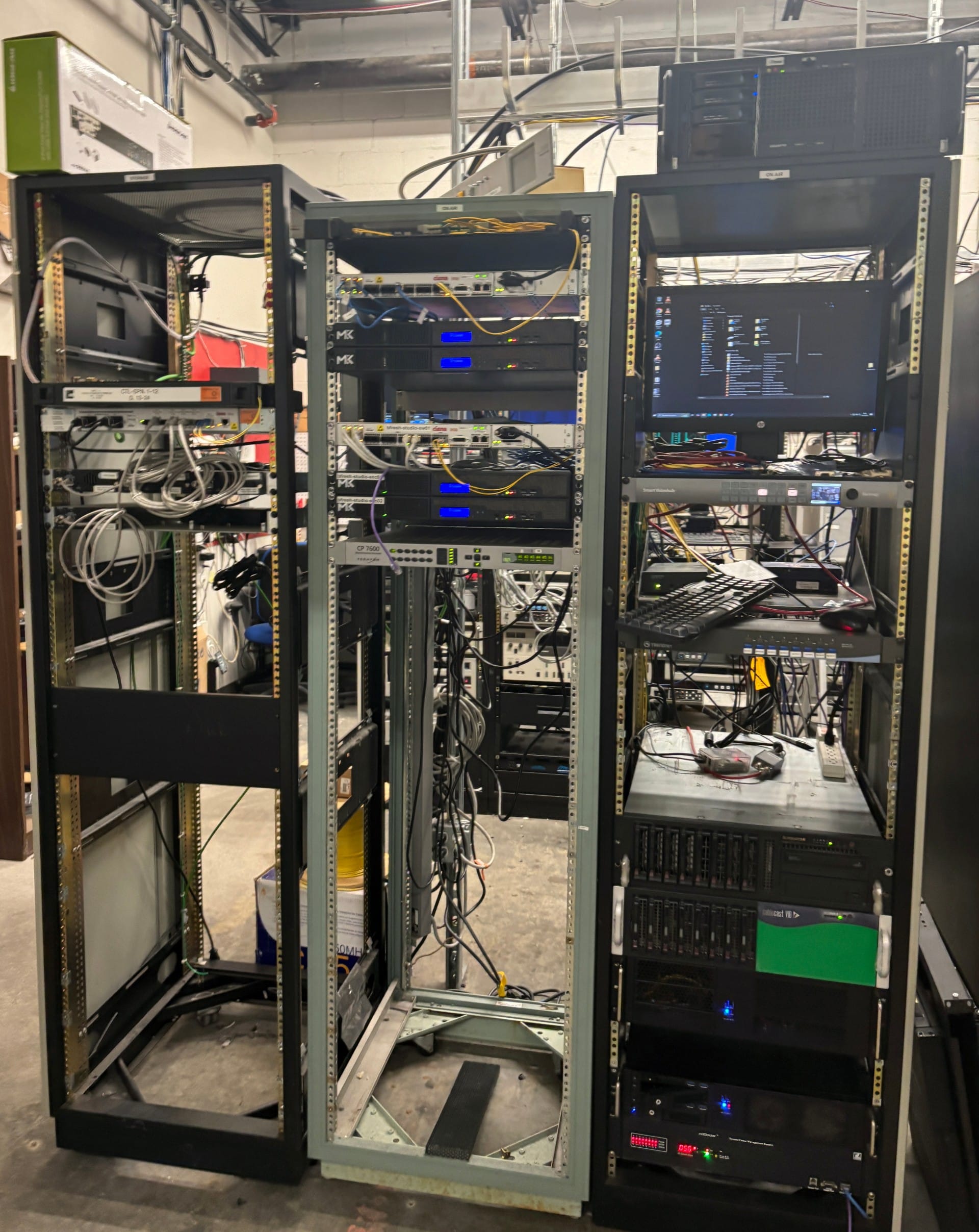
Network racks are great for storing basic networking hardware in a defined and easy to parse format. You can use them to mount power supplies, home servers, single board computers, and network switches. They also make routing that traffic easier, using mountable patch panels and what are known as ethernet keystones jacks, allowing you to map out exactly where you want your traffic to go. Keystones allow you to strip down an ethernet cable to a custom length, although dual sided and toolless keystone jacks have made the entire process much easier for normal people.
Jeff has been a proponent of the mini rack form factor.
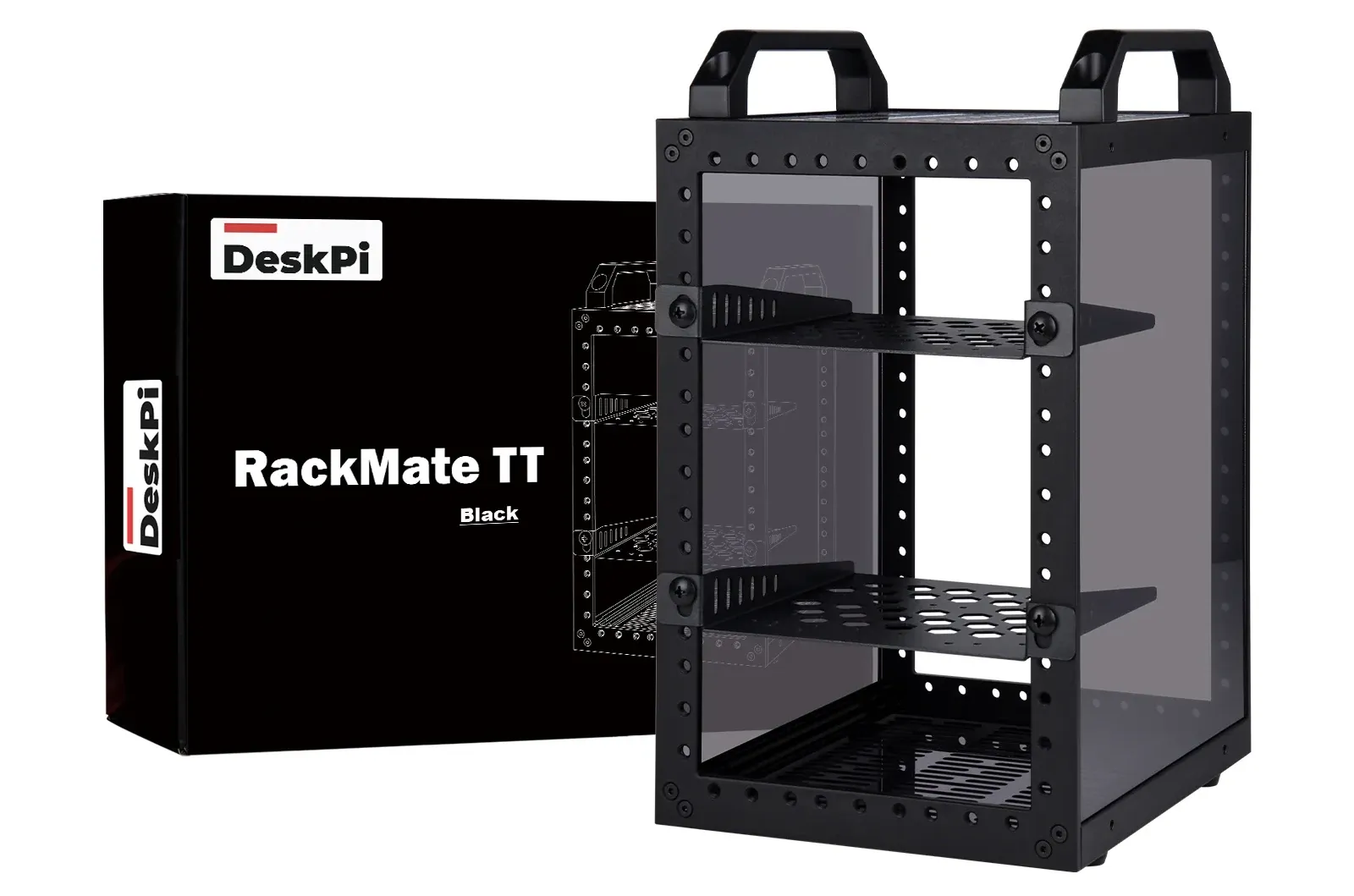
The issue with using a network rack in your home is they are huge and often ugly. Nineteen inches is a wide form factor and most normal people who don’t have a weird hobby don’t have networking sufficiently complicated to need that sort of space (although 19 inch desktop racks are cheap and plentiful). In the last few years, however, mini racks have become much more popular particularly with homelab enthusiasts and people with smaller businesses. Companies like DeskPi cater to enthusiasts with more realistic needs, like a router, some raspberry pis, and maybe a Dell Optiplex running Plex or Jellyfin. The 10 inch rack is the most accepted standard for mini racks, with YouTuber Jeff Geerling being a strong proponent of it, although even smaller rack formats also exist in even smaller formats now.
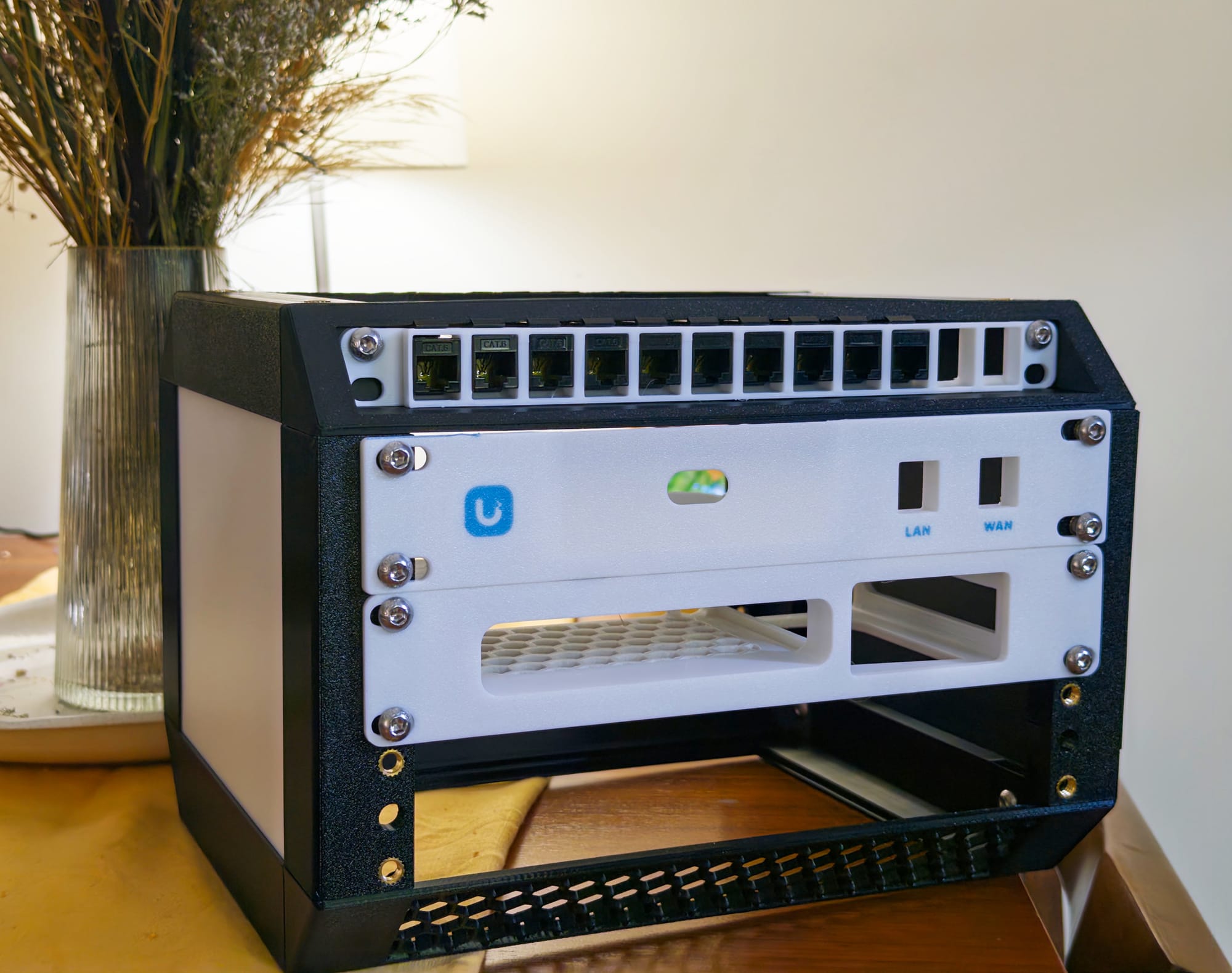
Unsurprisingly, 3D printed mini racks are also huge in the enthusiast space, as making them requires little actual hardware outside of the filament itself (usually PETG or ASA) and maybe some bolts and heat inserts, metal screw threads that can be heated and melted into plastic using a soldering iron tip. 3D printing also allows you to download or create custom sized 10” units that fit your specific hardware. I have personally built a Lab Rax unit designed by Michael Klements for my own home, which is attractive enough, although I find there is some wasted space and instability at the 45 degree angled panels it uses to connect the vertical and horizontal supports. There are also endless competing formats for mini racks themselves, including one for heavy duty components called the KWS Rack by Ilan Kushnir, that not only allows for quickly expanding the rack by printing additional parts, but also has space for magnets for additional storage.
There's countless Mini Rack form factors you can build at this point if you print.
In addition to this there’s another option beloved by racing sim enthusiasts: Aluminum. Extruded aluminum is fairly cheap and sturdy enough for many applications, although you do have to make sure you get extrusions sturdy enough to support the weight. Each extrusion has threads in it which allow you to easily place threaded nuts (T-Nuts) which can then be used to fasten the extrusions together with brackets. Sites like 8020.net, Misumi and Tnutz are vendors for this, although it’s not hard to find someone who will cut aluminum to length for you. Multiple different people have made mini racks with aluminum and they are weirdly attractive.
Guess who started 3D printing? Gridfinity, openGrid, and the infinite possibility of open standards
It is with a heavy heart that I must admit that I caved and finally got a 3D printer. Although becoming a “3D printer guy” has a lot of baggage spiritually, I am a person who does a lot of hardware hacking and so it was bound to happen. 3D printers are fantastic if you are the kind of person with a bone deep need for storage that is specifically tailored to the exact shape of your tools. Since 3D printing blew up, multiple standards have arisen, each with slightly different rationales.
The video that started it all in 2022.
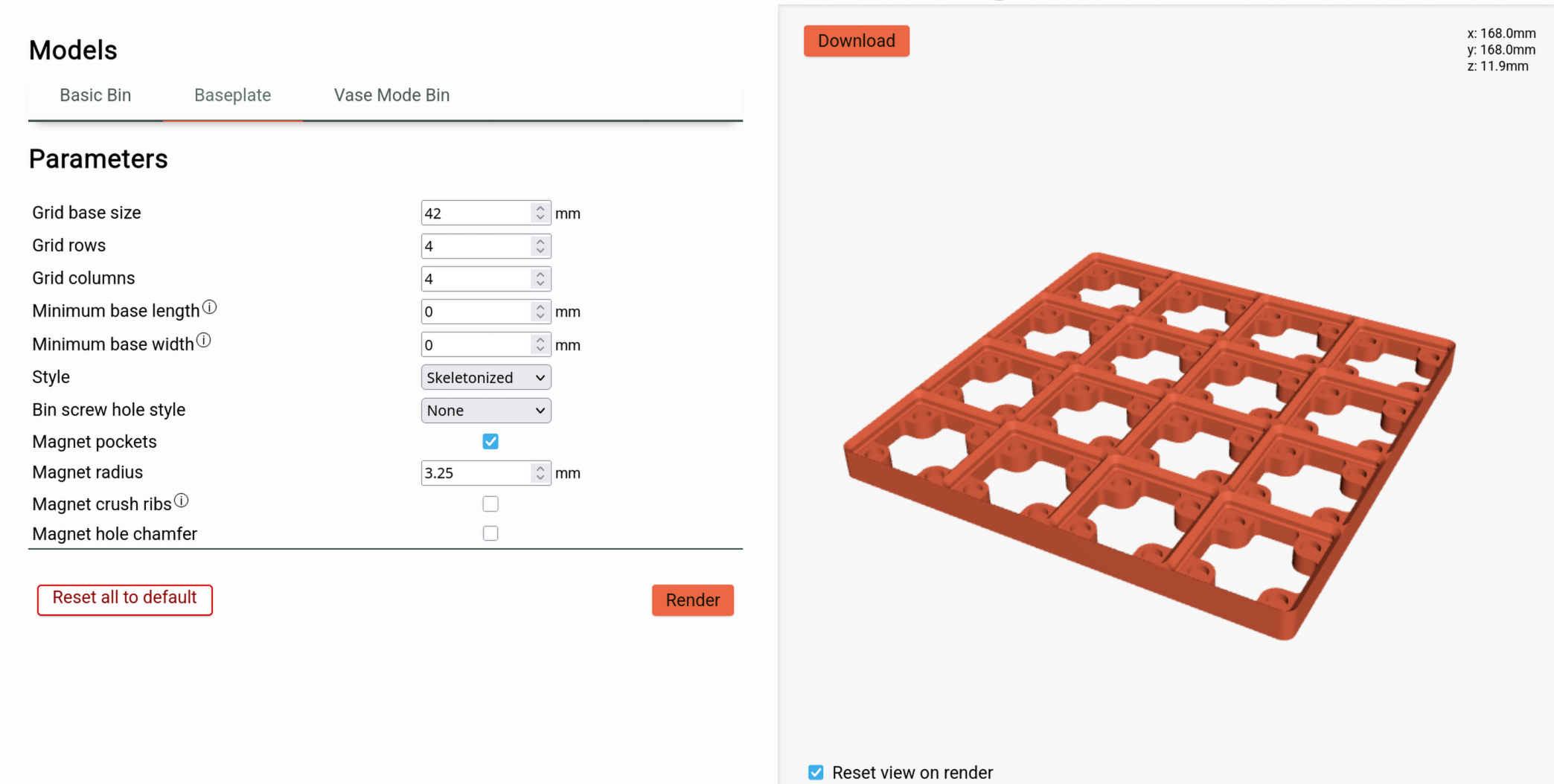
Gridfinity is the most popular standard by far. It is a standardized grid system (often 42x42x7mm, although generators exist for different grid sizes) that allows you to place custom printed bins without them moving around. You can choose to make these bins with or without neodymium magnets, which are nice to have but not strictly required for most storage. There’s also openGrid and MultiBuild, which are useful if you want to mount things on your wall like a pegboard or under your desk. In addition to this there’s a standard specifically designed for under desk cable management called underware by a Youtuber named Hands on Katie, who also designed another system called NeoGrid for storing larger items. There's even entire Gridfinity bins that work in the aforementioned SKÅDIS system.
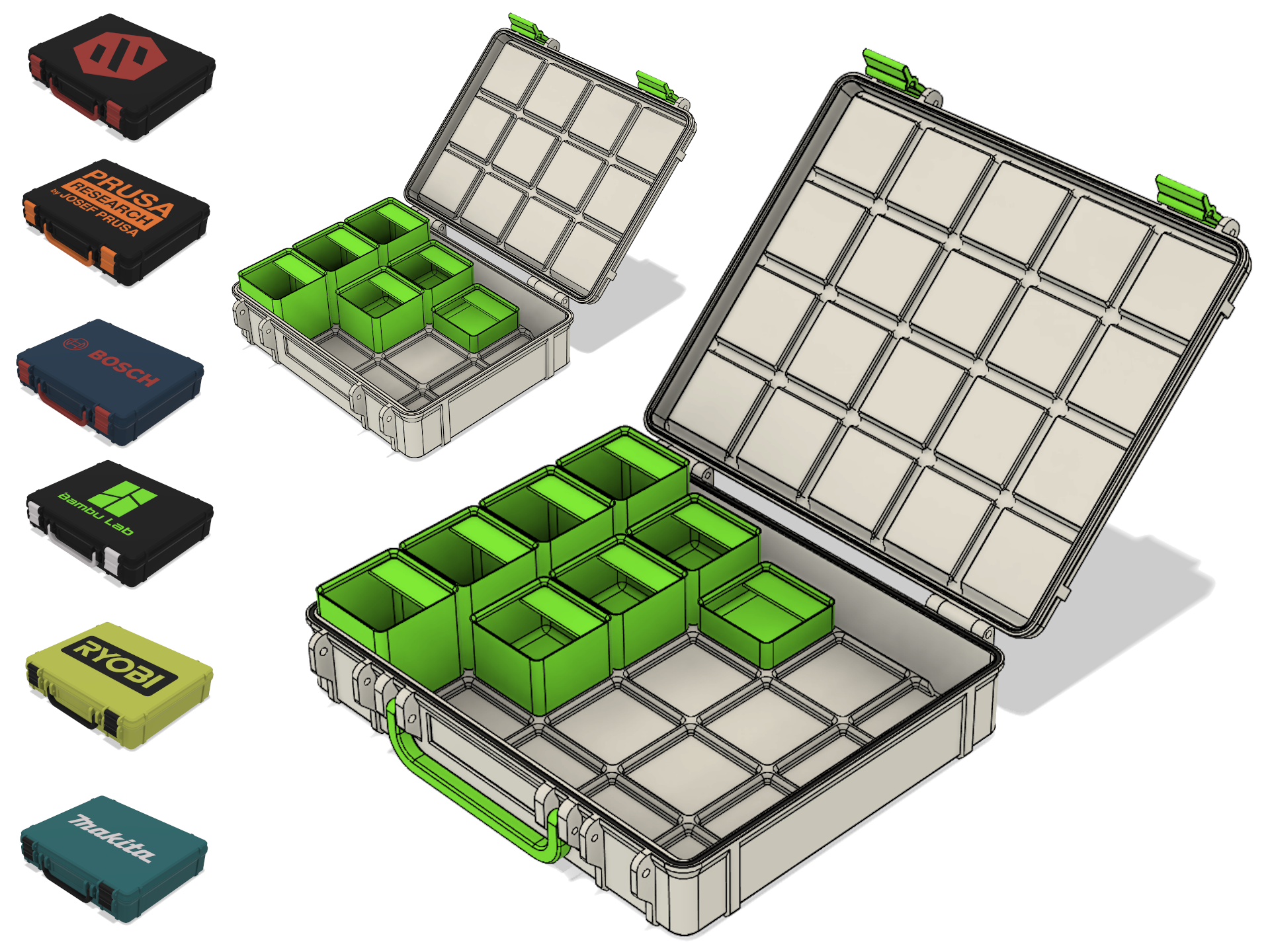
The majority of these systems are free and sharable, often remixed and iterated on, and as a result countless people have designed hyper-specific storage solutions for everything in their lives. There’s a few fantastic Gridfinity generators, including a few more recent ones that allow you to discern the rough shape of an object and generate a Gridfinity block with a Junji Itoh-style hole in it. One person invented a nice crate system specifically around Gridfinity, and another recently went so far as to create an interlocking crate system, functionally recreating Systainers in an entirely new context (although I would not make one in PLA and store it in a hot car).
openGrid is an open pegboard system you can print at home.
The primary space where I needed Gridfinity was my bathroom vanity, which is a series of extremely narrow shelves full of objects that feel designed to fall into a toilet. It is a precarious menagerie of round pill bottles and tubes with odd centers of gravity. Gridfinity solves these issues by giving those individual items a place to live, either with bins or specific cutouts. Gridfinity bins can be made stackable, so items I used infrequently, like razors and contact lenses, have a place to live while I can stack other items on top of those items. Add to the mix a label maker and you’re gold (Brother’s entry-level handheld printer the PTN25BT has both a keyboard and Bluetooth, making it very competitive.)

After printing a few Gridfinity bins I have become hooked. To quote a friend online, Gridfinity turns real life into a video game inventory, your various items in drawers having fixed dimensions like Resident Evil guns. There’s Gridfinity bins for everything, from specific tools to silverware drawers, although it’s worth pointing out that FDM-printed items are not technically considered food safe although there does not appear to be a clear consensus on if storing your flatware in there is more toxic than a piece of injection molded plastic. If you are prone to worrying about that sort of thing I’d stick to using it to hold screwdrivers. I personally do not intend on filling my entire home with a bunch of 3D printed objects because I find the way it looks to be somewhat tacky, but for functional storage it’s a godsend.
Modular everything
I am a person at my core who needs to know exactly where everything in my house is, both psychologically and functionally, to get things done. There are ways in which this kind of thing can be overdone, where spending time on creating a system takes up more oxygen than the time needed to find those tools. But often it is worth setting up your space properly, to label drawers and bins, to dedicate and categorize. There is a serene beauty in modular systems, in a storage solution that can not only collapse for easy transport but either contract or grow with you as your life and space changes. These systems have served me, I hope they will serve you as well.


