

In the process of reviewing the Steam Frame, I replayed Half-Life: Alyx from start to finish. Frankly, I would have replayed it even if I’d reviewed a different headset, because it’s a nearly perfect game to me, so singular in its execution and scale. But I felt a bit pensive playing it this time, because I’m not sure they’ll ever make anything like it ever again.
If you have not played Alyx in six or seven years, or even ever, that’s understandable. Despite the game selling well, VR’s big moment was years ago. It came and went as the technology bifurcated between multiple form factors, with Meta poisoning a lot of good will towards the medium by the sheer force of Zuckerberg being the most annoying billionaire on earth. Half-Life: Alyx launched in 2020 after the Index, and despite being a prequel, I consider it a full game on par with any in the Half-life series in terms of scope, world building, and importance.
Alyx technically takes place between Half-Life & Half-Life 2, although the strict chronology has “complications” that extend into the future. In it you play Alyx Vance, Gordon’s ally throughout much of Half-Life 2 and its episodes. Alyx is attempting to rescue her father and find a secret super weapon that The Combine have in their possession. Half Life: Alyx’s ending actually has direct and severe consequences on what would have happened after Half-Life 2: Episode 2, and so any complete understanding of the series requires playing it, or at least knowing what happens at its conclusion.
A lot of good context can be gleaned from the two anniversary documentaries Valve put out.
I’ve seen people lament Alyx being “trapped” on VR as a tragedy, but I think this is only a half-truth. I like to conceptualize much of what Valve does, from the Half-Life games to hardware, as R&D projects: massive investments that serve to explore what’s possible with technology and narrative. These projects end up having gargantuan and often profitable consequences even outside of Valve. Half-Life and its sequels explored what was possible not just within gameplay space but also interactive storytelling. Team Fortress 2 and the software used to market it, Source Filmmaker, had massive consequences on animation; for example, it had bizarre consequences on computer-generated pornography before Blender got good, and the “Meet The” series is clearly the blueprint for how Overwatch was marketed early on. Counter-Strike and DotA moved the needle forward on how multiplayer games and their markets work (in both good and bad ways). Hardware like the Valve Index, the Steam Controller, Steam Deck, Steam Machine and Steam Frame each serve to push forward a specific set of goals outside of the direct utility of each device. At times, Valve feels less like a game company and more like NASA.
Conceptualized in those terms, Alyx does not work outside of VR because it is a game made for the sole purpose of figuring out the contours of what is possible in VR space. It is a VR moonshot, a AAA game meant to troubleshoot how truly interactive space works. How do you solve movement and traversal? What is unique about aiming or loading a gun in virtual space? How do players deal with the scope of that space, and what is reasonable to expect of them?

These problems and their solutions are much more bespoke when you listen to Alyx’s developer commentary, where the developers talk about the unique challenges that VR space presents. For example, the flashlight that Alyx gets is mounted on her glove and turns on and off automatically in response to darkness. This solves the issue of having to have an additional item held in the player’s hand that they would have to fish around for, a particularly problematic issue when you consider that guns in the game are loaded manually with the offhand by reaching into a virtual backpack to pull out clips or shells. What’s more, Alyx can hold guns with two hands, which points the flashlight in the direction the player is aiming. The developers cheat this a bit by giving the flashlight itself an articulating ball joint that twists to make sure the light is pointing forward no matter what gun is being held. These are the kinds of considerations that you simply don’t have to make in a standard FPS.
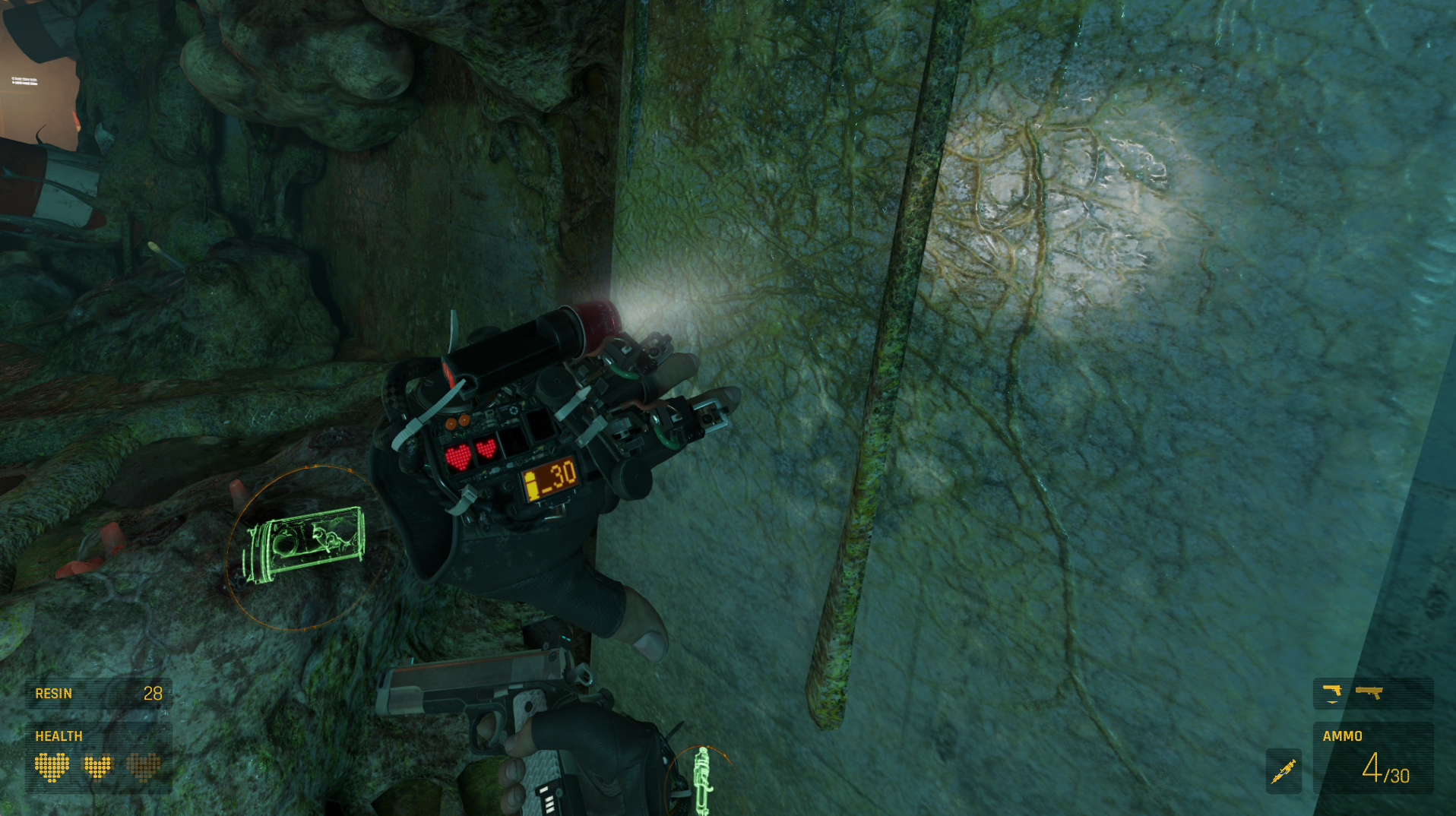
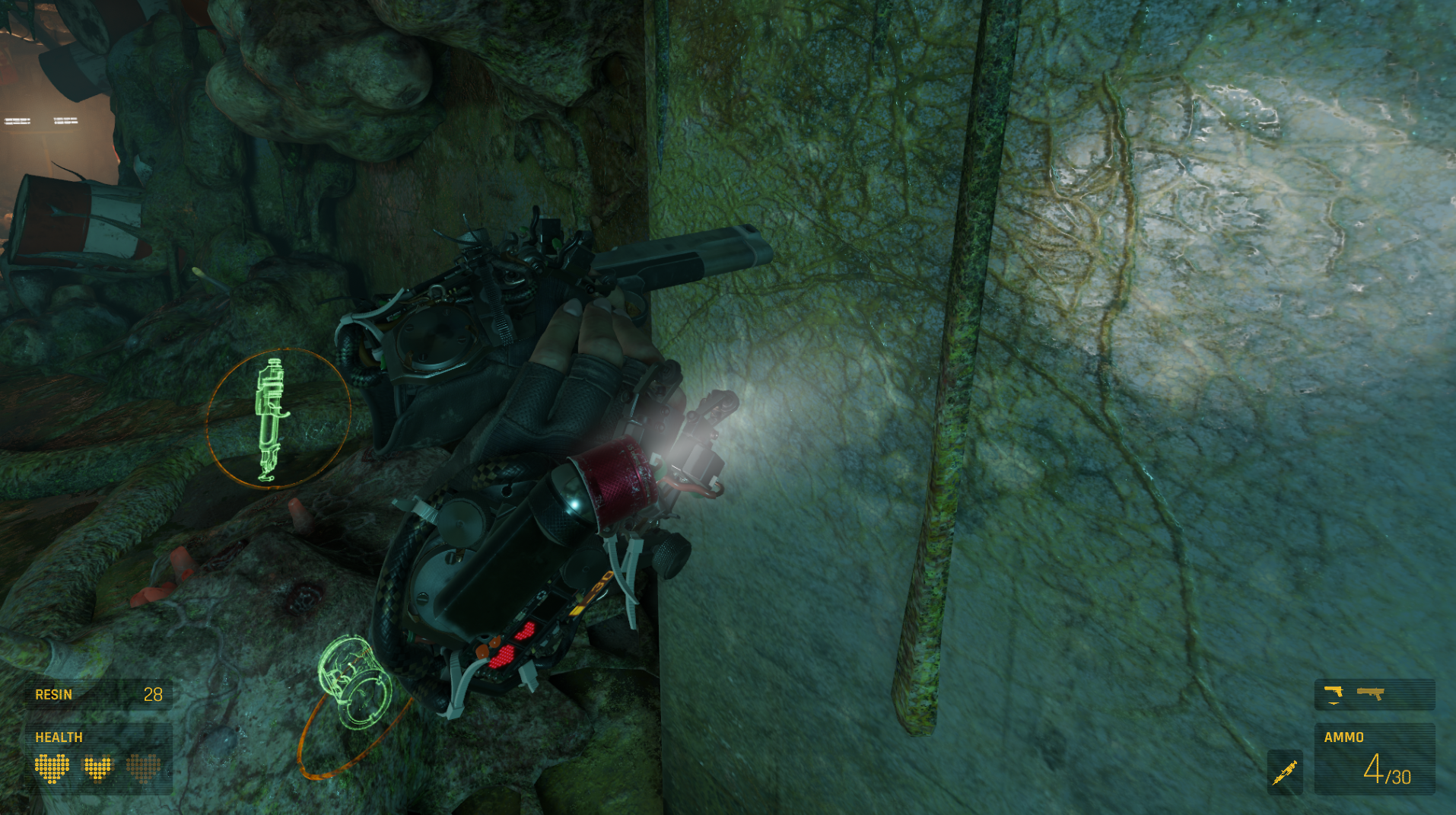
The game cheats the flashlight by putting it on a ball joint that moves when the player points a gun. This is invisible to the player unless you look directly at it.
The question of how to deal with objects in 3D space extends to one of the hallmark tools of Half Life: Alyx, the “Russells” or Gravity Gloves. The gloves are an iteration on the Gravity Gun from Half-Life 2, although their importance takes on debatably greater significance in Alyx. Using the Gravity Gloves is as simple as reaching towards an object, grasping at it, flicking it towards you, and catching it like an apple or a baseball. This becomes the primary action used for scavenging, a task you do in basically every room, as managing ammo and searching for Resin (the primary upgrade material for weapons) is a huge part of Alyx’s gameplay loop.q
In practice, the Gravity Gloves are the closest a game has ever felt to giving you the sensation of having The Force. Dumping a spent clip from your handgun, yanking a fresh mag of bullets from a shelf, slamming it into the gun and then cocking your pistol before unloading into a ravenous headcrab feels thrilling in a way that few games can. It is so natural when you get the hang of it that if you play Alyx for extended periods of time you start to forget that you can’t just do that in real life. You’ll walk into a store and reach for a soda, and your hand will hesitate for a fraction of a second as your nervous system unlearns an unreal and imagined impulse.

When I brought this up in chat, my colleague Luke said he did not like Alyx when he tried it, calling it the Disney ride version of Half-Life. He didn’t like the movement (OK fair, although I think the “continuous movement” setting solves a lot of problems) and thought the shooting was bad. I’ll agree that it is true the game holds your hand a lot more than its predecessors, that there’s a bit more banter and that the game is quite linear, but I think those are all for good reasons. The instructions you get from your companion Russell, played by Flight of the Concords’ Rhys Darby, serve to teach you the best ways to navigate VR space and mechanics. You need a harder hand and a narrowed scope sometimes when you’re dealing with a way of navigating that many people have never operated in. Many players who just got their hands on the game in 2020 were like newborn babies despite potentially having decades of experience with the series, and so you can’t let them go off and explore the same way you do in other games in the context of an experience this new.
I think it’s also hard to ignore the influence of Portal and Portal 2, both canonically Half-Life games, on how Alyx was written and physically constructed. Each Half-Life game is scoped for a different set of challenges and are quite different from each other stylistically, in part because they exist in such different contexts. The drab, low-poly military industrial complex look of the original Half-Life, with textures scanned from a local Bellevue Costco and goofball aliens, is closer in feel to Duke Nukem. It would give way to the biomechanically-conquered, Eastern Bloc-meets-Lebbeus Woods textures of City 17.
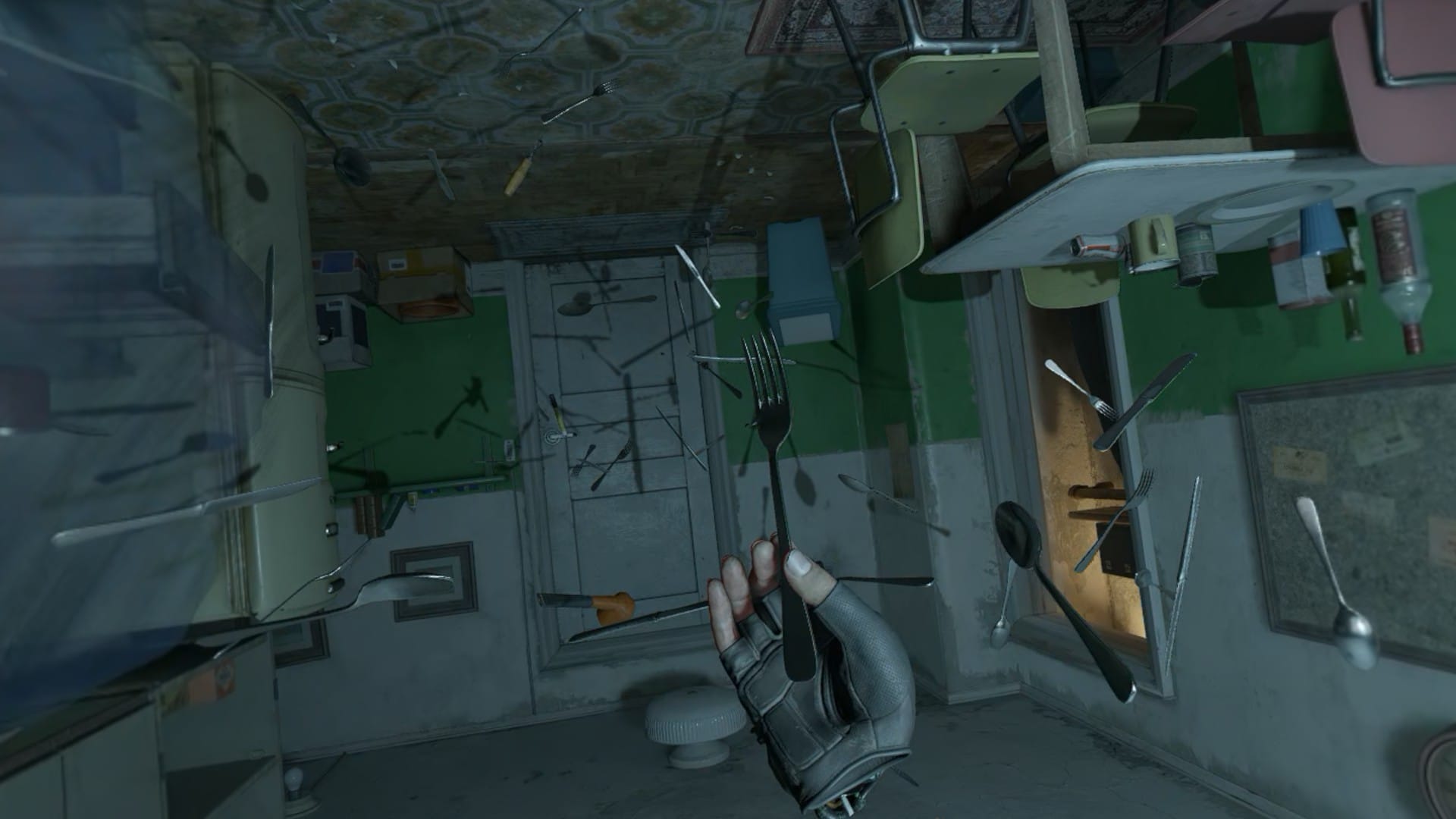
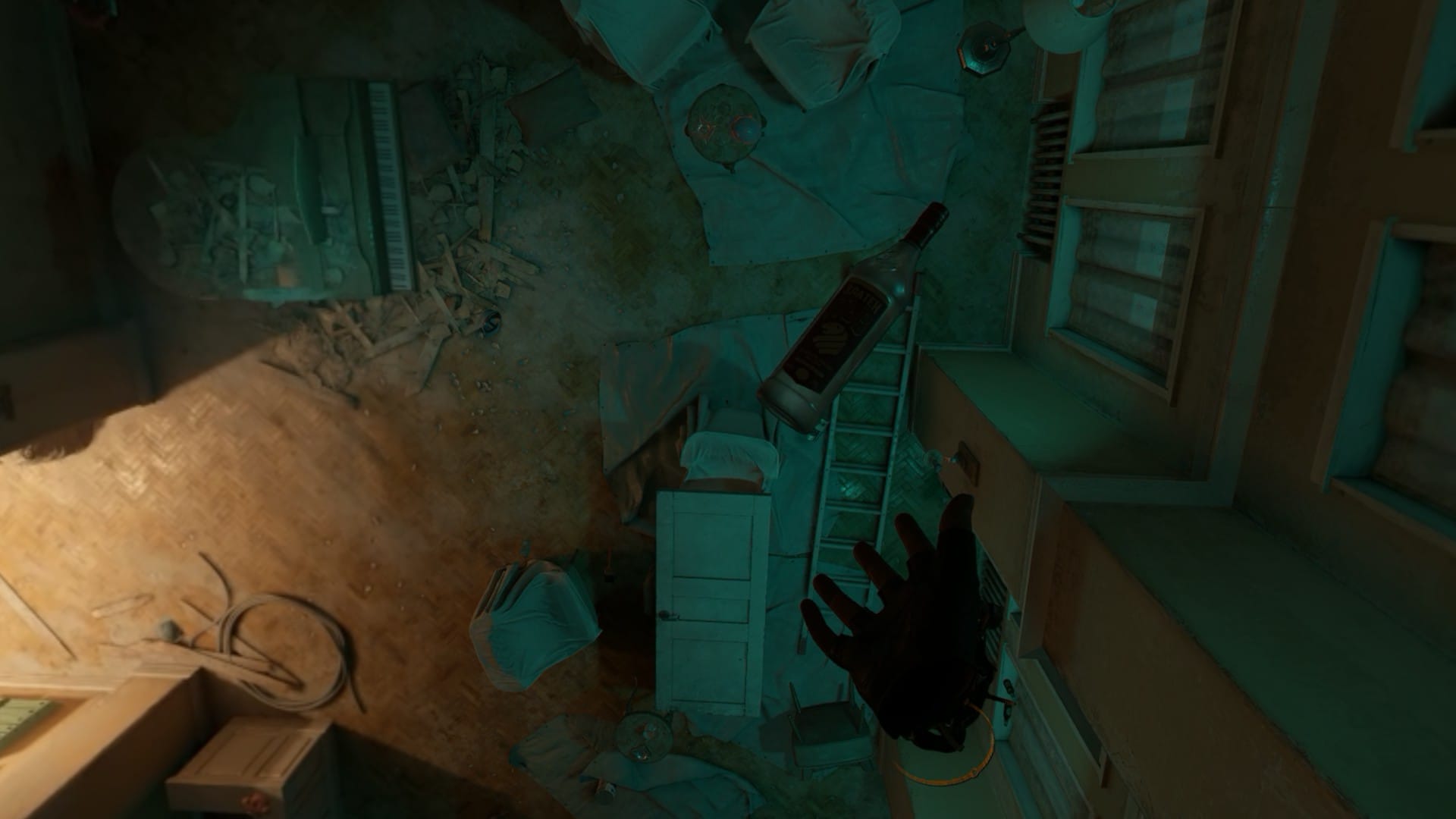
A surreal space in the endgame that leaves you wanting more. Gravity moves in unreal ways.
Alyx has a lighter tone at times, sure, but it also has moments that terrify and fill you with wonder, including an impossible space near the endgame where you stand in an extra-dimensional kitchen surrounded by floating silverware that moves and reacts to your touch. The many eyes of a brain-damaged Vortigaunt take on terrifying dimensions and intimacy, even as he goofily makes headcrab gumbo. He is not simply being rendered; the Vortigaunt is present in multi-dimensional space and time.
Feels like they just got a real Vortigaunt for this one. He's a real guy that's in the game.
There are points that I do think the game needs improvement. The initial holographic puzzles you use to unlock upgrade machines and open lockers are thrilling when you first get them but lack variability near the endgame. You are mostly interacting with three of them: one where you have to thread points of light connected by strings through dots in three dimensional space, another where you have to remember and connect colored glyphs on a sphere that can be rotated with your offhand, and a third where you have to very carefully navigate the surface of a rotatable sphere with your multi-tool. Doing these initially feels like every fantasy of interacting with a hologram come to life, but as the game progresses doing that third one specifically simply to upgrade your gun feels tedious and finicky, and I wish there was at least more novelty and variability instead of simply scaling the same puzzles with difficulty. Valve does add another light puzzle later in the game, one specifically for defusing tripmines where you have to guide the path of a line through a series of rings. This puzzle is easy and fast but no less riveting because of the context of possibly blowing up if you move slightly incorrectly.
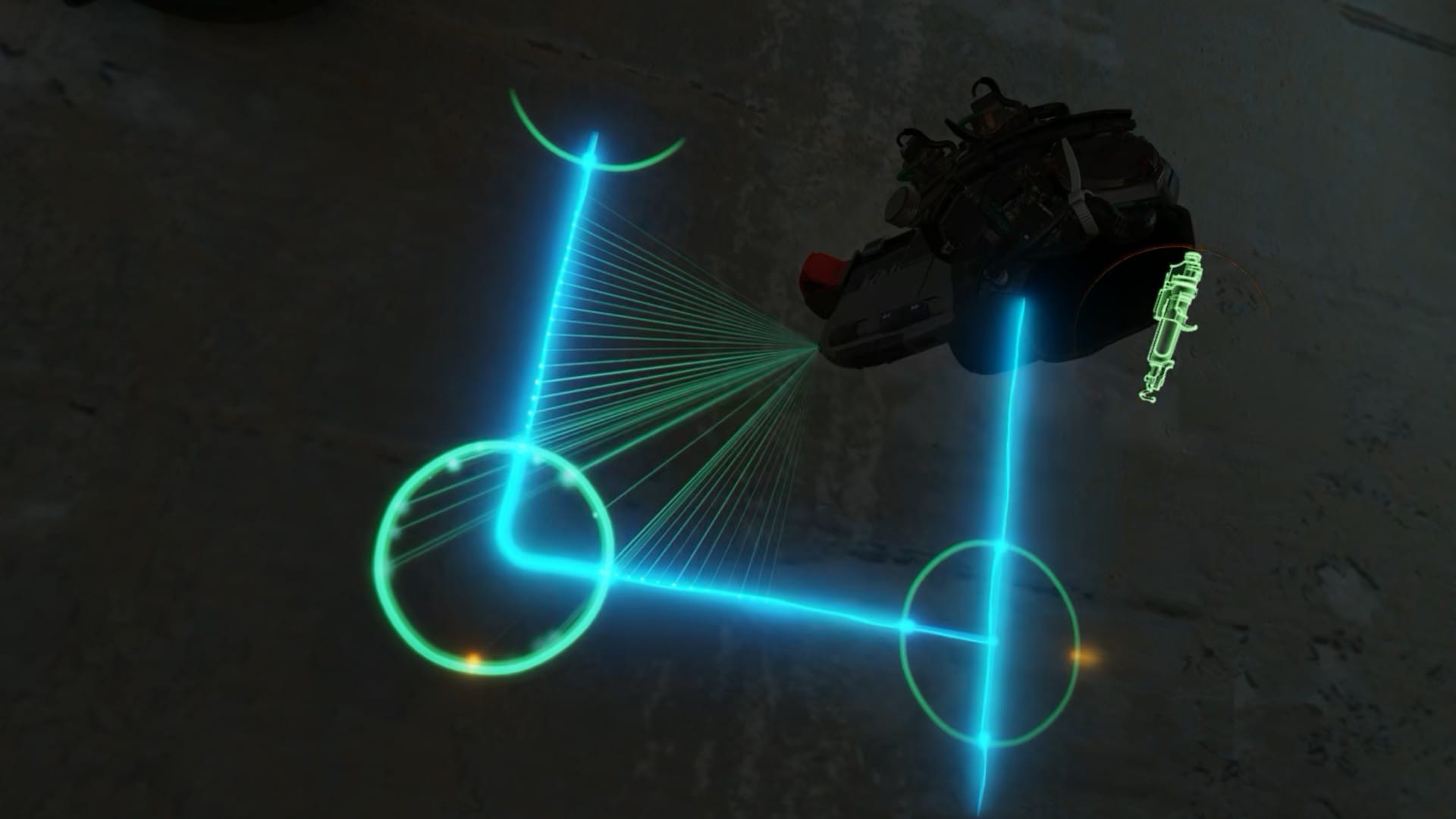
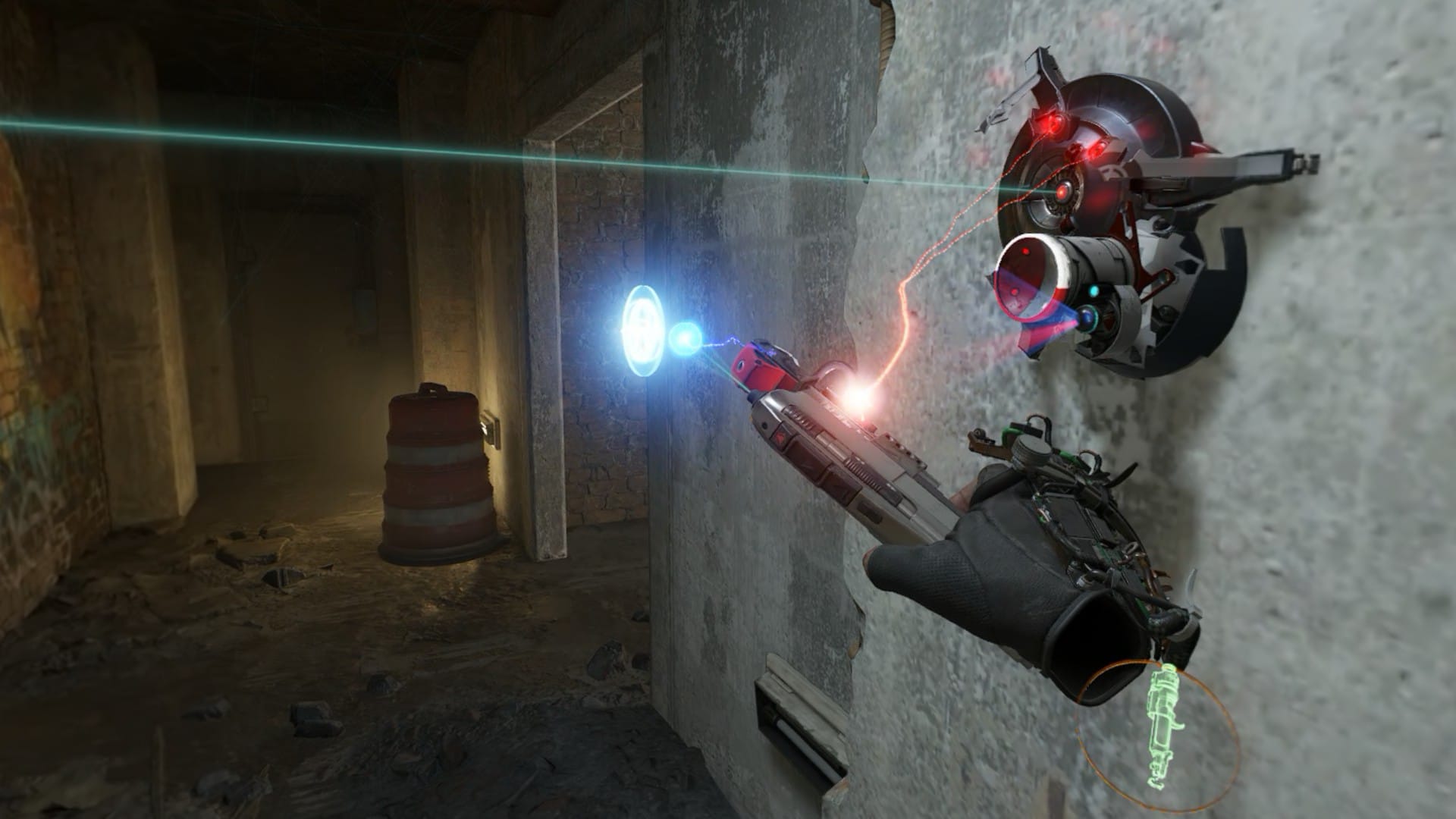
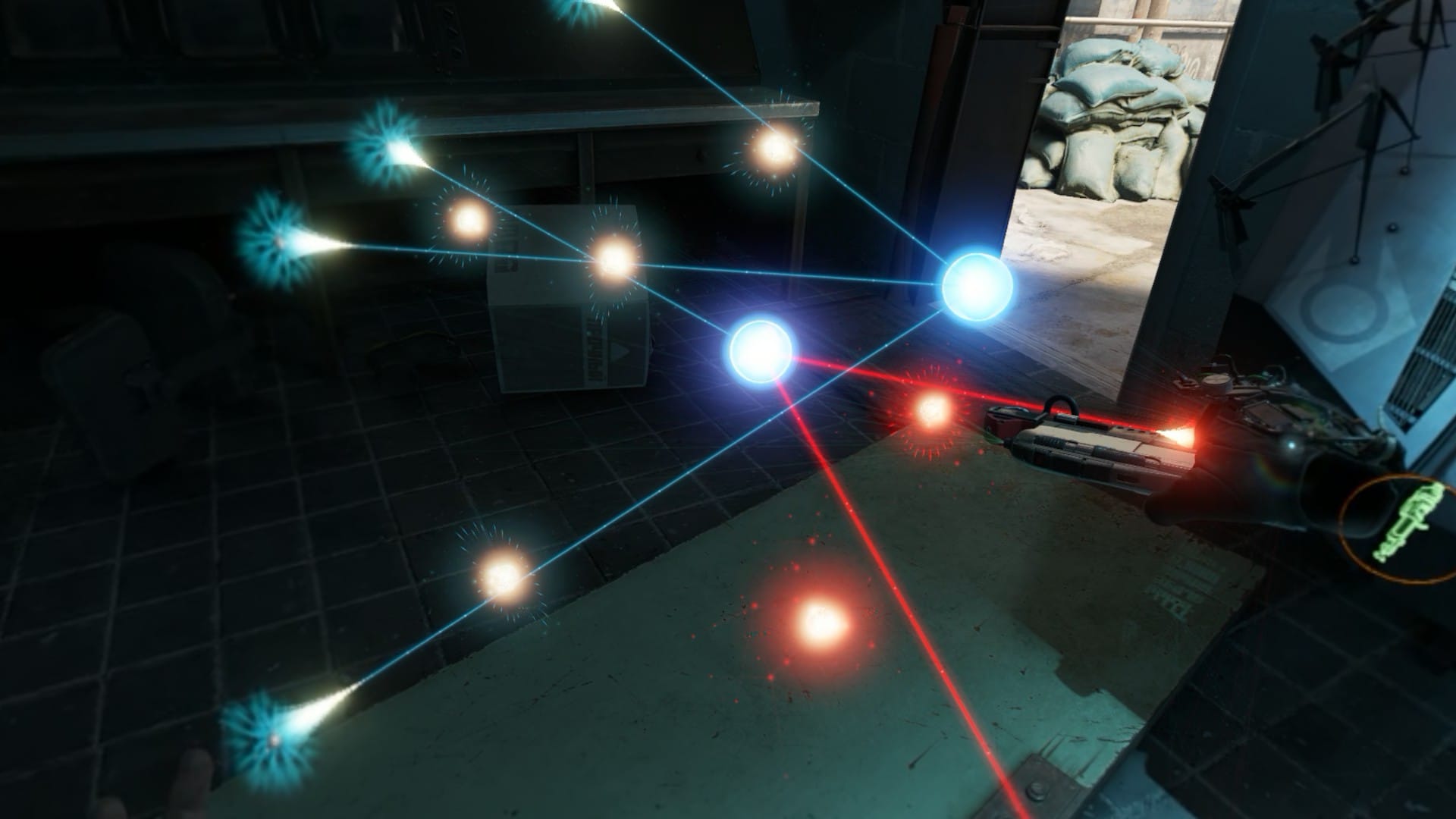
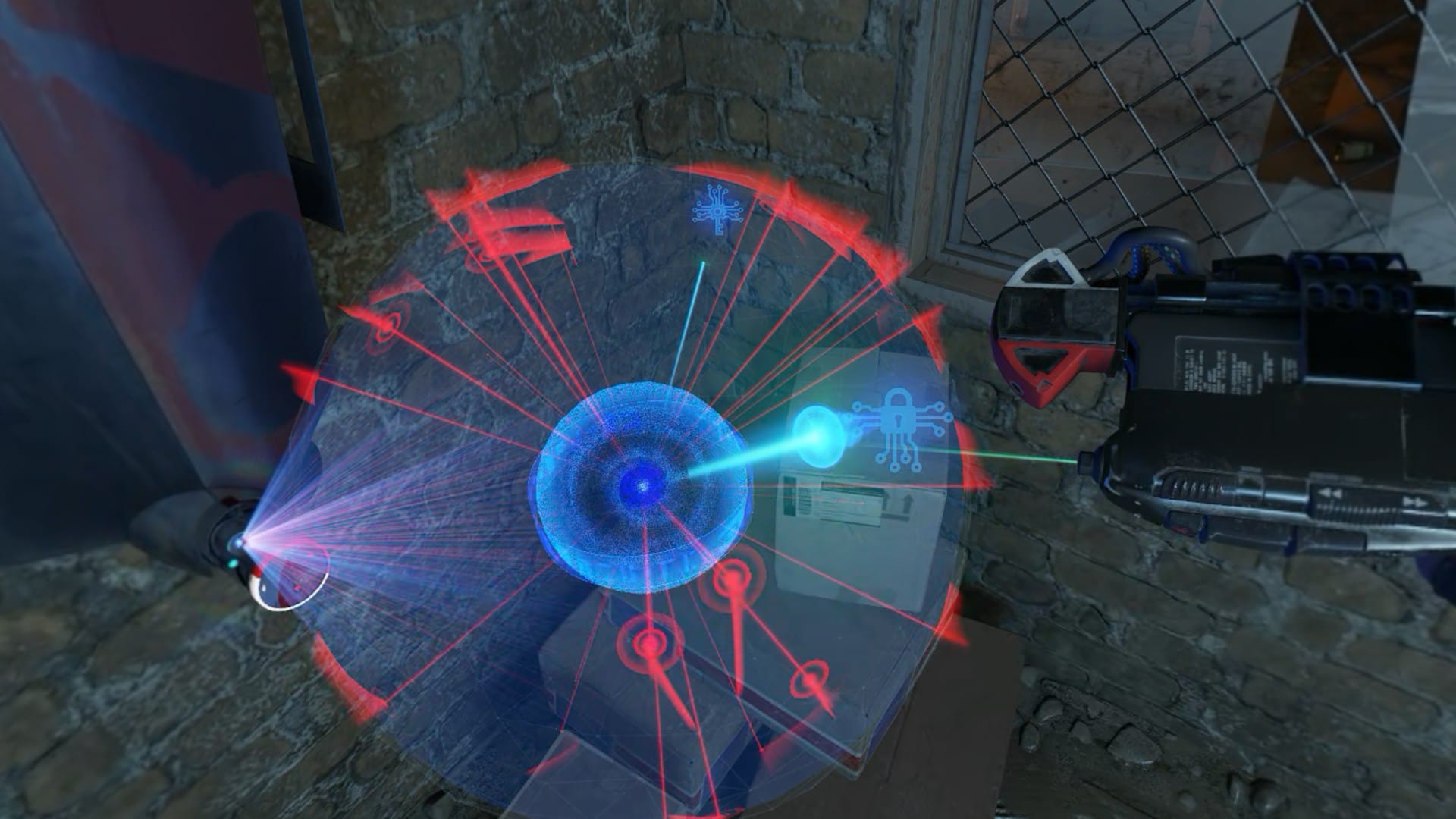
All told there are five puzzle types if you count the power routing puzzles but the three you use for unlocking lockers could use more variability near endgame.
To play Alyx on the Frame after previously playing it on the Index is a twofold experience. If you play it on the PC via the wireless 6Ghz dongle and wifi, it feels perfect and true, the way it was always meant to be played. You can see what the designers had intended the game to be, and it’s given new life and a fair shake on a device perfectly suited for it. It makes you mull over the possibilities of the medium again, to consider what VR “Is or Will Be.” As much as I like the Index, being wired and having to set it up every single time I wanted to play it meant that over the years I’ve become more familiar with the front half of Alyx than the back half during replays. It was easier to burn out just due to the friction of the Index itself.
The Frame is light, not fatiguing, and tailored for this specific kind of experience. But if you play Alyx natively on the Frame, you experience new friction points. The game renders at 36 fps and uses depth reprojection to achieve a stable framerate. This process is still in beta and at times looks a little ugly; it’s very much noticeable around the edges of objects and when you move your hands, which can appear choppy versus the background appearing smooth.
This is because getting Alyx to run on the Frame is itself a moonshot, what feels like an impossible feat of alchemy, particularly when you realize that the game itself has the exact same unsimplified assets as the PCVR version game. This is not only wildly impressive but also significant, because it means that content in the Workshop should, in theory, also work. This is more important than most people realize, as the Alyx modding community is robust, and Valve has not only hired multiple people from there but it has also yielded the game Gunman Contracts: “Stand Alone,” which started its life as the most downloaded Alyx mod. According to an interview with Digital Foundry, the mood internally was that Alyx was “never going to work,” but that changed over many months of development. Having 16 gigs of RAM to work with and dialing in on both foveated rendering and eye tracking, with the game focusing horsepower on where the player is looking, became critical to that success. Like any Half-Life game, the process of making it work on the Frame was a form of R&D invisible to the player, one that required completely rewriting graphics drivers over 18 months. The process of making this game work could, potentially, benefit other games running on the device should more people choose to develop for it.
Playing Alyx now forces you to confront the possibility that nobody will ever pour the same amount of resources and time into a VR title ever again. Perhaps that’s reasonable; many VR releases have scaled down in budget to match both the power of devices and the size of the market. But the idea that Alyx could be both VR’s killer app and also a bit of a unicorn gives me a similar twinge of uncertain melancholy that I get when considering the fate of Half-Life 3. There is this sensation of a lost future when I consider the current VR market, a space where too many of the old problems persist for most normal people, where the hardware is expensive and optional and where the market is scattered between manufacturers, each with their own confusing ideas of what VR should be.
But at the same time, the magic of VR is that when it works it’s like being unstuck in time and deposited into a potential branching future. You can never kill VR because there is absolutely nothing like it for the people for whom it truly matters. The format has a dedicated Sardaukar army of furries, simmers, Beatsaber players, and perverts. The lengths that they will go to make VR work, modding and tweaking and creating full body tracking, is terrifying and rarely matched. You should see the regular updates that Resonite, what I can only describe as “VRChat but made by furries”, received.
Every six months I check in on Resonite and they're like "we have found a way to do 3D modeling inside of it"
To the extent that the Frame is exciting, despite being hampered by its price, it is exciting because it feels rough, open and uncertain the way VR used to feel. The Frame’s hardware is straining to do multiple things correctly, often buckling under that weight, and some of the things it does correctly are sometimes more important than VR itself. And yet of all the VR headsets, putting it on feels like a home more than its competitors. To revisit Alyx again, to see it thriving on new hardware, is to open your heart up to the possibility that maybe the future could be different if it’s ever allowed to, that maybe one day hardware will be affordable again to normal people, persistent problems fully fixed, and that maybe someone will be wild enough to finally match Alyx’s sheer ambition.


