Many anime tropes have become so widely accepted that we don’t even bat an eye when they play out before our eyes. Shonen anime’s mandate for one lecherous character in their ensemble, the Akira slide being referenced for cool points, or characters assuming the Joe Yabuki pose in defeat are just a few examples of tropes that’re so ironclad in anime that they don’t need to be examined. Which is why I popped out of my couch in pure bliss to see a romance trope I’ve come to accept as an unassailable truth be deserted. Reader, blue-haired heroine/childhood friends' stonks are finally up.
For whatever reason, anime and manga as a genre has decided that in romance series, the main character will always reject a confession from a blue or dark purple-haired protagonist. In fact, this extends beyond romance to the medium in general, with characters with blue follicles atop their heads having a rough go of it in the romance department. JoJo’s Bizarre Adventure’s Jonathan Joestar, Neon Genesis Evangelion’s Rei Ayanami, Chainsaw Man’s Reze, the list goes on. Have blue hair, tragedy will follow.
Which hair color is the most successful in harem anime? A look at 100 harem anime endings
by u/paukshop in anime
Color theory can quickly explain why blue-haired characters in anime embody cool, calm, and collected—sometimes bookish—personalities. However, in anime, that often makes them the most boring character in an ensemble. And in a harem romance series featuring fiery-haired characters, especially the even luckier white-haired characters, the odds are better against the cool, reserved blue-haired maidens (and beaus) in love. That doesn’t make it any less fucked up to read a new series knowing full well it's a wash for them from the jump. The same is doubly true if the misfortune of their birth includes being the main character’s childhood friend.
Although I’m more empathetic toward lovelorn blue-haired characters, I’ve no sympathy for characters ensnared in the childhood friends trope. Full transparency, they’re kinda annoying to me on a narrative level. They’ve had all the time in the world with the main character, but didn’t get a fire lit under their procrastinating asses until a new arrival hit the scene. It’s all well and good to have a sense of urgency, but doing so when you’ve blown your lead is clownshoes behavior, which is why, on principle, I never root for them in harem anime. It's a lesson I learned thrice over, reading Nisekoi (and malding over Seishirō Tsugumi losing), witnessing the dumpster fire that was Domestic Girlfriend, and laughing my ass off at anime making fun of the trope in Too Many Losing Heroines.
I’ve since then steeled my heart at the prospect of childhood friends, much less a blue-haired heroine in love, winning in the end. That is, until I came across Hima-ten’s Honoka Kanai and witnessed her make Stephen Curry moves in the manga’s 11th hour.
Spoilers for Hima-Ten!
Hima-ten!, created by Genki Ono, is the latest harem manga to grace Weekly Shonen Jump. While its premise evokes Nisekoi, it leans less into the madcap farce of its predecessor’s false-love harem romance and more toward a grounded modern-age story about high schoolers catching feelings. The story follows a high school housekeeper named Tenichi Iemori who ends up in the employ of his school’s local celebrity, fashion influencer Himari Yoshino. It's a job they have to keep secret from their school, especially from Iemori’s childhood friend, Kanai. Things get even more complicated when everyone involved, including Kanna Aizawa, the wildcard gravure idol added to the love triangle, realizes it's make-or-break to confess their feelings to the mild-mannered Iemori.
All the while, Hima-ten’s girlies are pointedly aware of each other’s affections for the otherwise polite but milquetoast protagonist, whose charms begin and end with “he’s nice, thoughtful, cooks and cleans,” as they struggle to be overly considerate of each other or selfish in their pursuit of his affections.
Since the series’s debut in July 2024, I’ve been reading Hima-ten with cynical interest. Partially because it's a light read following Akane-banashi and Blue Box as the first series in my Shonen Jump new chapter drops, but mostly to see if history would repeat itself. And for the most part, it felt like Kanai’s chances of romance were a wash. I mean, the name of the series is a mash-up of Tenichi and Himari’s names, so that wasn’t helping the girl’s chances. And while her hair is technically black, Ono’s cover art and color spreads of her are drawn with blue highlights, so we count those as markers of her inevitable failure.
With the manga approaching its 100th chapter—the point where endgame romantic breakthroughs occur—I wasn’t liking Kanai’s odds. Like so many harem protagonists before him, Iemori finally hit the fork in the road: choosing between the new girl and his childhood friend.
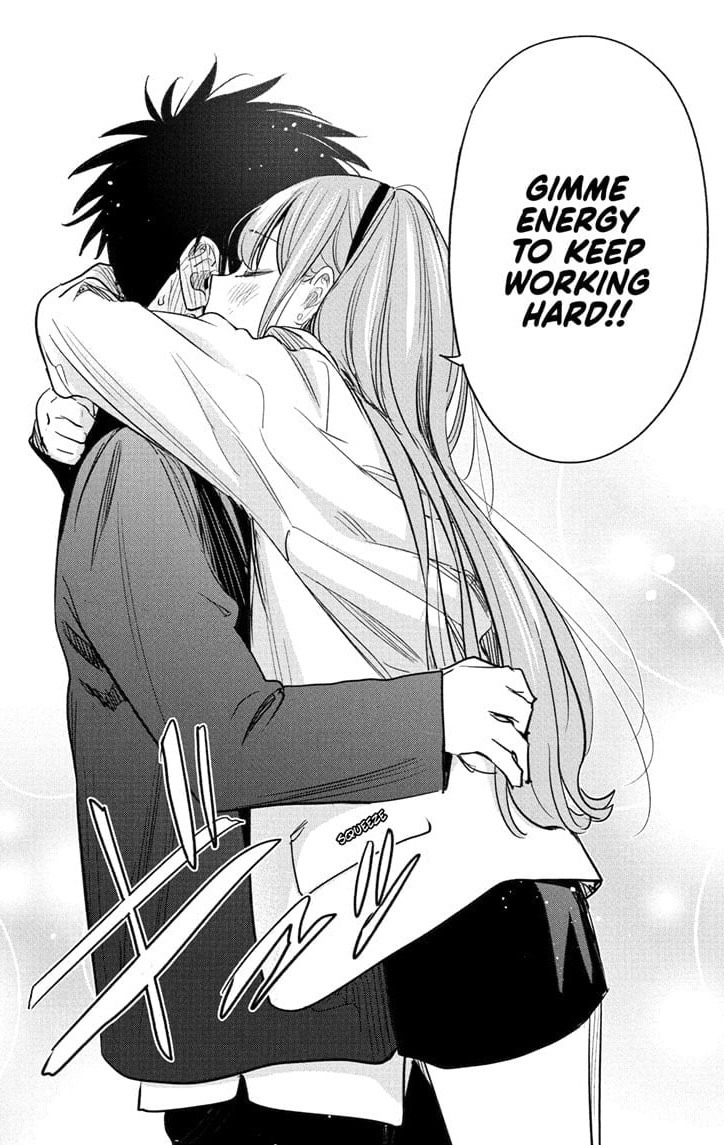
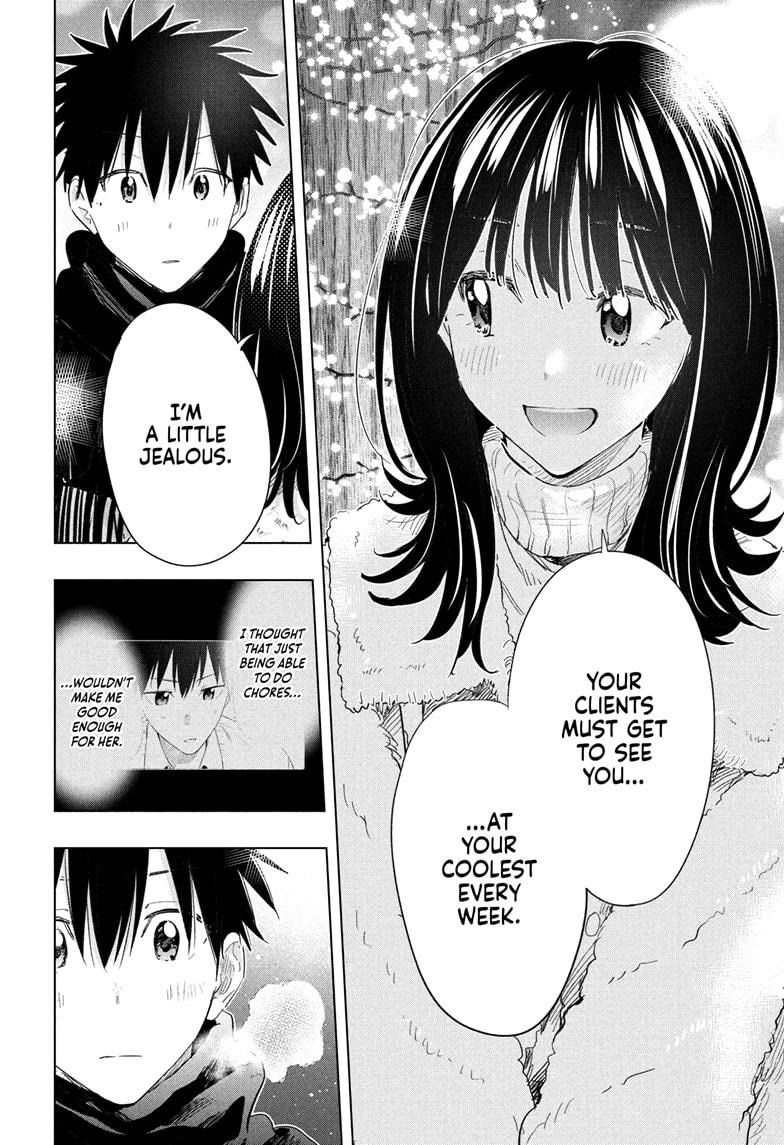
© Genki Ono / Shonen Jump
In the lead-up to chapter 95, Iemori had done the hard road of interrogating his feelings for the girls. He’d rejected Aikawa, the most upfront of the three, leaving an air of severity to his final choice. The series even questioned the fact that Iemori and Yoshino’s relationship is a bit skewed, with her technically being his employer, which led him to resign as her house cleaner. But still, it felt like Hima-ten was setting Kanai up for rejection. While Iemori and Yoshino were doing a photobook shoot and spending time together, Kanai put her hail mary in a letter she wanted Iemori to read later.
In it, she included a letter she wrote to herself about her crush on Iemori from middle school as its preface. How her hi-byes weren’t out of disinterest, but because that’s all the words she could muster in his presence. How she’d admired his work ethic and cherished the dates she managed to muster up the courage to ask him on, and even the snowboarding date they never went on. In any other series, her confession would’ve been tantamount to a concession speech, but, when they finally met up and she said the last part she wanted to leave for when they finally met up in person, she finally let her arrow loose and confessed her love. Knowing full well she, like so many heroines before her, is destined for the silver medal.
And then she fucking won.
KANAI WON!!!!!!!! pic.twitter.com/HgjeUOEczT
— TheMangaAddict ²³ CR: Golden Kamuy (@Th3MangaAddict) June 21, 2026
After years of romance series passing over the childhood friend, Hima-ten went from being a color in the margins of a harem series to one that took the road less traveled in a surprisingly poignant and mature way. As someone who read the series without fail for the past two years, it's especially cool to witness a series I started out reading cynically surprise me. Moral of the story, communication is important. But most importantly, never count anyone out, especially when it comes to matters of the heart.
Recommended
 Isaiah Colbert