Games journalism has always been a white institution. There is no clearer evidence of this than its historical and present relationship with Black journalists.
Video games are said to be entertainment for everyone. However, who gets to write, report, and become the salaried taste makers and analyzers of the field is a homogeneous hierarchy that is enforced both actively and passively. Overwhelmingly, the people who get to write and report about video games are white, and unfortunately progress along this axis has been slow, if not non-existent.
At any point in the past or present, when you look at major publications, podcasts, and trade show coverage, the racial and gender dynamics are crystal clear. The white people who report, the white guests are spoken to, and the white industry experts are not merely the majority: they are treated as the default.
Even when the sector was abundant with employment and growing, the number of Black journalists was minimal at best across the board.
Aftermath spoke with a cohort of past and present journalists to discuss their journalism, the industry’s gatekeeping, and who shapes coverage.
“We should be able to explain those choices”
Over time, games journalism has had to reflect on itself and its capability to cover the political dimensions of this beat. One such case was the coverage of Resident Evil 5 in 2009. Famously, the 2009 action game depicted African villagers as dangerous zombies, an explicitly anti-black image. The first trailer saw a white Chris Redfield gun down hordes of dark-skinned Africans zombies in an imaginary West African region. N’Gai Croal was the journalist who started the industry-wide inquiry.
Croal’s 2008 comments came about when he was interviewed by Tracey John for MTV Multiplayer. He saw the trailer at E3 and was sitting beside the late Vince Zampella. Croal described the moment he first saw the trailer for Resident Evil 5.
“That was a moment where I turned to Vince, and he turned to me. Nothing was said. It was: ‘Are you seeing what I'm seeing?’” Croal said. “What I said to Tracey John in the piece was what I was thinking as I was watching it. Part of the reason I think my remarks, which would have probably blown up anyway, is that Stephen Totilo, a very good friend of mine, has excellent news instincts, and he felt that part where I was specifically talking about Resident Evil 5 was newsworthy. In addition to running my remarks, which were on theme with the broader focus on Black people working in and around games, he did a separate piece focused only on the Resident Evil 5 remarks, and that's the post that went viral.”
Croal notes that before joining Newsweek, he began writing movie reviews for his university paper. He studied the work of writers and critics such as Pauline Kael, Andrew Sarris, and Roger Ebert for his craft. Meanwhile, alternative press such as The Source, Village Voice, and Vibe inspired him as well. This helped him feel comfortable writing and saying things that, intentionally or not, would get a strong reaction from people. He wasn’t part of the enthusiast press, and he wasn’t trying to maintain a readership for a large platform like IGN. His goal was simple: “What I was doing on [Newsweek’s] Level Up was, I'm trying to be your favorite blogger's favorite blogger, right?” he said.
Recalling the reactions to his comments, Croal said it was interesting to see some forum commentators call him “one of the good ones” and feel betrayed by his criticism of the trailer. There was, of course, a vocal opposing reaction from white people in media. Being who he is, the journalist had no problem responding to people.
“I didn't have a problem explaining; I think that's one of the things I love about journalism,” he said. “I think, just in life, I feel that I'm, by nature and by training, a curious person, and so I'm interested in how things work and in how systems work.”
Croal notes that what was particularly interesting was that people couldn’t see the problematic elements, at the time. Nor were they knowledgeable about African history that involves European colonial empires, never mind the way that Europeans continue to mine Africa for its natural resources.
This was hardly the first video game to lean on racial imagery. This wasn’t a morality test—it was a visual, cultural, and cognitive one. A society built on the unmaking of African people as humans for centuries does not blink at media depicting one of its favorite pastimes. In turn, commercial press that is run by people who inhabit those societies wouldn’t either.
When I saw that, it wasn't satisfaction, because I don't want to see that image. It was more that I knew I wasn't crazy.
In the 1938 book, The Black Jacobins, written by Pan-Africanist C.L.R. James discussed this phenomenon long before Resident Evil 5.
“‘The Negroes,’ says a memoir published in 1789, ‘are unjust, cruel, barbarous, half-human, treacherous, deceitful, thieves, drunkards, proud, lazy, unclean, shameless, jealous to fury, and cowards.’ It was by sentiments such as these that they strove to justify the abominable cruelties they practiced. And they took great pains that the Negro remain the brute beast they wanted him to be.”
Before Resident Evil 5’s release, Croal addressed some of the criticisms with Capcom. First, the former Newsweek reporter learned that contrary to his rhetorical comment, Black game developers did work on the game. Additionally, he discovered that a senior person in Capcom’s US office raised concerns about the game’s iconography, which was shared with Capcom Japan. This would seem to contradict producer Jun Takeuchi’s 2008 reply, “We certainly didn’t anticipate the reaction. We were quite surprised.”
The seemingly deliberate reliance on tired, racist tropes did not go unnoticed by other Black journalists and writers. Dr. André Brock’s 2011 article, “When Keeping it Real Goes Wrong: Resident Evil 5, Racial Representation, and Gamers”, analyzes the title’s iconography and cultural attitudes about Blackness and the internet.
In it, he writes, “In survival horror, there are no innocents. Early in RE5, the team sees an (extremely) White woman dragged screaming by an African into a second-story apartment... There are no random choices in video games; the developers chose that pairing to fit in with the horror aesthetic of the game.”
Around March 2009, the month Resident Evil 5 was released, Croal and other journalists interviewed the game's producer, Jun Takeuchi, at DICE. The interview allowed Croal to get a better understanding of the game’s direction, creative choices, and the use of Africa and its people.
“What I remember emerging from the interview was that he couldn't remember which African countries they visited on the trip, which I found a little striking,” Croal said. “Africa is a continent, not a country. I think maybe [Capcom] sent, subsequently, maybe the art team or whatnot for textures and other things, but I think for him it was one trip. So it felt like the research was cursory ultimately, relative to where they had chosen to place the game. And the history of those places, those images, and the amount of research and depth of research and levels of research were insufficient for the moment.”
Croal then explains that within chapter 3 of the game, players are introduced to new enemies. In the marshland, Chris and Sheva encounter, and shoot, grass-skirt-wearing, spear-chucking zombies who present as tribal Africans.
“When I saw that, it wasn't satisfaction, because I don't want to see that image. It was more that I knew I wasn't crazy,” Croal said.
Beyond becoming a top-selling game and a player favorite, Resident Evil 5 and the conversation about racism brought changes. It became the subject of multiple academic articles examining the relationship between race, games, media, and the myth that it’s all simply just for fun. It also led Capcom to change its development style to incorporate more feedback from the USA branch.
“I have to be one of one”
When analyzing how she started her career in games journalism, Ash Parrish, senior reporter at Kotaku, explains that her desire to get into the field was partially ignited by a new spotlight on eSports following the release of hero shooter Overwatch.
“This was right around the time the Overwatch League started. I was all in on Overwatch because I love that game. I'm going to talk about this because it will be what makes me unique in the games journalism business…I started doing a lot of eSports writing. I was also very good at doing critical work and reporting,” Parrish said.
A new voice with a unique skill set and a focus on an emerging beat has value to media outlets. This led to her being published across publications and building notoriety and an audience. Eventually, she obtained full-time employment at Kotaku when a writing position opened.
When asked whether she modeled her work from other journalists, Parrish said she appreciates other people's journalism but wasn't specifically inspired by anyone.
“I knew that what I would bring to the industry would be so unique,” she continued. “I'm one of one. Because how many Black people and Black women, femmes in general, are in this industry?”
Among the remaining media professionals at major sites, Parrish is one of the few full-time staff Black women. Black women have been underrepresented as US media professionals for decades. For example, a major publication such as The Washington Post had Karen Attiah, as the only full-time Black staffer for its OP ED desk. That was until she was fired for her comments about Charlie Kirk in 2025 and in August it was determined that Attiah was wrongfully terminated and The Post was ordered to reinstate her with full back pay and benefits.
Parrish recognizes these realities and knows her perspective is invaluable among her peers. What best illustrates her brand of journalism is Parrish’s interview with singer Cynthia Harrell, of Metal Gear Solid: Snake Eater fame.
 Ash Parrish
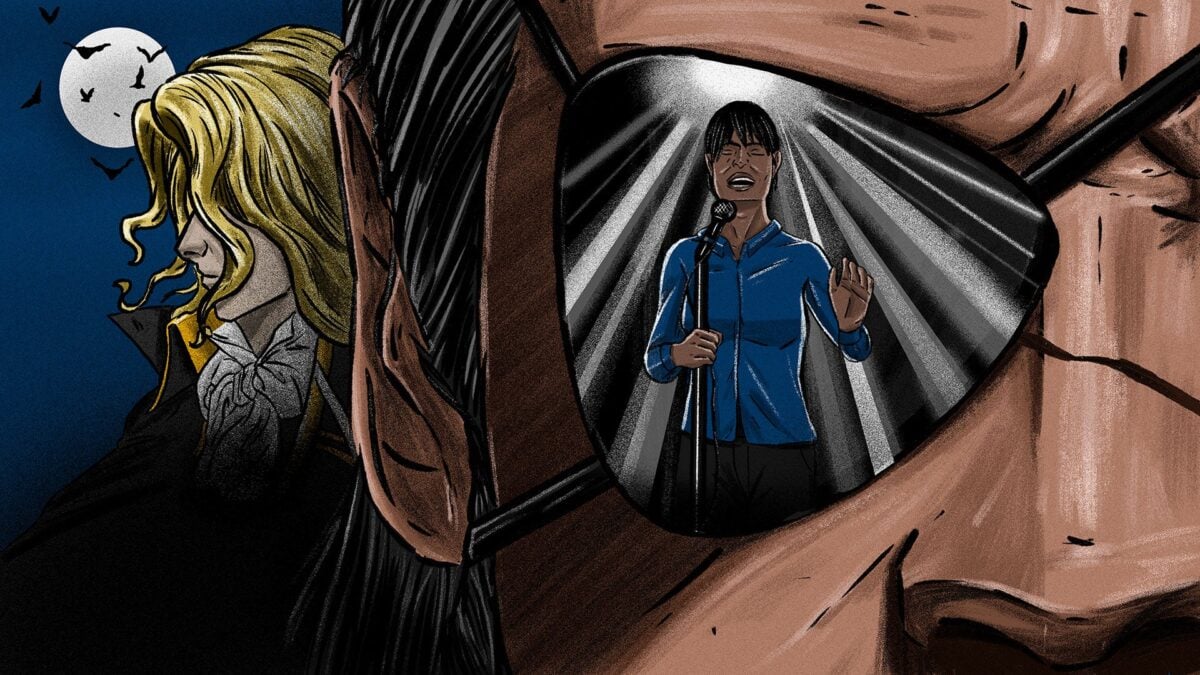
“This was a Hidden Figures moment for me. Maybe I was watching a Let's Play of Metal Gear Solid 3. I'm [thinking] this song is amazing, and that sounds like a Black lady…It got me going down this rabbit hole of trying to figure out who this lady was, and I found her name,” Parrish explained. “This was in the middle of COVID, [I’m] at my desk in the middle of the night, just scrolling through Facebook, looking up Cynthia Harrell and trying to filter out all the ones that couldn't possibly be this Black lady. I happened to find her, and I shot my shot and sent her a message, and she [said], yeah, that's me.”
When speaking about progress and moving forward in games media, Parrish offers a somber, realistic outlook. Parrish explains that when younger writers and college students email her about the field, she has to be honest.
“If you want to write, fucking write,” she said. “Get a blog, do whatever you have to do, write it down, get it out of you, write it, put it in a place, make a little portfolio out of it, you know, pitch freelance, you know, here and there as the spirit moves you, but do not have that be your main source of income.”
Still, Parrish has a sober minded view of the industry and the places where it can improve.
“My hope for progress is that those people have the ability to make some kind of career out of [games journalism].” she said. “Progress to me is being able to tell students when they come to me, ‘Here's what you can do,’ instead of just ‘don't,’” she explains.
“Someone said, I do really smart criticism, without being head ass about it”
Journalistic careers can be lifelong pursuits, and such is the case forJordan Minor. Minor, senior software and services principal writer at PCMag, said that he wanted to be a writer since his youth. Eventually, he started working on his high school newsletter, where he covered the Wii. Shortly after, he began covering game releases for the first iPhone and got paid.
“This [work] was really impressive on my resume to a lot of college recruiters,” Minor said. “I not only cared about this game journalism thing but cared about it so much that, at that point in time, I was already making money from it. So that's how I got to Northwestern University Medill School of Journalism.”
Minor said that his experience at Northwestern gave him a robust education in journalism in general.
“That school offers a really well-rounded journalism education,” he said. “I was trying to do game stuff as my capstone projects. But for the bulk of my experience there, I was covering all sorts of stuff. I was learning about design, I was covering local news in Chicago. I was on the magazine track, that's one of the tracks they have versus, like, broadcast or newspaper.”
Minor’s university also had a residency program that set him up with an internship. In 2013, he began his time at PCMag as an intern, and 13 years later, he remains there in a senior position. His years as a young journalist helped develop the insight to report on communities and their relationship to the tech and games sector. For example, Minor took a school thesis and eventually had it published in Kotaku as a 2013 report, Chicago: Home Of A New Indie Gaming Renaissance.
Over the years, Minor has developed the skills and insight to speak from a place of understanding tech, gaming, and where they intersect and overlap. He said that he knows his approach to journalism resonates with people. Minor said that he received a compliment regarding his book,Video Game Of The Year, that stays with him.
“Someone said that what they appreciate about my writing is that I do really smart criticism, but without being head ass about it,” Minor said. “I work for a mainstream website, so I do try to meet readers where they're at, and that's also just a journalism quality of mine. You're trying to write in a way that we are understood by a lot of people, and that doesn't mean dumbing things down necessarily. But it does mean being very clear, explaining concepts plainly, and not getting wrapped up in a ton of jargon.”
This pursuit of service journalism can also be observed in work such as Minor’s 2020 opinion piece Video Games Owe Black Players More Than Just Talk. Here, he spoke frankly about how the video games industry was reacting to the protests over the police murder of George Floyd. Minor was rightly skeptical, noting that video games exist within the same social, cultural, and political forces as everything else and aren’t special.
Minor wrote that while the industry was acknowledging the moment of widespread discussion of racial injustice, it shouldn’t expect applause for doing so. In hindsight, it could be argued that companies didn’t deserve praise of any kind for saying, “we see you, Black people.” The industry's allegiance to Black players seems, in retrospect, questionable at best. Consider that in 2003, Cliffhanger Studio announced that they were developing a Black Panther game, which was then canceled in 2025. Currently, development studio Arkane Lyon, the studio working on a Blade video game, is looking for a buyer even though the project is reportedly almost complete. It’s interesting that serving people titles with some of the most brand recognizable Black characters is seemingly impossible.
In the piece, Minor writes, “While it may initially be jarring to see these brands openly discuss Black issues, to see Black streamers pop up as guest stars on your favorite all-white gaming podcasts, in reality, Black people have always been a part of gaming. These conversations have already been happening; now they’re just too loud to ignore.”
He criticizes how society at large responded to an explosion of justified Black rage. Minor states correctly that white spaces, including games journalism, effectively hit the panic button and sought out Black people to assuage themselves of guilt or, to appear non-discriminatory. To the PCMag principal writer’s point, 2020 became a mass tokenization event for Black people.
The first chapter of the book ends with a section about Jerry Lawson and the cartridge. How can you argue that Black people aren’t the genesis of the medium's existence?
Minor said that his book was his greatest contribution to games journalism as a Black journalist. His 2023 book, Video Game of the Year, covers 40 years of history, one game at a time.
“As a writer, as a journalist, I’m just an online writer, so having a physical thing exist is really important to me,” Minor said. “I'm really grateful to have my comprehensive statement about video games in a form that can be preserved.”
It was specifically important to Minor that Black figures in the history of video game development were documented in his book.
“I am happy that I made it a point to where I felt appropriate to highlight Black contributions,” he said. “The first chapter of the book ends with a section about Jerry Lawson and the cartridge. How can you argue that Black people aren’t the genesis of the medium's existence?”
Like Parrish, Minor compares his work to the Hidden Figures and their contributions to NASA. He highlights that the book also includes contributions from Black writers such as Alexis Nedd, Tanya DePass, Evan Narcisse, and Austin Walker. Overall, Minor wanted to make sure the book reflected the diverse community he knows and included a real array of voices.
Looking at Minor’s career further, the longevity of his career stands out. Long-term employment should be standard and expected for everyone, but again, it’s generally elusive for Black people. As reported by The Guardian, Black journalists across multiple news institutions were laid off following the anti-DEI fervor of the Trump administration. This also resulted in the erasure of beats dedicated to communities of color, with some saying that “it’s not a coincidence”.
With a tenure of well over ten years at PCMag, Minor says it's partly due to luck.
“I'm just lucky in a lot of ways. PCMag is a particularly steady brand. That's what drew me back when I had the opportunity to return after I graduated college. PCMag has been around since personal computers in the early 80s. I've been there for over a decade, and there are people who've been there for like twice as long,” he says
Most importantly, Minor notes that his job security comes from his workplace having a union.
“A big thing is I have a union. I'm very active in our union. I have been since its conception. I was involved in our contract. I was on our bargaining team. I helped write our contracts both times,” Minor said. “That has helped with job security for everyone at the company, not just me. It’s helped enshrine job security in a great way. Also, the contract includes diversity provisions, and they have to reach out to a certain number of people and work with certain organizations. This at least helps keep the workforce diverse.
Minor said that, unlike many newsrooms, PCMag is a diverse workplace.
“I've worked with a lot of black people in my role. My boss currently is Black and has been [my boss] for years,” Minor said. “Black writers have come and gone from the organization. But I think the [diverse workforce] helped me feel welcome, where I can grow and expand what I'm doing.”
Minor’s experience also speaks to the fact that people have and will continue to work together to create the environments they want. Unions are historically strong in the northern US, such as New York, where PCMag is located. In the past and today, unionization has been weaker in the southern region. The South is where labor laws are worse, wages are lower than the rest of the US, and where most Black people live.
This isn’t because people aren’t trying to improve their material conditions; that would be historically inaccurate, as Black people have had decades-long labor organizing actions. More unionization across media and job fields in America would help bolster workers' rights for everyone, but as more organizations unionize, the more that their bosses will resist that change.
“Now you’re just spitting in my face”
Career paths can be shaped by adapting to the moment. This was the case for games and tech journalist Allisa James. She originally planned to enter the games industry. However, she says that after graduating from university with a major in PR, the plan did not work out because of the 2007-2009 market crash.
“I minored in Japanese, and I ended up starting with Dual Shockers, which was a small independent publication at the time. It was unpaid, but I figured I wanted to do something that I was passionate about while I was looking for work in the very abysmal job market,” James said. “It was a bad market then, and it’s a bad job market now. You can't escape.”
Her comparative analysis is difficult to argue with. The economic crash of the late 2000s is estimated to have resulted in millions upon millions of job losses. Currently, the Ludwig Institute for Shared Economic Prosperity reports that the true unemployment rate is 24%. Jobseekers now have to navigate fewer roles, dehumanizing hiring practices, and discriminatory AI screening.
James said that her experience in college did end up helping her out at DualShockers.
“They accepted me because I had reading and writing fluency in Japanese. I had majored in public relations, which meant I took a lot of journalism classes, so I knew how to write and report,” she said. “I started building my resume, working with others, and fine-tuning my craft. I also realized my niche: I was really into Japanese video games, so I translated press releases and all sorts of websites. Honestly, it was very fun, though far from perfect.”
James left Dual Shockers after it was acquired and returned years later as a weekend writer in a paid role. During the years, she expanded her writing portfolio with freelance work for TechRadar and Tom’s Guide. This created a runway for her future as a tech reporter.
James recalls that during this expansion of her work and range, she also navigated rough patches. A former editor called her Japanese translation work a waste of time. She worked at the publication Siliconera for a month, then left, citing bad management as the reason for her quick exit. She also had a very short stint with Tech Raptor. Overall, this period soon revealed the flaws in the SEO business model websites were beholden to at the time, and what that meant as a reporter.
“I tried writing for other publications,” she said. “I was treated like I didn't have over 5 years of experience as a writer and reviews editor. You’re being treated as a cog in the machine, essentially just pumping out articles.”
“I was still trying to do video games writing at that point, and it was just atrocious,” she said. “I ended up going fully into tech writing instead. I ended up getting a full-time position [at Tech Radar] after freelancing with them for 6 months. That was honestly a wonderful three years, and it was a world of a difference in terms of my own treatment.”
James recognizes that her early experience highlights the labor exploitation and abuse synonymous with games journalism that runs small and large publications alike. James’s first stint at DualShockers was unpaid. When she returned as weekend writer, she was finally compensated for her work, which led to more paid work. But getting the money she was owed for her labor was a struggle.
What hope do you even have, unless you keep your head down and stay quiet as a Black writer or any other journalist of color?
“I remember during my first role with Dual Shockers, when I was reviews editor, and we were working towards me actually getting paid,” she said. “I recall asking for a very low amount just to sustain me. I believe I had asked for $400 every two weeks, once again [I’m] lowballing, but at least just to get me started. That was too much; they were offering me like $125 a week, but I'd have to make sure I worked full time, and I [said] absolutely not. Now, you're just spitting in my face.”
James’ experience highlights how work exploitation doesn’t just flourish within games reporting but is a natural function of the US economic system. Websites generate page views and, in turn, ad revenue. This revenue mostly goes toward inflated salaries of the C-suite, while paying the talent that makes it possible pennies.This is, unfortunately, the major path for young, marginalized, and gender expansive people to get bylines in their name. Most major websites don't offer, or have, internships, and prefer to work with established freelancers, further locking out opportunities.
Reflecting further on the issues that she and her peers witnessed, James highlights that it placed people in a difficult situation. Many could not speak out on these realities due to the field being so small, and a fear of being blacklisted by the often white men who held power. This didn’t just extend to economics, but also to social and political observations at the time.
“I remember being invited to a Discord chat with a peer. It was basically a lot of top industry people from IGN and Kotaku. I kept noticing this issue where you would try to speak out against inherent racism and whatnot in video game journalism, such as the hiring practices, the fact that you have these big-name people maintaining relationships with very racist, openly racist people on social media. Then when you try to address it, they'll immediately dogpile you [in Discord] about that,” she said. “I saw that happen to my peer. I ended up leaving soon after that, and I was just thinking, wow, that really sums up the issue. What hope do you even have, unless you keep your head down and stay quiet as a Black writer or any other journalist of color?”
The actions described here stem from a historically well-established system maintained for years. Over time, games journalism has improved with its range of journalists, but then shrank after the tidal wave of layoffs. It is not by coincidence that these media job cuts have further erased the already microscopic pool of Black writers, other writers of color, and women, as seen in a 2024 layoffs that hit the LA Times. The field, much like society, cannot separate itself from past and present disenfranchisement of marginalized workers.
Despite all this, James went on to write about games and then established a years-long beat covering all things technology, trade shows, and everything consumers should know. The writer notes that she got the role because an editor whom she had previously worked with vouched for her skills.
 Allisa James

“I feel like that's the love that a lot of us really pour into this work, and it's why we're willing to go through all this like hellfire,” she continued. “It's something that feeds your soul in a way that nothing else really did. It's just sad because eventually you do get burnt out and you end up moving on and leaving. Then immediately, as cogs in the machine, you're replaced.”
“We barely have made it past stage one”
Evan Narcisse calls himself a recovering games journalist, but he still monitors the industry. He worked for various websites throughout his career and reported at Kotaku for nearly seven years. Narcisse’s writing has never shied away from how games and Black people intersect. When thinking about Black games journalism, he views the work through a socio-economic analysis.
“To me, it means covering the events and the goings-on on the business side and the creative tiers of video games as a medium,” Narcisse said. “Doing so through a lens that examines how we're represented, where we work, what we work on, and what those working conditions are. It's also examining how a Black audience consuming video games gets viewed and incorporated into marketing communications, conception, and ideation.”
Looking at the field’s history and Black participation overall, Narcisse links the lack of advancement to structural barriers to employment. He measures what it could be versus what it has been with an eye towards legacy Black entertainment media and publications.
“When it comes to Black participation and intervention inside video games as a cultural medium, I think there are stages,” he said.“There’s the entry-level stage, where you accrue enough bylines and employment to build a critical mass of commentators, a professional class. That's stage one. Stage two is multiplicity and diversification of opinions and opportunities. You got somebody at the New York Times, Kotaku, Paste Games, Kinda Funny. At that stage, we don't all have the same opinion. I'm not saying that we do, generally, but there can be debate and disagreement and multiple points of view, all within the umbrella of Blackness. There's enough of a professional class where the work can become less about presence and more about opinion and reporting.”
“Stage three is where an outlet, solely premised on collecting a survey of Black thought across a cultural paradigm, whether it's games, comics, literature, or sports, can be self-sustaining. Think about Black Enterprise, Ebony, and Jet magazine,” Narcisse continued. “This is kind of the promised land in terms of creating a business, an outlet, an organization that can sustain itself, and keep this as its main purpose.”
Narcisse is frank as he notes Black writers have barely made it past stage one. Over his journalistic career, he said the early 2000s were when he saw the most Black journalists on the games media beat. He names journalists such as Latoya Peterson, N’Gai Croal, Seth Schiesel, and Jamin Warren. Narcisse said that he can’t recall there ever being more than ten writers.
The expectation was that it was a hot-button issue writing about race and representation, and I didn't always want that smoke either, you know what I'm saying?
Across the media sector, Black writers have historically experienced low rates of employment. In a 2022 Pew Research survey of 12,000 journalists, 6% of respondents were Black overall. Overall, 76% of surveyors identified as white. When examining newsrooms' attempts at diversification over the decades, a 2017 Columbia Journalism Review study by reporter Karen K. Ho gets to the heart of the matter.
“In 1978, the American Society of News Editors (ASNE) made a pledge to achieve parity with the percentage of people of color in the general population by the year 2000,” Ho writes. “After that deadline was blown and a new one was set for 2025, data in the Voices report shows many American newsrooms are still nowhere close to achieving this goal.”
Games media is, of course, a niche within journalism. It has fewer jobs than entertainment, business, and technology subsections. If there are fewer Black journalists overall, then there are fewer within a niche as small as games journalism.
Narcisse noted the multifaceted realities of journalism for people who often don't pass entry-level hiring. Junior roles tend not to pay well. Additionally, lower-level journalists may not have the freedom to pursue their interests due to editorial oversight.
“I remember freelancing for Time Magazine,” Narcisse said. “It had a video game pop culture vertical called Techland. An editor oversaw it who wasn't a gamer, but he chewed me out for not covering that year's Call of Duty release. I don't like Call of Duty. I'm a freelancer, you know what I'm saying? I cover what interests me. The editorial hierarchy was that I wasn't being given assignments. I would pitch stuff, and it would get approved. I didn't pitch Call of Duty because I didn't want to write about it, and he chewed me out.”
Describing his daily operations as a reporter, Narcisse said that, in part, it involved having discernment of when to deploy multi-dimensional awareness that was invisible to his non-Black peers. This includes choosing when to report on real-world issues, especially those impacting Black communities, if he chose to at all.
“I was always hyper-aware of [serious stories]. Sometimes the expectation was that I would write about this stuff, and I didn't want to. The expectation was that it was a hot-button issue writing about race and representation, and I didn't always want that smoke either, you know what I'm saying?” Narcisse said. “Sometimes I just want to write about something I enjoyed. But the expectation can go either way.”
That said, Narcisse said he experienced a lot of freedom in his own career that other Black journalists have not.
“I'll be upfront and say I had a lot of freedom to pursue my own interests. When I was a journalist, and especially at Kotaku, I got the chance to write about what I wanted, how I wanted, with a few exceptions,” he said. “OK, Trayvon Martin gets killed, and I felt I couldn't write about that. [However], I remember when there was legislation in the Dominican Republic, a whole political effort to send anybody of Haitian heritage back to the other side of the island. They could be there for multiple generations and not know the language of Creole and the culture of the people on the other side of the island.”
 Evan Narcisse
Regarding that article, Narcisse explains that he received comments from readers uninterested in reality. Some readers expressed dissatisfaction because they came to find review scores, release dates, and preview news. Narcisse said that he wrote to share his thoughts about art and cultural production, as it is a part of the world. He was accused of having an agenda at the time. Narcisse says that having an agenda isn’t bad.
“I always say I wanna help manifest a full representation of black humanity in everything that I touch,” he said.
Since Narcisse’s time as a full-time reporter, the cost of gaming as entertainment has increased repeatedly. This is due in part to tariffs, geopolitical hostilities driven by US imperialism, and an economy propped up by the false god of so-called AI. These factors, alongside wages being flat since the 1970s, an ever-rising cost of living, and the country remaining historically uninterested in helping millions of unemployed people, make the hobby antagonistic to working-class people now.
“As this moves towards becoming a luxury hobby or even a luxury profession, we see the professional class of both critics and journalists and game makers being thinned out by virtue of the intense changes hitting the industry right now. I'm not going to say there's a vast conspiracy behind this stuff,” he said. “But it is going to become a wider gap for people from marginalized backgrounds where there already was economic precarity.”
“I always felt inspired to get into journalism”
Having different people work as journalists should also be about how their perspectives and skills add to reporting. One such person was former games and tech journalist Taylor Lyles. Before taking a chance on covering games and working across multiple major publications, Lyles was a pre-law student.
“I originally wanted to go to law school. I got in after undergrad, but I realized that I didn't want to take on more debt. I was doing a lot of writing and journalism, and I had an epiphany moment when I came back from traveling for an assignment,” Lyles said. “I realized, you know what, I bet I could do this full time. I don't have my [Juris Doctor] or anything. I'm not a lawyer, but I was taught by people who were. My professors were trained or licensed attorneys who had practiced law for at least several years. It was a very writing-intensive major, which is great given how much writing journalism involves.”
Lyles said pre-law gave her the skills that would make her a good journalist.
“What I found interesting about learning all of this legalese was that the knowledge was very helpful in just getting to the point and being more familiar with the policy side of things,” she said. “I thought [this] made me more versatile in covering certain things when certain laws were passed and we see certain legal things that are happening in the industry.”
At a glance, Lyles’ career shows she had quite the journalistic run. Her path included working at major platforms such as Business Insider, then a stint at The Verge, which was followed by tenure at IGN. Reflecting on her professional history, Lyles acknowledges the impressive sprint.
Tina Amini was the reason I wanted to come work at IGN. She was one of the primary reasons when I was offered the job.
“As a journalist, everybody should have that kind of instinct to just be hungry and always try to strive to be better than what they're currently doing,” she said. “When I started working at The Verge, I was finally able to articulate why I still had the passion, drive, and interest. I always felt like something was missing. I owe so much to Digital Trends, and even my work at Business Insider, which helped get me to that job at The Verge, which then, you know, became a job at IGN.”
Speaking of her brand and approach to journalism, Lyles said that she had a simple approach.
“How would you talk to your grandma about it? There have been times when I wrote stories, especially more complex ones, where, if I had to show this to my mom, who's not really tech-savvy, or my grandma, could they look at this and say, ‘You know what, I actually know what you're talking about,’” she said.
Lyles said that writing effectively in layman’s terms makes a journalist more valuable. She emphasized that speaking beyond the established audience should remain a goal. In her experience, that pursuit has built her journalistic confidence.
When discussing her decision to work for IGN, Lyles emphasizes that former editor-in-chief Tina Amini was a key factor in the pivot. Amini, one of the rare few non-white women to hold the highest of editorial positions, was a vocal advocate for fostering a diverse pool of journalists. Having a boss who recognizes the field's transparent hegemony can help inspire more people to work for them.
“Tina was the reason I wanted to come work at IGN. She was one of the primary reasons when I was offered the job,” Lyles said. “I was interested in what I envisioned for this role because I saw the potential. But also because I wanted to go work under Tina. I always felt that she was very much a vocal voice for people of color. Just having conversations with Tina made me feel more emboldened and more confident speaking out.”
Lyles’s work at IGN was certainly invaluable. While it's one of the largest media platforms, it shares the same historical reality of the games media field: few Black staffers on the editorial side. Lyles said she still asks herself about the lack of Black talent there, even after leaving for a new position.
“When I started getting the momentum in my career, I had to step outside my comfort zone and try to be more vocal and hopefully that would inspire and influence more people,” she said. “I keep thinking about this time when Isaiah Colbert, before they even got hired at Kotaku, asked me if we could talk, and we had a conversation. Then Isaiah got hired. They had this introduction piece [on Kotaku at the time]. I remember they spoke to a lot of people who worked in the industry and mentioned me. Seeing that was exactly why I was doing what I wanted because I was trying to inspire that. This was probably one of the more blatantly obvious examples of saying: this was my [reason] why.”
“The 2010s seemed like a broader cultural shift towards political awareness”
Career writer, professional games critic, and former editor-in-chief of Waypoint Austin Walker gets straight to the point.
“I think that the racism in this industry has always been here,” Walker said. “In the 2000s, when I was first starting as a freelancer… generally, it was an emanation from a predominantly white, predominantly male online fandom that was dismissive of anyone who brought up anything about identity or politics in any direction.”
Walker said that this eventually changed.
“I will say, I got to live through the shift from disorganized dismissal to disorganized interest. You know, the mid-2010s, you know, post, I would say pre-Trump, but post-2014 Black Lives Matter movement,” he said. “A lot of folks in my cohort started making some inroads. Critics of color like myself and Gita [Jackson], Tauriq [Moosa], there were a bunch of people who kind of pushed on it. Obviously, again, building on the work that N’Gai [Croal], Evan [Narcisse], and them did. But not even just in terms of race, in terms of gender. Such as Leigh Alexander, who was still writing at that point… writers of color, non-Black writers of color, queer writers, white women writers—people were trying to push on stuff and trying to ask: hey, what's going on with this or that?”
Walker said that during this period, which seemingly offered a sea change, was a reaction to changes in the US. During a time of high-profile murders of Black people and the rise of the Black Lives Matter movement, white society became apparently more sympathetic to non-white people, women, and non-cis people. Furthermore, 2015 saw the legalization of same sex marriage, and in 2017, the MeToo social movement, originated by Tarana Burke in 2006, took national attention. This led to more visible hiring and promotions for those perpetually frozen out of certain careers.
There was organization happening among folks like us on the margins to say, hey, this is important.
Walker said that following the first Trump presidential win, people became more accepting of new games journalism.
“I had lots of resistance when I was at Giant Bomb, but people were listening at the very least. By 2015, 2016, going into the Trump presidency, people were [said], oh, we have to start reading these articles about questions about race and gender. 2017, 2018, somewhere in there, people were locked in on it,” he said.
“A lot of that was brought forward by media critics and cultural critics in my age group, and older and younger, but in that era, people were tuned in. So there was this move from games culture, which was dominated by white men in terms of its vocal membership in the 2000s, going from disorganized, indifferent at best, racist at worst, to still disorganized, but kind of interested,” Walker said. “There was organization happening among folks like us on the margins to say, hey, this is important.”
Walker said that at the time, more marginalized writers were talking to each other, sharing their stories, and people of color began getting full-time editorial roles. This culminated in 2016, when he became editor-in-chief of Vice's game vertical, Waypoint. Not to underscore Walker’s achievement—no one hire marks institutional change—but his hiring made some things concrete. At that point, he was likely the first Black US editor-in-chief for a major video game publication. According to a 2016 American Press Institute survey, 22% of newsrooms had a Black leader. It's worth noting that since then, there hasn’t been a steady stream of more Black EICs.
“I was certainly not the first salaried Black employee. But it took a minute for us to get into, into leadership or into management,” Walker said. “Now, a lot of the disorganized indifference and racism has gotten very organized. A lot of it has organized around ‘anti-woke,’ ‘agendas,’ anti-DEI stuff. This is all old hat, but so much has shifted to ‘this game is ruined because XYZ.’”
Walker cited Gamergate as one of the forces that took that disorganized, unfocused racism and turned it into an organized force. Gamergate started as an attack against independent developer Zoe Quinn, but then turned into a movement that subjected journalists and especially marginalized people to all manner of harassment: death threats, threats of sexual violence, and doxing.
“It's the same time as people are actually starting to get organized around things like Gamergate. So those same people, in that same era, what you see is like the beginnings of a shift from disorganized, disinterested racism to step two, some people organizing around Gamergate,” Walker said.“Now unfortunately, I feel we're at that same demographic of vocal gamers, that kind of cuts across cultures. It probably leans white, male, but it's back to being, at best, a lot of disinterest among that kind of core gamer culture. It feels now more organized than ever as targeted hate campaigns have spread beyond just Gamergate. Gamergate was terrible, but now new micro-Gamergates can bubble up over any new game release, over anything, even Sweet Baby Inc.”
Gamergate showed that bad actors and grifters can organize to target people for how they supposedly make gaming worse. Online hate mobs extend beyond gaming as the right has adopted and supercharged the playbook for campaigns of misinformation and disinformation. Of course, Gamergate got a sequel ten years later, targeting narrative development and consulting company Sweet Baby Inc. and its CEO. Again, marginalized game developers, journalists, and reasonable vocal people also became targets.
While continuing to talk about the past few years of journalism, Walker said that it’s been exasperating to watch.
“It has been really frustrating to see,” Walker said. “Now a lot of those people feel indifferent, feel aggressively anti to any sort of big political perspective. Most importantly, the shift in the economy has meant more Black game journalists are out of work or back to working freelance or don't have salaried positions.”
Reports detail that when the economy is on a downturn, Black people are among the first to lose their jobs. Of course, layoffs have also disproportionately affected women and people of color at large. The U.S. Bureau of Labor Statistics projected a 6% decrease in jobs for journalists over the next ten years.
Walker said that he thinks that there’s a world where the marginalized don’t have to do all of the nuanced heavy lifting.
“Obviously, I think to some degree, Black people will always be at the forefront of talking about being Black. But we don't need to be at the forefront of talking about racism. Everybody can talk about racism,” Walker said. “I think we have learned that there are a lot of people who are not interested in talking about racism. I'll just let someone else handle that, and then someone else tends to be Black or tends to at least be people of color who've experienced racism. So now they have to do the double lift of experiencing it and then unpacking it for a predominantly white audience.”
“If anyone should be burnt out and fatigued, it's the people doing that, not the people who, in many cases, don't have to write it,” Walker continued. “They just have to read it, and they get fatigued. They weren't even in the article. We're in the article.”
The cohort of journalists' experiences illustrate that a career in games media requires incredible grit. Their fortitude to do well and succeed could move mountains. Black reporters need to know they might be the only one on staff. Career longevity may or may not be long due to chance. The journey of journalism may at times mean navigating abuse for byline opportunities.
It also means understanding that the times a reporter chooses to acknowledge the real world it might not be received well by readers. Writers could see anti-Blackness as clear as day in games while everyone else sees no issues. Journalists might find themselves gainfully employed with like minded marginalized peers for years, maybe a decade, and then that eventually comes to end. Their work is invaluable despite what they have to navigate.
Despite all that, Black journalists still want to be here, and to report on games.
“I know it sounds insane, but it really does show me how much I enjoyed doing it despite all these issues,” Allisa James said. “I genuinely love doing that sort of reporting. I love reviewing really niche JRPGs. I think that's one of the biggest joys was me getting this small audience of devoted people who really appreciated everything that I covered.”
Correction 11/9/2026, 3:14 p.m. ET: A previous version of this article incorrectly stated the format of MTV Multiplayer and the role of Tracey John.
 Isaiah Colbert