Reality TV dating shows are rarely without their controversies, both on-screen and behind the scenes. Be they unearthed social media posts of liberal use of the N-word or night-cam videos of infidelity, controversies are usually the cherry on top of what makes these shows so irresistibly entertaining. However, the discourse surrounding the latest season of a Netflix Japanese dating show full of ex-juvenile delinquents, accusing it of glorifying criminality, is utter nonsense.
Badly In Love is one of a new crop of Japanese dating shows jockeying to recapture the magic Terrace House once had before its devastating cancellation after the death of a cyberbullied cast member. Its premise centers on a group of yankii (delinquent) guys and gals cohabiting in a school setting, competing in challenges to earn dates with the people they’re interested in. It’s the typical dating-show rigmarole, but with the added element of not judging a book by its cover. In concert with the ebb and flow of meet-cutes, romantic indecisiveness, and scenes where hot people deal with rejection for the first time in their lives while cameras roll, it's a show with a surprising amount of heart that outshines the will-they-won’t-they dating of it all.
Despite the show becoming a global hit on Netflix, with Western viewers championing it for confronting biases and showcasing people on the fringe of society who want to do better for themselves, Badly in Love’s second season landed the show in hot water, prompting Japan’s justice ministry to cancel a campaign with the show. According to Japan Today, the Japanese ministry initially planned to promote Badly in Love as part of its rehabilitation bureau because it aligned with the program’s belief that people can change.
The ministry canceled its partnership on August 21 following online backlash accusing the show of glorifying criminality. Japan Today notes that the moment from season 2 that sparked online discourse was when a cast member confessed to being arrested as a teen for setting someone on fire to prove he wouldn’t “chicken out.”
“It was never the intention of this collaboration to endorse crime or delinquency, nor to glorify or trivialize these acts from someone’s past,” the ministry wrote in a statement. “But we have received a lot of concerns and criticism that it can cause discomfort among people victimized by crimes.”
The ministry went on to add that, regardless of putting the kibosh on its collaboration with Badly in Love, its actions were in no way “meant to deny efforts to help rehabilitate people who committed crimes in the past.” Although it's a nice sentiment, the noise around the show’s core, controversial aspect smacks of a similar discourse and dissonance with Japanese audiences abhorring Netflix anime Chain Smoker Cat because of how it highlights the unglamorous aspects of living in Japan.
 Isaiah Colbert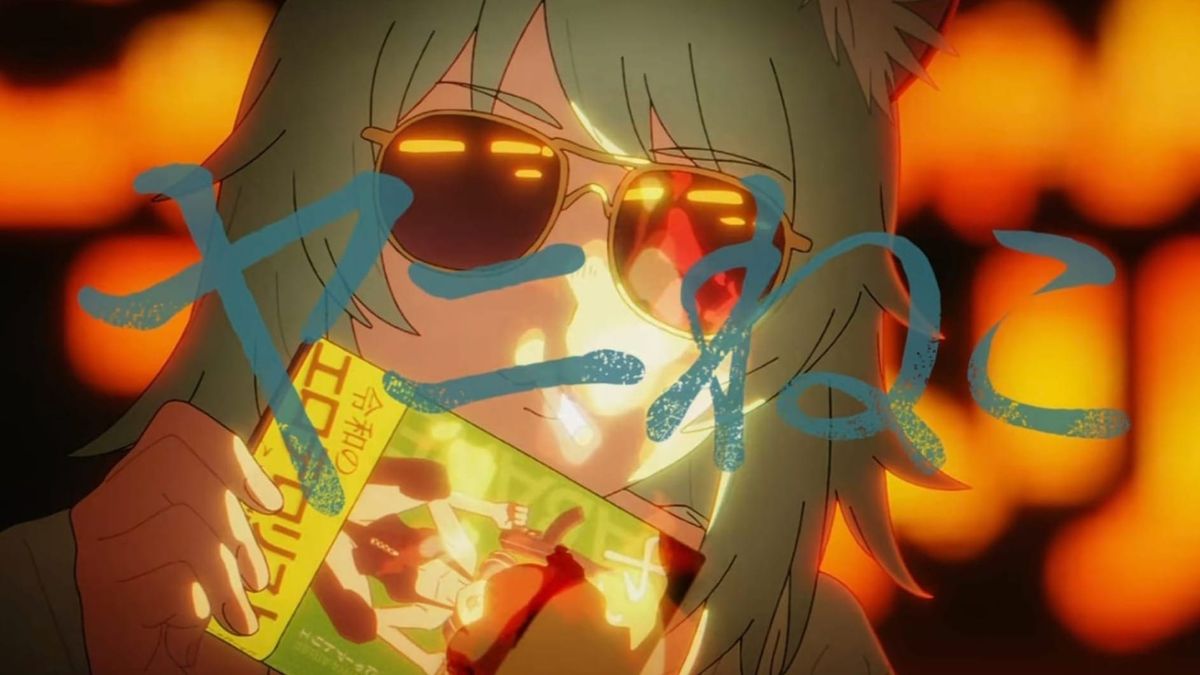
While I’ve my quibbles with Chain Smoker Cat’s premiere—which, against all odds, I’m still watching out of interest in how, if ever, it’ll address its catgirl protagonist’s journey to quit smoking—the anime has landed in similar discourse amongst Japanese viewers for being a controversially gross-out show. In the weeks since its premiere, it too has landed in hot water, getting banned on streaming services for cigarette ads. But what’s become more telling amid the noise of the show being 2026’s controversial anime is how much of it says the quiet part out loud, with viewers put off by how it puts Japanese poverty and addiction front and center.
In an excellent write-up about Chain Smoker Cat for Unseen Japan, Jay Allen wrote that Tokyo works to keep its homelessness hidden because it—like any country—doesn’t like to look at its own poverty.
Japan’s relative poverty rate sits around 15%. Its child poverty rate was around 11.5% in 2021, with around 44.5% of single-parent families below the poverty line.
Japan has a social safety net (生活保護; seikatsu hogo) to catch people below the poverty line. Private citizens, such as the children’s cafeterias we’ve written about, also work to make sure those who are struggling get enough to eat.
Some say it’s not enough. The Organisation for Economic Co-operation and Development (OECD), a Paris-based forum of 38 wealthy countries, ranked Japan one of the worst performers on child poverty despite its wealth. The statistics bear this out: poverty is rising in Japan, but the number of people on the welfare rolls is falling.
Japan stigmatizes poverty. It regards it not as a social ill to be addressed but as a national embarrassment to be swept under the rug. This was clear in 2018 when the country’s right-wing piled on an award-winning director for daring to pull back a curtain many want kept closed.
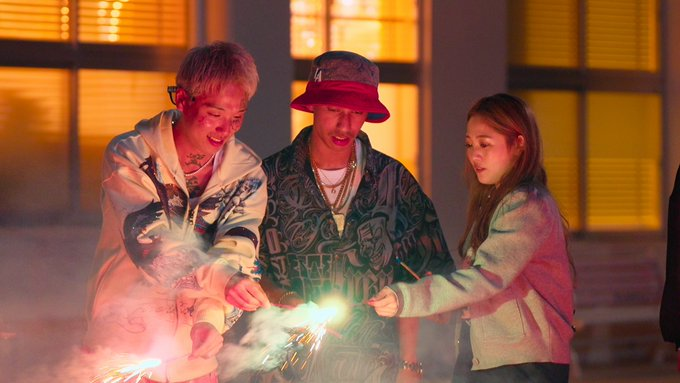
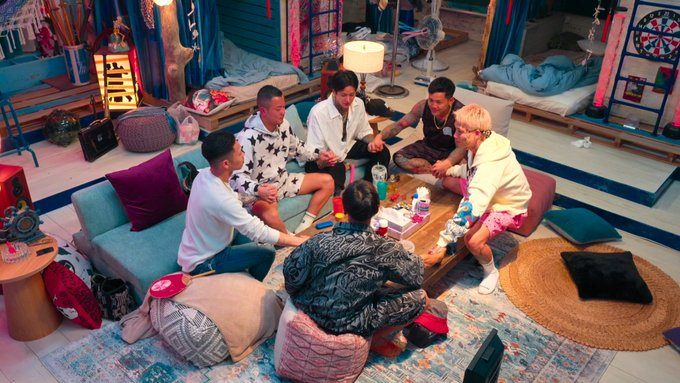
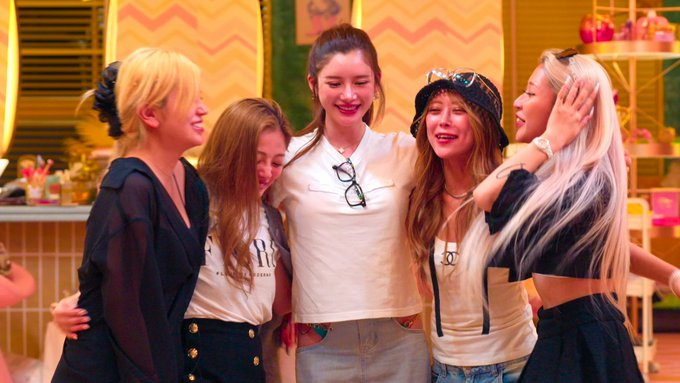
Although I’ve yet to see whether Chain Smoker Cat rises to the occasion to bring truth to power as a lens into poverty in Japan, when it’s not doing It’s Always Sunny in Philadelphia bits that are nonetheless entertaining to watch, I’ve seen firsthand how Badly in Love has taken ardent steps illuminating the harsh upbringings of its cast members and fostering a community where folk who are readily stereotyped based on their appearance are more than meets the eye.

Netflix
Mechanically, the show achieves this—albeit a touch patronizingly for my taste in its first season—by having its cast members do community service in their downtime. Whenever folks aren’t planning dates or gossiping about who likes who, they’re helping youth and the elderly through menial labor on farms and in after-school programs. It's here that audiences are meant to have their biases challenged in real time.
To my delight, the show’s three-person live commentary panel was given a boon by featuring rapper Awich. In contrast to last season, when its panel played armchair psychologists, leaning into stereotypes for why its cast members are the way they are, Awich provided a much-needed, empathetic insight into their lifestyle as someone who’s lived as hard a life. Throughout the show, audiences witness a softer side of the cast, which fosters an understanding beyond their rough first impressions of the most for-the-cameras peacocking and tear-apart scuffles I’ve ever seen committed to television.
Organically, the show achieves this by having its cast members confide in one another about the abuses they’ve endured and perpetrated, and their desire to change. The “worst” things done to and by cast members include going to juvie for fights, being physically abused by and to their exes, and setting a person on fire. The common thread across these confessions is that they’re shared by cast members of their own volition—not to sound tough, but to be upfront with their newfound family about the worst that’s happened to them and because of them, and to express their desire to change however they can.
Sometimes that means finding a partner who’ll accept them on their journey, being moved to call home and talk with estranged family members, or having friends organize an intervention. To my delight, the women in season 2 readily step in when they feel their homegirl Maririn’s steps toward changing for the better aren’t being acknowledged by the guys, or when cast members tell a new “transfer student” that her jokingly telling Ari—another mixed-race cast member—he “looked like a drug addict” was foul.
Anyone who's watched Badly in Love will tell you it's a refreshing watch compared to the more clean-cut, Uniqlo-clad reality TV shows on Netflix, where everyone is some sort of model or businessman. Here, its cast members wear their baggage on their sleeves, in tattoos and missing digits from leaving the yakuza. Their yankii and gyaru aesthetics aren’t presented as virtuous or as a cross to bear. It’s who they are.
Sure, there’s a latent cynicism about walking into reality shows with the expectation that their participants are there to increase their follower counts. But of all the dating shows I’ve watched on Netflix, Badly in Love doesn’t hit hard because of its cast members clashing, but because it showcases how they come together over matters of the heart, commiserate, and support each other in their pursuit of love, atonement, and change despite their bad reputations.
Recommended:
 Luke Plunkett