

Sometimes it’s nice to cut to the quick, so I’ll start off by saying that Blood Dungeon kicks ass. This is unsurprising for several reasons, the first being its pedigree of coming from developer Messhof, who brought you the classic indie duelers Nidhogg and Nidhogg 2. The second reason is that I dumped about six hours into the demo before receiving review code, and that’s usually a warning sign that a game is very, very good.
The quick log line on Blood Dungeon is Vampire Survivors meets Spelunky, although the comparison to Survivors might do Blood Dungeon a disservice. Though I find Vampire Survivors and Vampire Crawlers to be well-made and engaging, the way they are balanced does rancid things to my mind, a sensation that Brendan Caldwell recently articulated to in his blog that made half the people that saw it online get upset. Vampire Survivors exists purely in the machine zone, an endless time sink that ends up practically playing itself. It always leaves me with a nasty, oily feeling of never having accomplished much, whereas something like Balatro, an equally sinister game in terms of sheer addictiveness, constantly escalates in difficulty to check whatever broken combo the player can concoct. Though Blood Dungeon’s levels have a distinct end point and get progressively easier to break as you unlock new weapons and upgrades, the amount of active choices you have to make in terms of strategy and platforming make it so you never end up in that numb, queasy zone that Vampire Survivors tends to induce where all that’s left is the reward, a slot machine payout that keeps going.
Nothing but respect for Balatro.
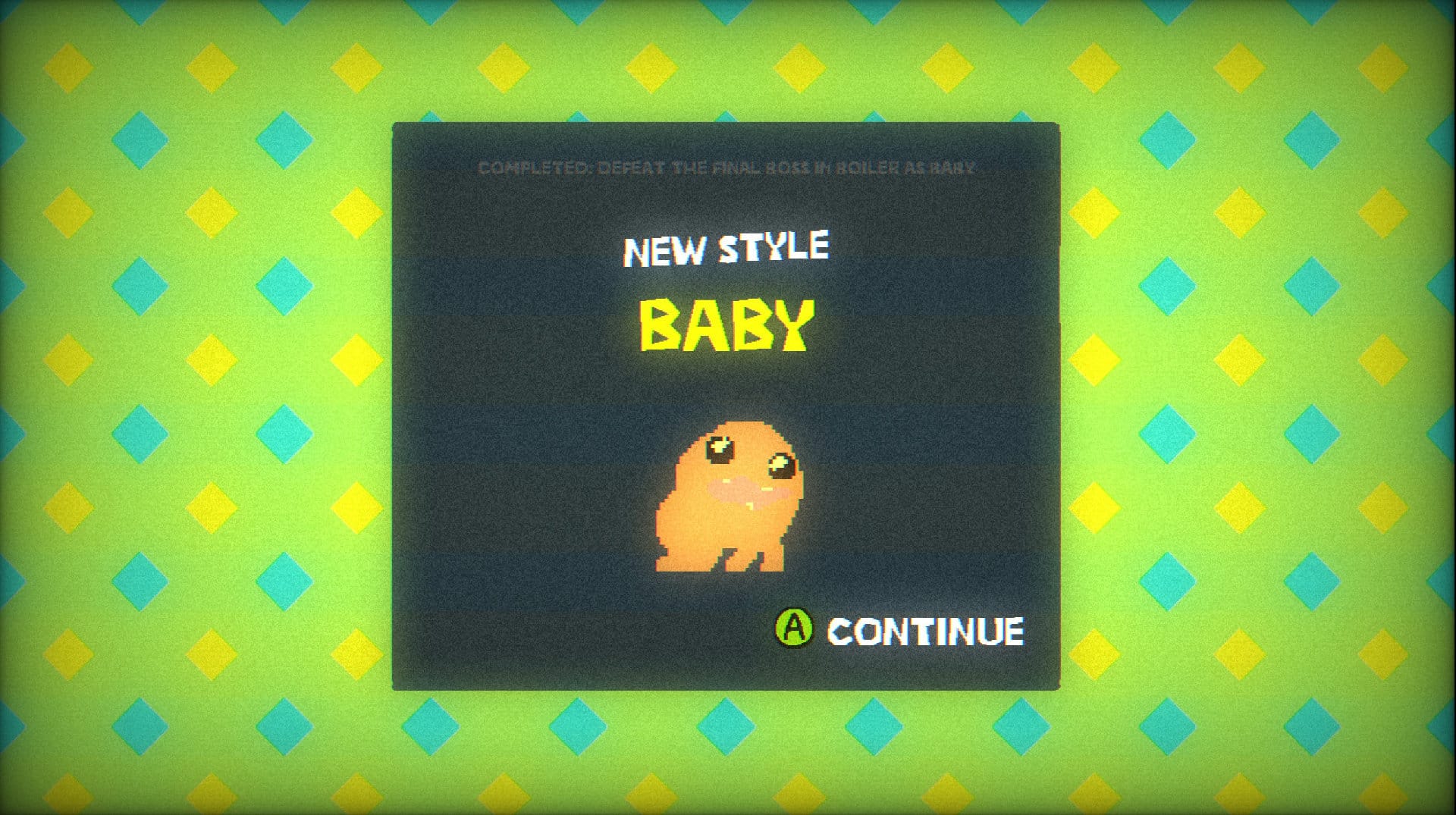
There is little plot to speak of in Blood Dungeon save for the fact that you’re a nasty little freak that gets pooped out of a bloody butt in the ceiling of an underground dungeon. You can swap between different characters, each with their own pluses and negatives — a baby with a magnum and a trust fund, a nude barbarian with his dingdong out, a naked freak named Skinja that walks on her hands, legs troubling in the air and cartwheeling on the ceiling like that old lady in Exorcist III. Each plays slightly differently and has passives that require different choices in how you build them out.
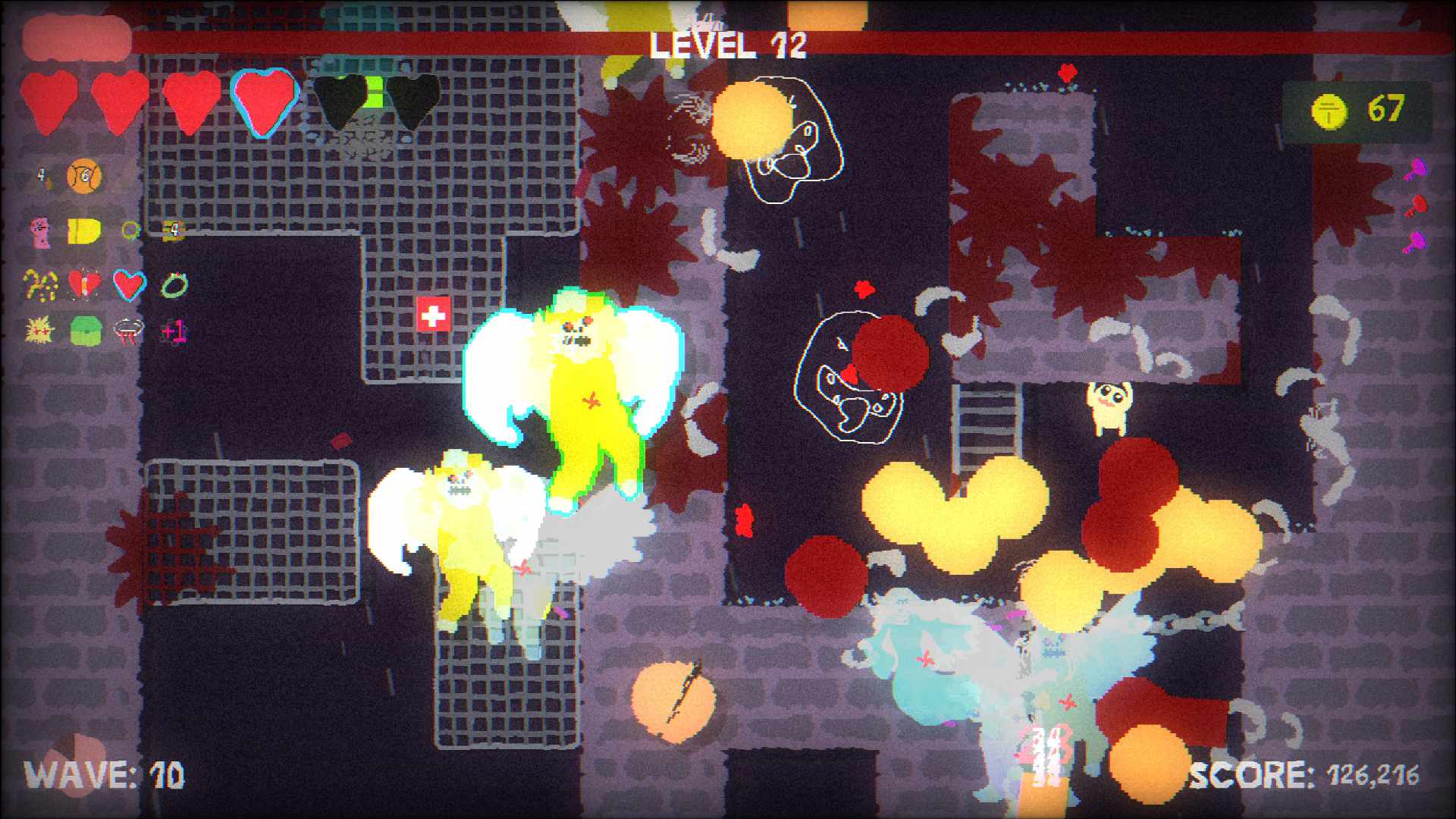
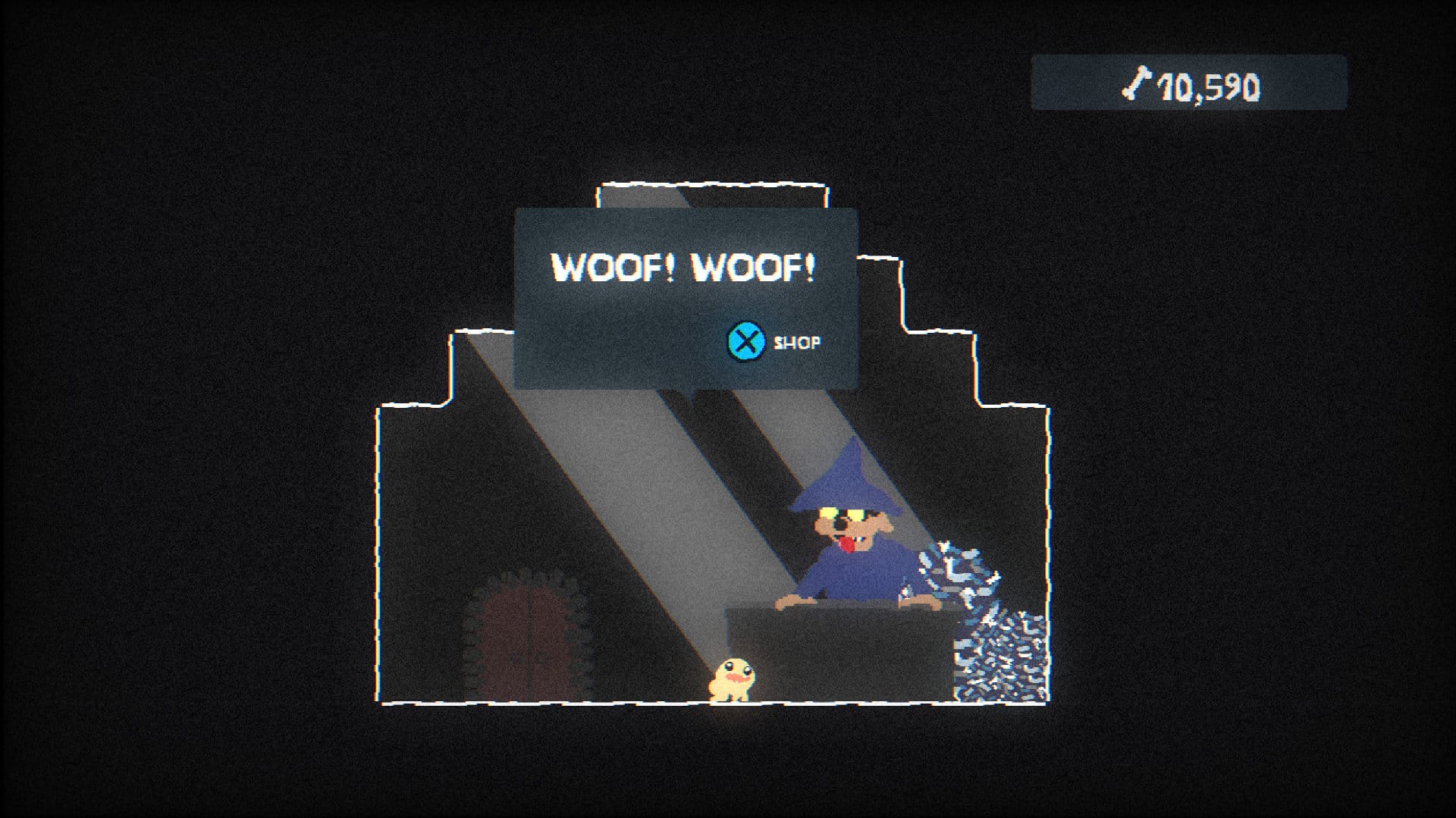
The art style is most reminiscent of Nidhogg 2 by way of MS Paint: squiggly, funny and unpleasant to look at. The main hub features a wizard that’s a dog and several witches holding assault rifles. Enemies are equally inventive and amusing: a seagull with gesticulating legs that are way too long, skeletons in track suits running absurdly, flying demon babies with terrible teeth, centaur men that are squarely average looking, and a boss that’s just a really big frog. The entire game feels, much to its benefit, like it was designed by a bored yet creative 12 year old metalhead drawing in the margins of a notebook during math class.
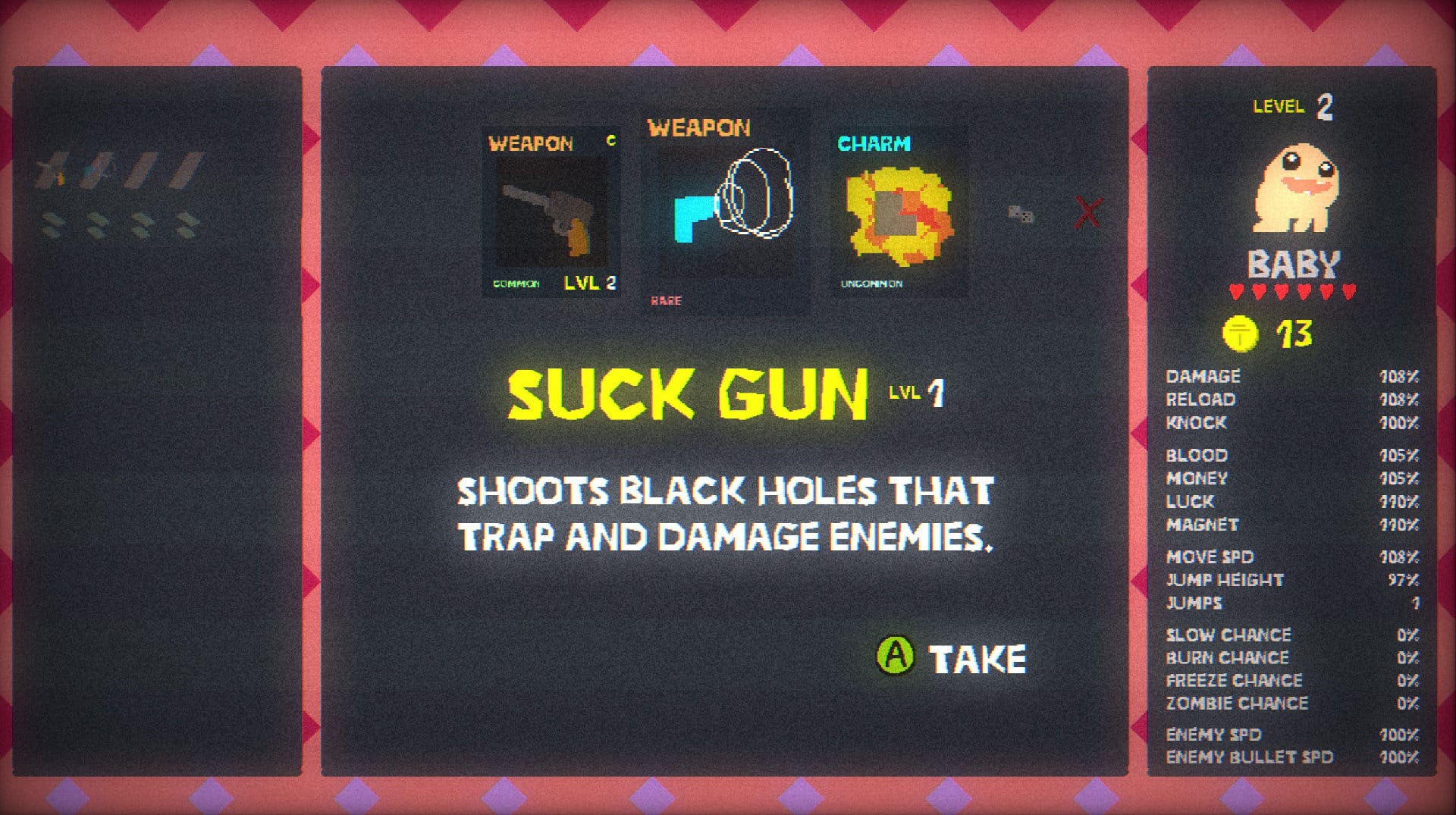
Each individual stage is an enclosed, sometimes looping arena with various pickups. Each character starts with a primary weapon that is predetermined and which auto-fires à la Vampire Survivors, and they can claim additional weapons over the course of the round. Enemies will drop blood, which is the currency that levels you up, and those levels, along with any treasure chests you might find, are how you secure upgrades. Upgrades are pure RNG, even to the point where the choices are presented like a slot machine, although they can be forcibly rerolled using coins.
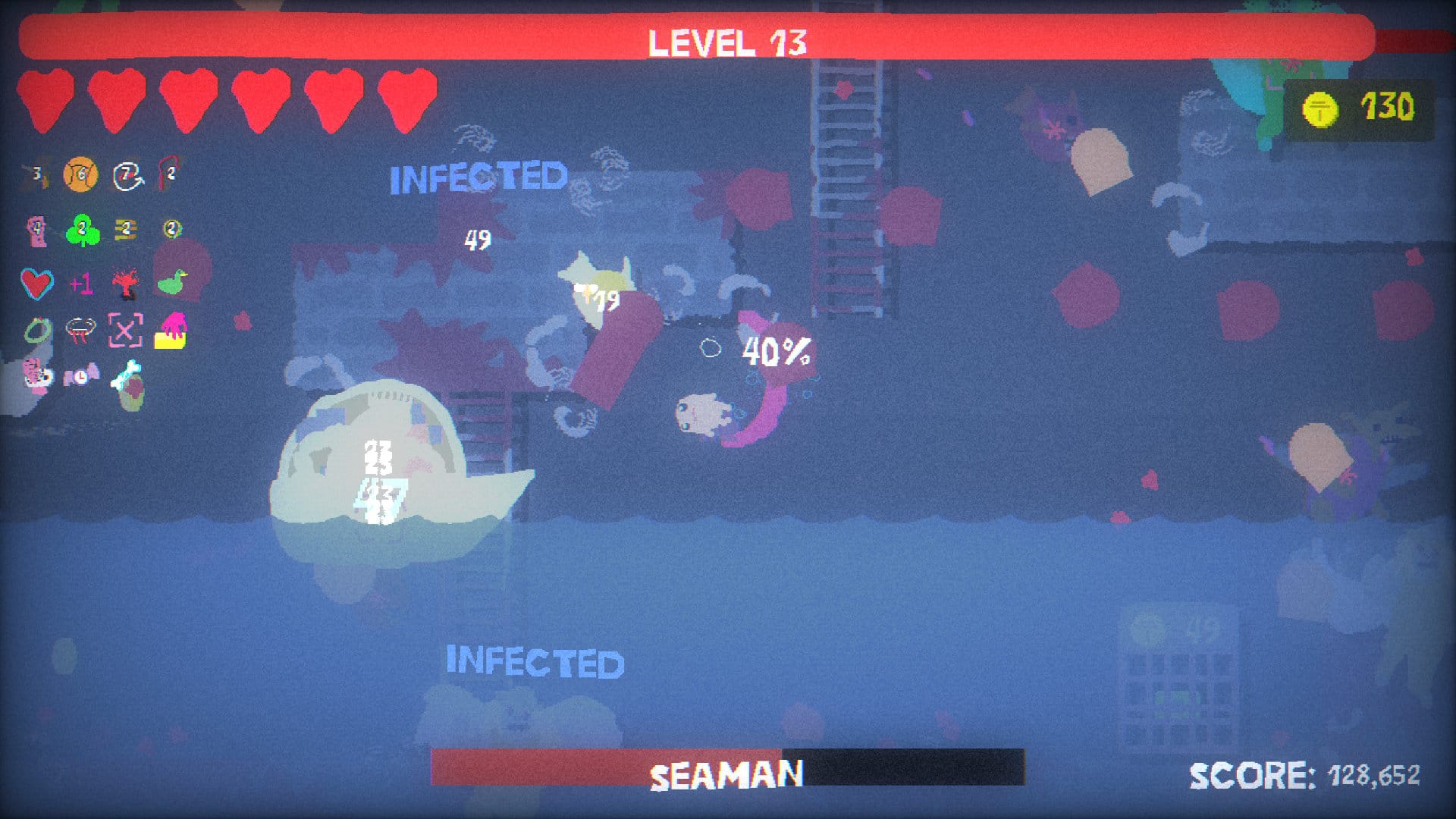
The bulk of the strategy is in building out a character with a proper weapons and accounting for synergies in an individual stage. For example, there’s an upgrade you can acquire that increases your rate of fire significantly if your character only is below 25% of their max oxygen while swimming, so a viable strategy in the few water-rich stages is to come close to drowning yourself repeatedly. Some upgrades have hyper-specific conditions, while others are purchased from the dog wizard by giving him bones. Upgrades are also influenced by rarity, and so making it so your volleyball explodes or that your whip chains between enemies can have huge impacts on your ability to clear a screen.
What makes Blood Dungeon riveting instead of feeling like you’re in a palliative haze of endless, recursive upgrades is that the experience is brutally tuned. Though your character can climb walls, the sheer density of enemies with absurd and capricious movement patterns requires a significant skill to navigate on the fly, an aspect of the game that feels most indebted to Spelunky’s legacy. Those countless near misses coupled with what the designers refer to as a “dungeon dnb” soundtrack by Thomas Hoey creates an escalating sense of tension that ratchets up to an obscene degree. There’s no experience quite like hearing harpsichords intermingling with high bpm drum machines while you vault over a giant floating mummy head.
Blood Dungeon is out on multiple major platforms, although Switch 2 and Steam Deck are by far the most compelling because it is a fantastic travel game if I’ve ever seen one. The rounds are fast enough to fit in between waiting in a dentist’s office, and it doesn’t take up enough time to be onerous. It’s a perfect little forever game to take with you, an experience that you can endlessly play while attempting to beat all your friends on the individual stage leaderboards. And, in case I have not been clear enough at this point, the game is really fucking good.


