

It’s one thing to hate software, but that hate takes on new dimensions when you have to use it for your job. To choose software and have it fail is unfortunate; to be chained to it for sustenance and be unable to walk away is torture. Because of this, I have nothing but hatred for Adobe. They are one of tech’s greatest villains, the software has gotten worse to use, and if you don’t like it fuck you there’s the door.
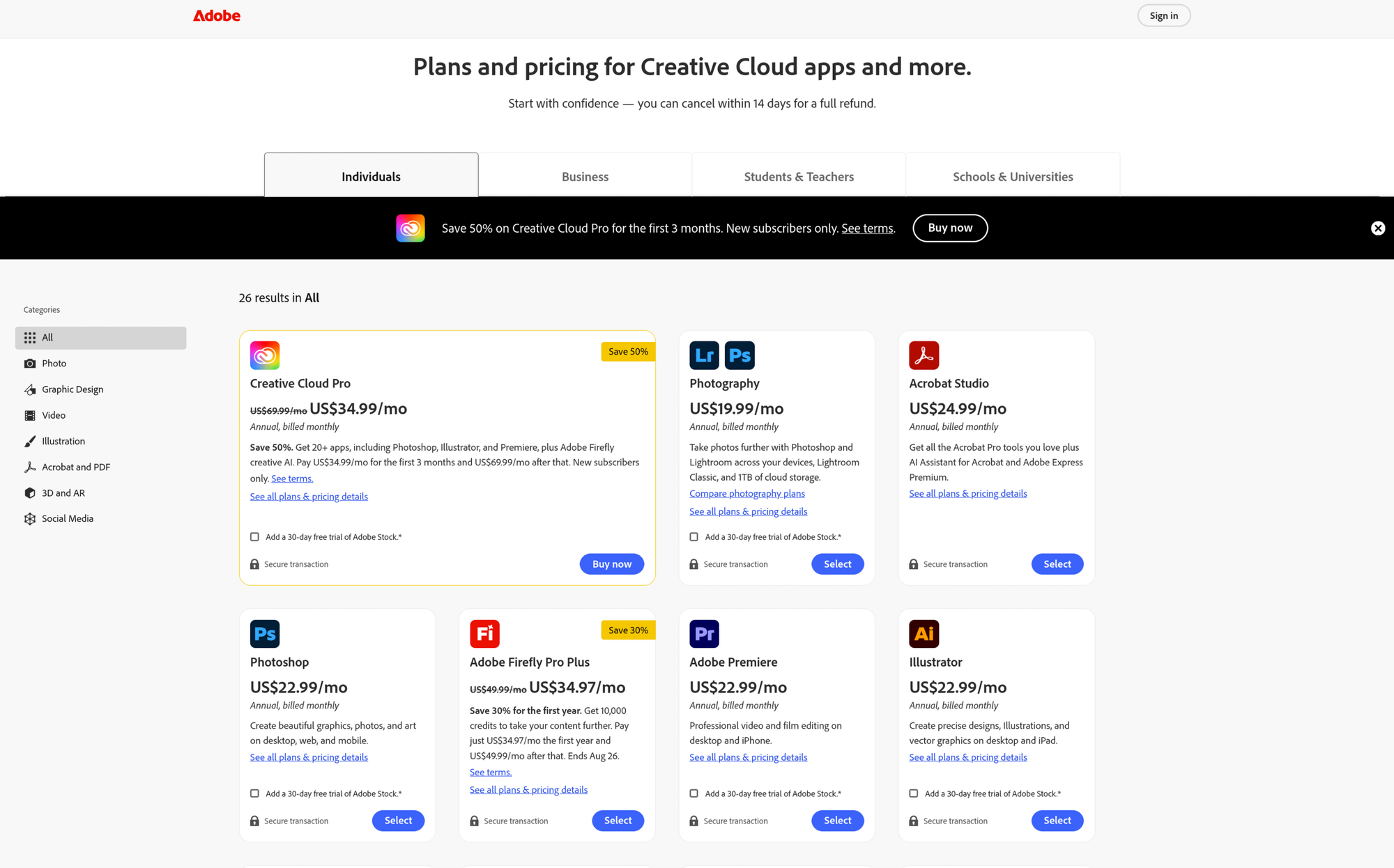
From every visible sight line Adobe is vile, starting with just trying to pay for the software. You can’t just buy their software and be done with it until you need an upgrade–instead, you rent the software monthly or yearly for an obscene amount of money relative to the creative industries that depend on it. As I write this, the Creative Cloud Standard costs $659.88 a year billed in 12 monthly installments, and $82.49 a month if you want to go month to month. This is assuming you don’t want the “Pro” subscription, which includes more generative AI tokens and is prominently listed on the top of the sales page while Creative Cloud Standard is on the bottom. Adobe frequently hides these costs by offering aggressive promotions, and a trick every poor artist knows if they try to take away your discount is to call tech support and say that you’re going to cancel to bait them into renewing the old rate. I’ve done this before and can confirm it works.
Very few software companies outside of Microsoft have the kind of leverage over entire industries. Premiere, Photoshop, Illustrator, InDesign, Lightroom and After Effects are all load bearing to some extent within their respective fields despite the fact that many people I know loathe using them. Creative Cloud as an app sits on your computer’s tray like a sleep paralysis demon, while the individual apps make your laptop hotter than the sun and your GPU fan spin louder than it needs to, countless years of shitty legacy code attaching itself to the apps like barnacles.
There are a few notable exceptions. Their free camera app Indigo is quite nice albeit computationally intensive. I liked Audition when I used it, but that was years ago. But I had to use Premiere for years and years and it ran like garbage while not implementing basic features that would have saved me months of work over the course of my life. After Effects was even worse, because it’s laid out in a bizarre way that nobody would implement if you asked them to make a motion graphics program today. (Most good compositing and animation programs are node-based, but After Effects is not). It is also irreplaceable, because nothing works in the specifically weird way that After Effects works. A guy I used to drink with had to do compositing in After Effects, and the degree to which that program did not work had serious consequences on his mental state whenever I talked to him. I think he’s better now, but the strain clearly took years off his life.
There is an additional element to this, and that’s Windows. For many, Photoshop and the Creative Cloud apps are some of the most significant pain points keeping them from seriously embracing Linux. There is no universe in which Adobe embraces Linux, and much in the same way that we must rid ourselves of Adobe, we must also rid ourselves of Windows. But that is a blog unto itself.
It would be enough to earn the ire of countless freelancers if the software simply ran like shit and you had a proverbial gun to your head making you use it. But add to this that Adobe loves generative AI and has hitched the success of the company to it. Artists and workers should not be economically induced to haggle with tech support for the privilege of renting garbage software below the asking price, but to know that the money you send them is feeding a machine that is suffocating your livelihood is insulting beyond measure.
Alternatives
I have not paid for Adobe Creative Cloud for a while now, on account of my loathing. The biggest shift was moving my entire workflow away from Premiere, Adobe’s non-linear editing software. For most serious film and television work, Avid is still the gold standard outside of some indie film productions because, despite working in a clunky and retro way, it has worked consistently for decades and you can set your watch to it. But for tons of indies, freelancers and YouTubers, Premiere has a significant market share.
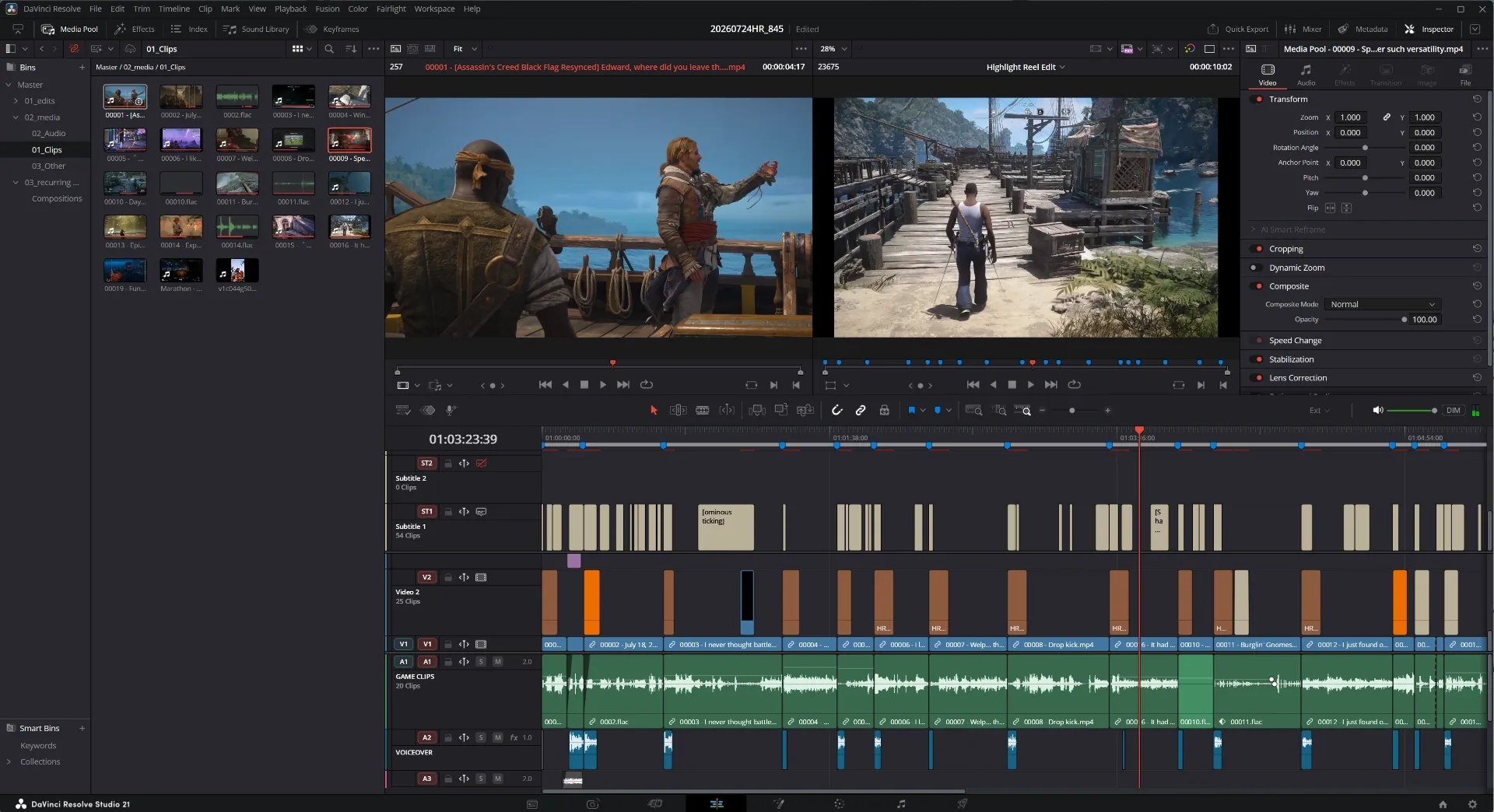
And yet for that exact same demographic, DaVinci Resolve is a much more compelling offer. I cannot say enough kind words about Resolve. It’s functionally free to download and use, and the free version is shockingly feature complete. They consistently ship features I care about before Adobe, and I actually started using it because the way it handled subtitles worked seamlessly well before Premiere. You can pay $295 once, or a key comes packaged for free if you buy a Blackmagic camera, like the one G/O Media purchased for Kotaku years ago. I have been riding that same Resolve Studio license for years and they haven’t asked me for a single red cent since.
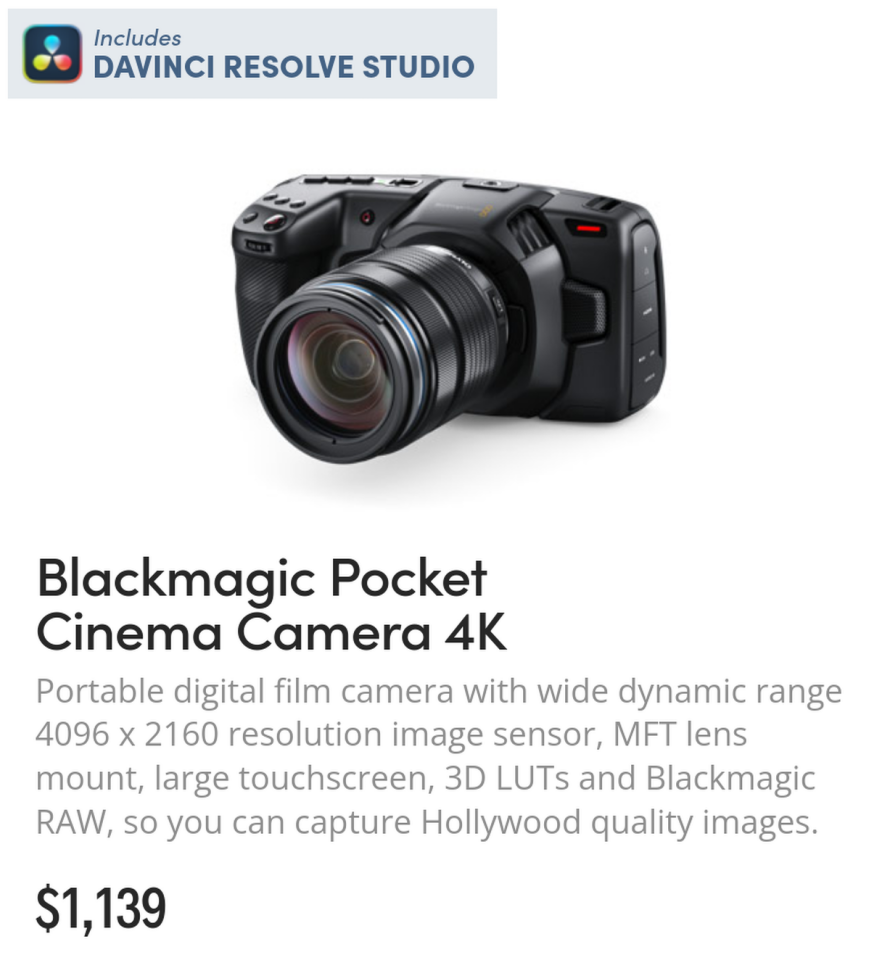
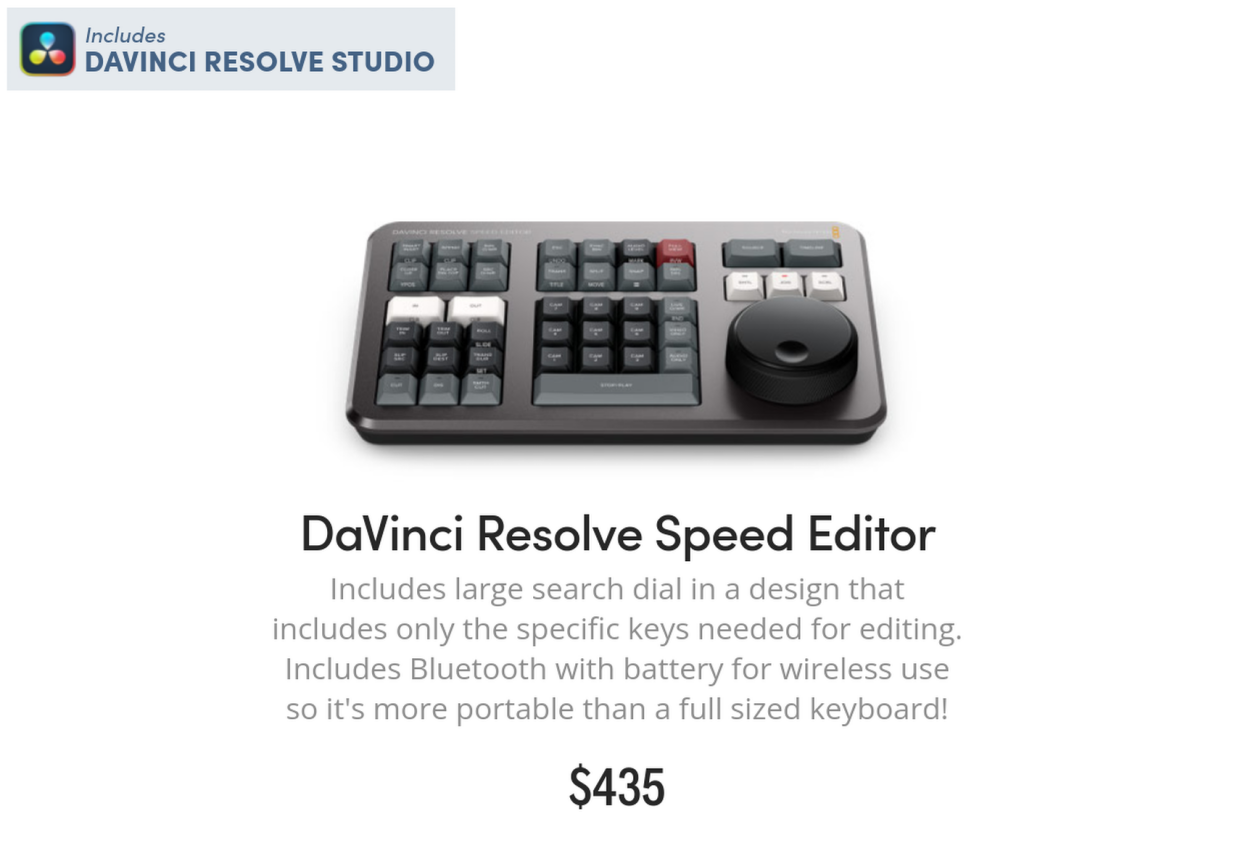
This is older hardware at this point but this is how I got my Resolve license originally. Or just download the free version and pay $295.
Resolve in its current form only exists because of Apple’s hubris. Apple used to own the go-to software suite for both non-Avid video editing (Final Cut Pro 7) and color grading (Apple Color). In 2011 Color got killed off and the tools got rolled together into Final Cut Pro X, a totally rewritten software suite which every person on Earth hated and caused many people to switch to Premiere. Though DaVinci Resolve had existed since the early 2000s, Blackmagic Design has owned the company that produced it since 2009. It started its life as color grading software, gaining market dominance, and in 2014 they built out a feature-rich non-linear editor. They went on to incorporate software from Fairlight (a digital audio workstation that began in a primordial capacity 1979) as well as Fusion (motion graphics software that traces its roots to DOS). The pricing changed over time, but the software has gotten consistently better and more feature-rich.
I learned this software in film school and killed it in the sloppiest way imaginable.
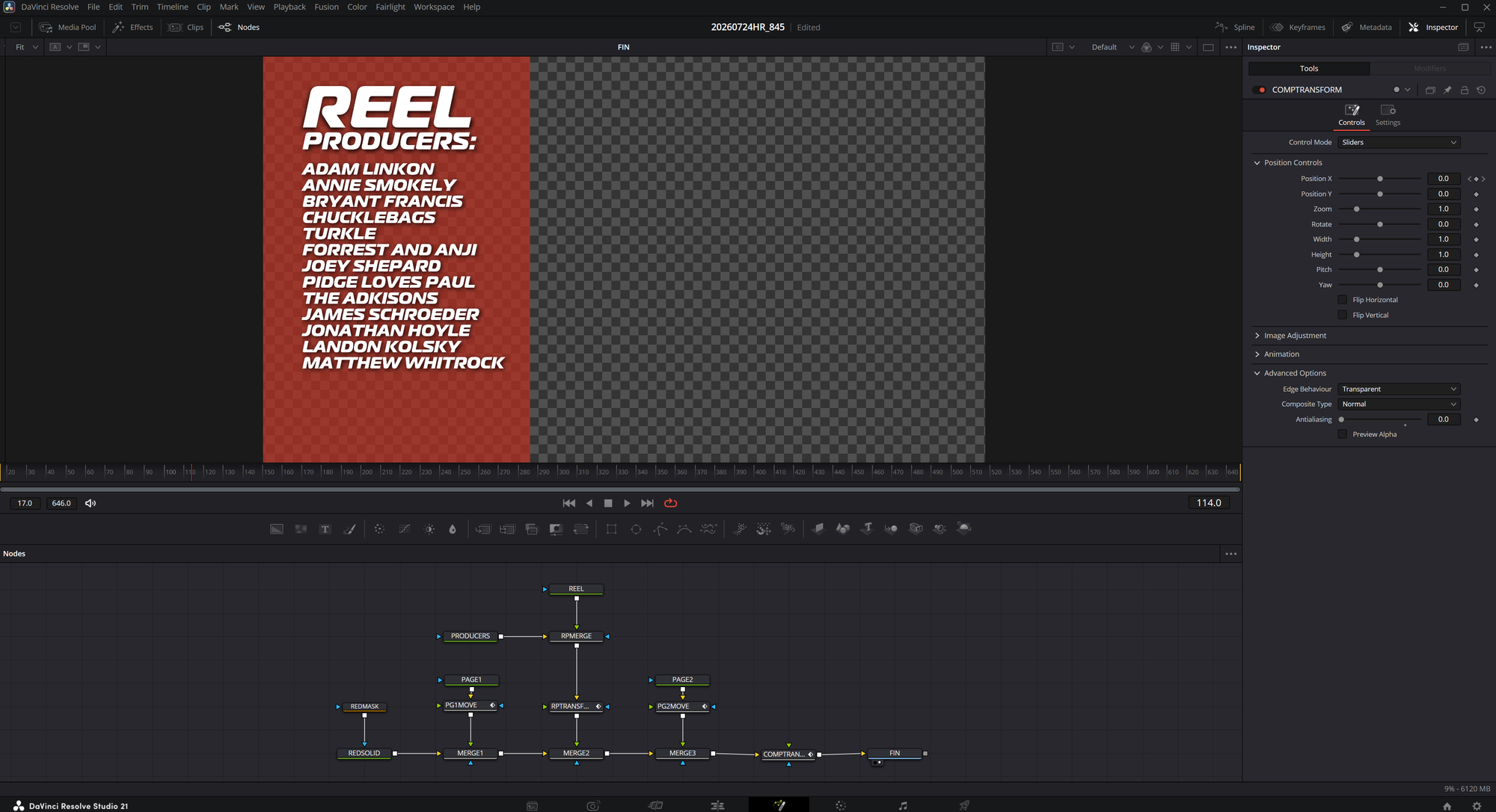
Fusion’s inclusion also fills a similar role to a different program that Apple killed in 2008: Shake, a node-based compositing program that was the industry standard before Nuke. When I switched over a few years ago, I was pleased to discover that Resolve’s default keyboard was Final Cut Pro 7, which I had not budged from since the first Obama administration. Resolve is a piece of software for haters who have never forgiven Apple for their repeated transgressions. I love it deeply, and do everything from recording audio with post processing to motion graphics for my show Highlight Reel directly in Resolve.
This was not a niche piece of software, it was used on The Matrix and The Lord of The Rings.
Other pieces of software are harder to get off of, the biggest one for me being Photoshop. Though I know GIMP has shooters, it is hardly a replacement for a commercial piece of software. Affinity is the closest replacement for the Adobe suite, offering a fairly robust replacement for software like Photoshop as well as InDesign, and recently they were purchased by Canva who subsequently made new versions of the software free. Although I do not trust Canva as a company that has also embraced AI, the only features that seem to be gated off in the free version are AI ones, and that’s ultimately a fairly OK deal.
“Switching off Photoshop has been a lot more difficult. It took years,” Illustrator Aurahack told me via DM. “When my career shifted more towards illustration, I cut my CC subscription and opted to learn Clip Studio Paint instead. It was around 2018, I think, and the conversation about Adobe killing Flash was still going around and I was just like ok fuck this. They're exerting absurd monopolistic practices, my software is getting shittier and more bloated every year, it crashes constantly, and I'm still paying hundreds for this. I need to switch.”
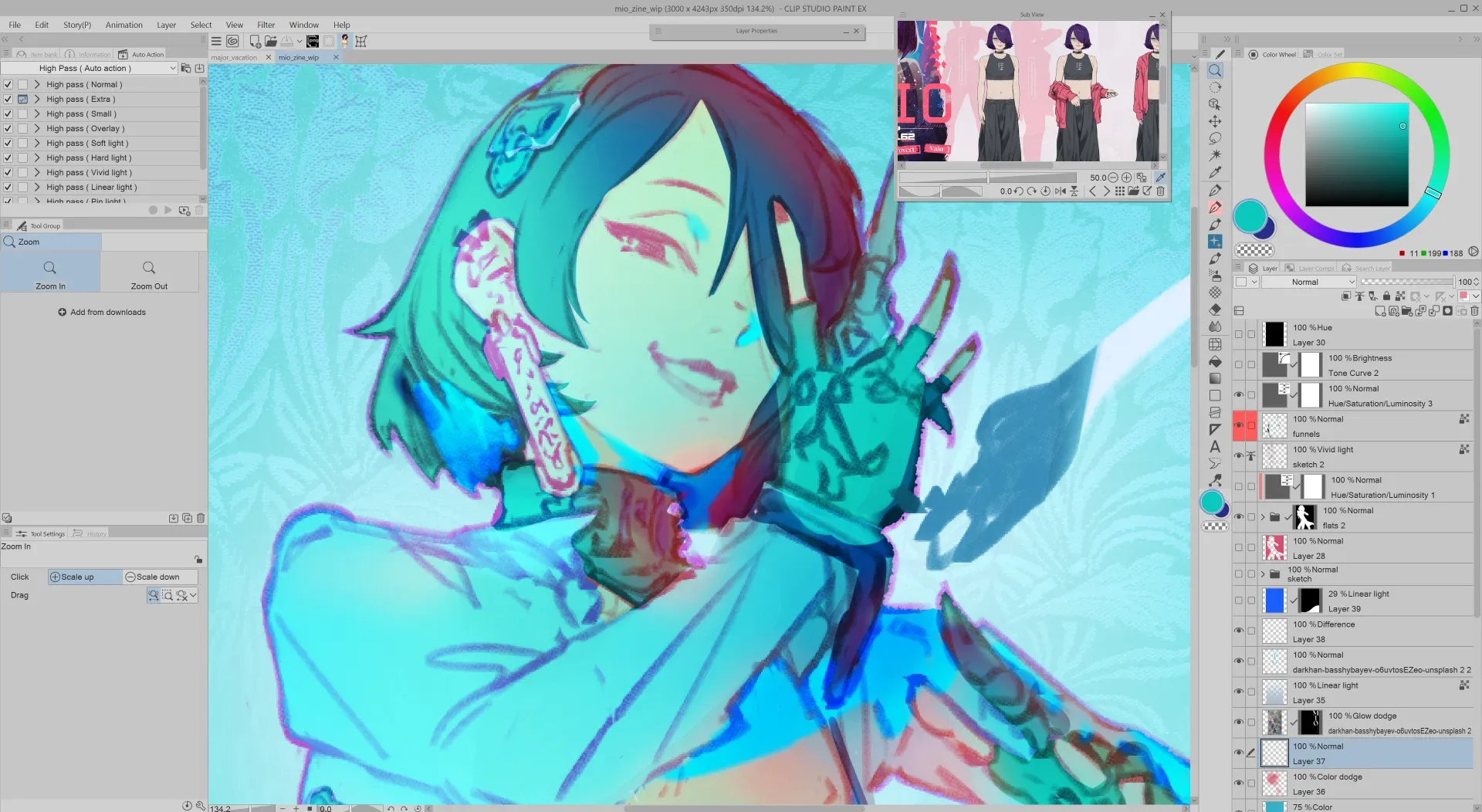
Like myself, Aurahack was fighting decades of muscle memory and habit. Though Affinity’s InDesign replacement is almost one-to-one and combining software for different tasks works for her, she understands it's trickier for others because it has to be many things to many people.
“After about a month's worth of daily use I felt really at home in [Clip Studio Pro]. It doesn't do everything I need it to--it's not image editing software--but with a combination of things like Photopea, Mosh Pro, and more creative workarounds like using stock photography or embracing sketching over vector art, I've basically cut [Adobe] entirely out of my workflow.”
“It's not a path that works for everyone,” Aurahack told me. “I'm sympathetic to artists in other professional capacities who are locked into that ecosystem for business reasons and I'm very fortunate to exist in the freelance capacity that I do, but the end result still feels like my best expression of self. If anything, it forced me to get a little creative with how I approach my own versatility and that mentality has done me nothing but good.”
Though switching can be difficult, being rid of Adobe is bliss. To know that your software is either free or buy once feels like walking on solid ground after drowning. Our lives are full of countless rotten little thieves that have access to our credit card information and, in the case of Adobe, our careers. Adobe has earned my nothing but my deepest contempt. I hate you, Adobe, and I hope the whole company gets dragged to hell when the AI bubble pops.
It's Hater Week here on Aftermath. This week we’re letting the hate flow through us by examining what it means to be a hater (and… a lover?), venting about some of our biggest pet peeves in games and life, and giving others a space to do the same.


